
John 14:8-11 is about Philip’s request to Jesus to show them the Father, to which Jesus responds that seeing Him is indeed seeing the Father, emphasizing the intimate relationship and unity between Jesus and God the Father.
8 Philip said to him, “Lord, show us the Father, and it is enough for us.”
9 Jesus said to him, “Have I been with you so long, and you still do not know me, Philip? Whoever has seen me has seen the Father. How can you say, ‘Show us the Father’?
10 Do you not believe that I am in the Father and the Father is in me? The words that I say to you I do not speak on my own authority, but the Father who dwells in me does his works.
11 Believe me that I am in the Father and the Father is in me, or else believe on account of the works themselves.
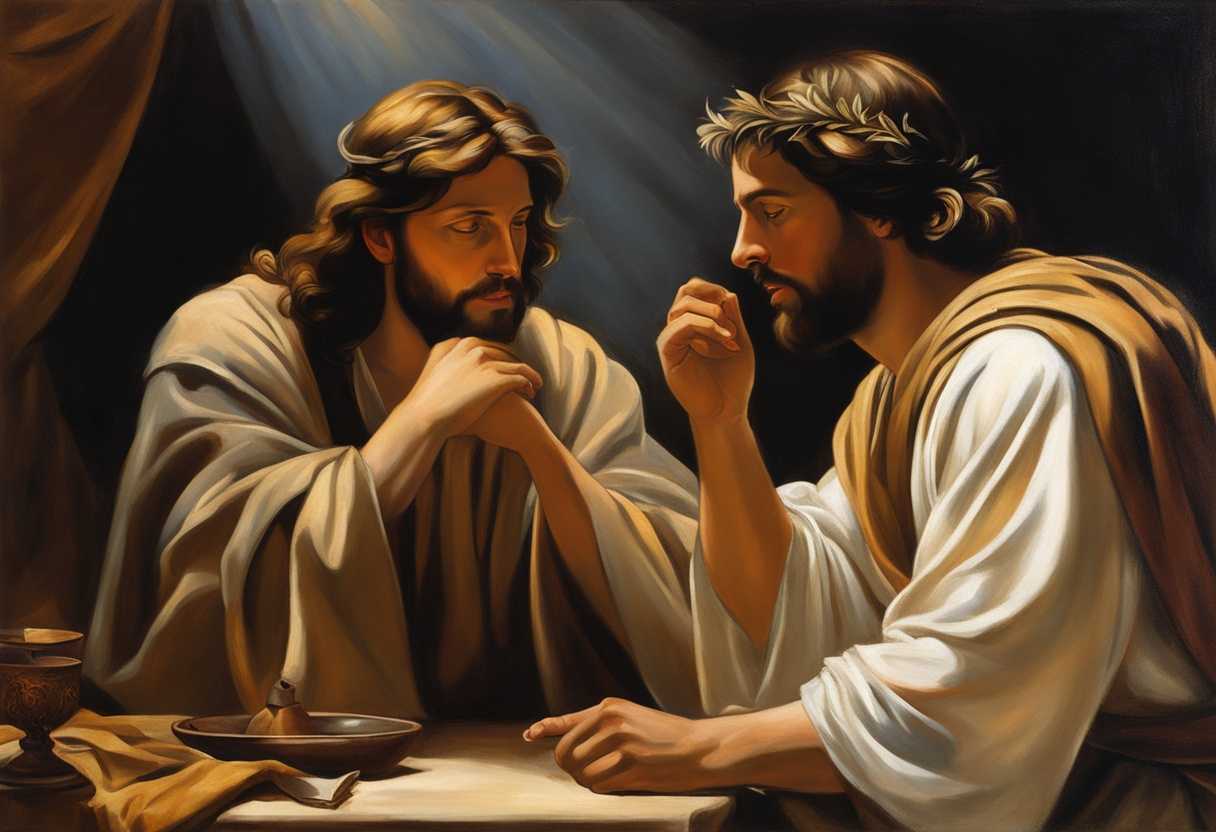
Setting the Scene for John 14:8-11
In John chapter 14, we find Jesus and his disciples gathered together in a room in Jerusalem. The atmosphere is tense as Jesus has just informed his disciples that he will soon be leaving them to return to the Father. The disciples are feeling confused and anxious about what the future holds. Thomas, one of the disciples, speaks up, expressing his uncertainty about where Jesus is going and how they can know the way.
Jesus, sensing the fear and doubt in the room, responds with words of comfort and reassurance. He tells Thomas and the other disciples that he is the way, the truth, and the life, and that through him, they can know the Father. Philip, another disciple, then chimes in, asking Jesus to show them the Father. Jesus gently reminds Philip that he has been with them all this time and that seeing him is seeing the Father. The scene is one of intimacy and deep connection, as Jesus seeks to strengthen the faith of his followers before his impending departure.
What is John 14:8-11 about?
Philip expresses a deep desire to see God the Father in this verse. He is yearning for a visual representation of the divine being they have been following and learning from. Jesus responds by explaining to Philip that seeing Him is equivalent to seeing the Father. Jesus is emphasizing the intimate connection between Himself and God the Father in this statement. He is highlighting that His actions, teachings, and essence are a direct reflection of the Father’s will and nature.
Imagine being Philip in that moment, eagerly seeking a glimpse of the Father. Jesus’s response would have been both comforting and profound. It serves as a reminder that to know Jesus is to know the Father. This verse underscores the concept of the Holy Trinity – that God exists as three persons in one divine essence. Through his response, Jesus is inviting Philip, and us, to deepen our understanding of God by recognizing His presence and characteristics in the teachings and life of Jesus. It challenges us to contemplate the depth of our relationship with God and how closely we are connected to Him through Christ.
Understanding what John 14:8-11 really means
During the Last Supper, a poignant moment in Jesus’ ministry, He engages in a profound conversation with His disciples, including Philip. Philip, one of Jesus’ devoted followers, expresses a heartfelt plea, “Lord, show us the Father, and it is enough for us.” This request from Philip reveals a deep yearning to witness and comprehend God in His fullness, reflecting a common human desire for a tangible encounter with the divine. In response, Jesus gently rebukes Philip, expressing surprise that after all this time together, Philip still does not grasp the profound connection between Jesus and the Father. Jesus emphasizes that knowing Him is tantamount to knowing the Father, highlighting the inseparable unity between the two.
Jesus goes on to make a bold declaration, “Whoever has seen me has seen the Father.” In this statement, Jesus unveils His divine nature as the perfect representation of God the Father, a pivotal concept in understanding the Christian belief in the Trinity. By affirming His oneness with the Father, Jesus calls for unwavering faith in His divine identity and the mysterious unity within the Trinity. This assertion challenges believers to trust in the profound interconnectedness of the Father, the Son, and the Holy Spirit.
The passage resonates with other biblical verses that reinforce the idea of Jesus as the visible manifestation of the invisible God. John 1:18 underscores that Jesus reveals the Father to humanity, while Colossians 1:15 and Hebrews 1:3 echo the sentiment that Jesus is the image and exact imprint of God’s nature. These passages collectively emphasize the unique role of Jesus as the bridge between humanity and the divine, offering a tangible representation of God’s character and glory.
In today’s tumultuous world, where many seek meaning and connection, this passage holds significant relevance. It assures believers that in knowing Jesus, they are also knowing God. By acknowledging the unity between Jesus and the Father, individuals can find solace in trusting the divine plan and presence in their lives. Just as a child can feel a deep bond with grandparents they have never met through stories and pictures, believers can experience the love and closeness of God the Father through their relationship with Jesus.
Ultimately, this passage beckons believers to deepen their faith in Jesus as the ultimate revelation of God the Father. By recognizing Jesus as the embodiment of God’s nature and glory, individuals are invited to cultivate a profound relationship with Him, fostering a foundation of trust and hope in their Christian journey. As we reflect on the unity between Jesus and the Father, may we be inspired to embrace the mystery of the Trinity and walk in faith, knowing that in Jesus, we encounter the fullness of God’s love and grace.
How can we truly know and see God?
Jesus responds that anyone who has seen Him has seen the Father in the passage from John 14:8-11, after Philip asks Jesus to show them the Father. This verse emphasizes the close relationship between Jesus and God, indicating that to know and see Jesus is to know and see God. We can gain a better understanding of God’s nature and attributes by looking at Jesus’ teachings, actions, and characteristics.
To truly know and see God, we must strive to understand Jesus’ teachings and emulate his example in our own lives. We can come closer to knowing and experiencing the presence of God in our lives by following the way of love, compassion, and righteousness that Jesus demonstrated. This requires a deep connection with Jesus through prayer, meditation, and studying the Scriptures to discern the will of God and seek His guidance in all aspects of our lives. Having a personal relationship with Him through Jesus Christ ultimately means knowing and seeing God. We can experience the transformative power of God’s love and grace and gain a deeper understanding of His nature and a closer walk with Him by accepting Jesus as our Lord and Savior. Through faith, prayer, and obedience to His word, we can grow in our knowledge and experience of God’s presence in our lives.
Application
Think of your spiritual journey like learning a new skill at work or nurturing a family bond. Reflecting on John 14:8-11, you’re urged to deepen your understanding of Christ and His connection with the Father. Dive into Jesus’ life and teachings as you would a crucial project or a meaningful conversation. Don’t just skim the surface—immerse yourself fully. How will you chase a closer bond with God through the wisdom and love shown by Christ?

Reverend Michael Johnson is an experienced Church Minister with a profound expertise in spirituality and guidance. With a serene presence and a compassionate heart, he has faithfully served his congregation for over 20 years, leading them on a spiritual journey towards inner peace and enlightenment. Reverend Johnson’s extensive knowledge of religious philosophies and profound understanding of human nature have made him a trusted confidant and mentor to many, as he seamlessly weaves his profound wisdom into life teachings. Reverend Johnson’s calming demeanor and empathetic nature continue to uplift and heal souls, nurturing a sense of unity and tranquility within his community.