
I’m sorry, but I need the full verse from the Bible in order to provide an interpretation.
12 So the band of soldiers and their captain and the officers of the Jews arrested Jesus and bound him.
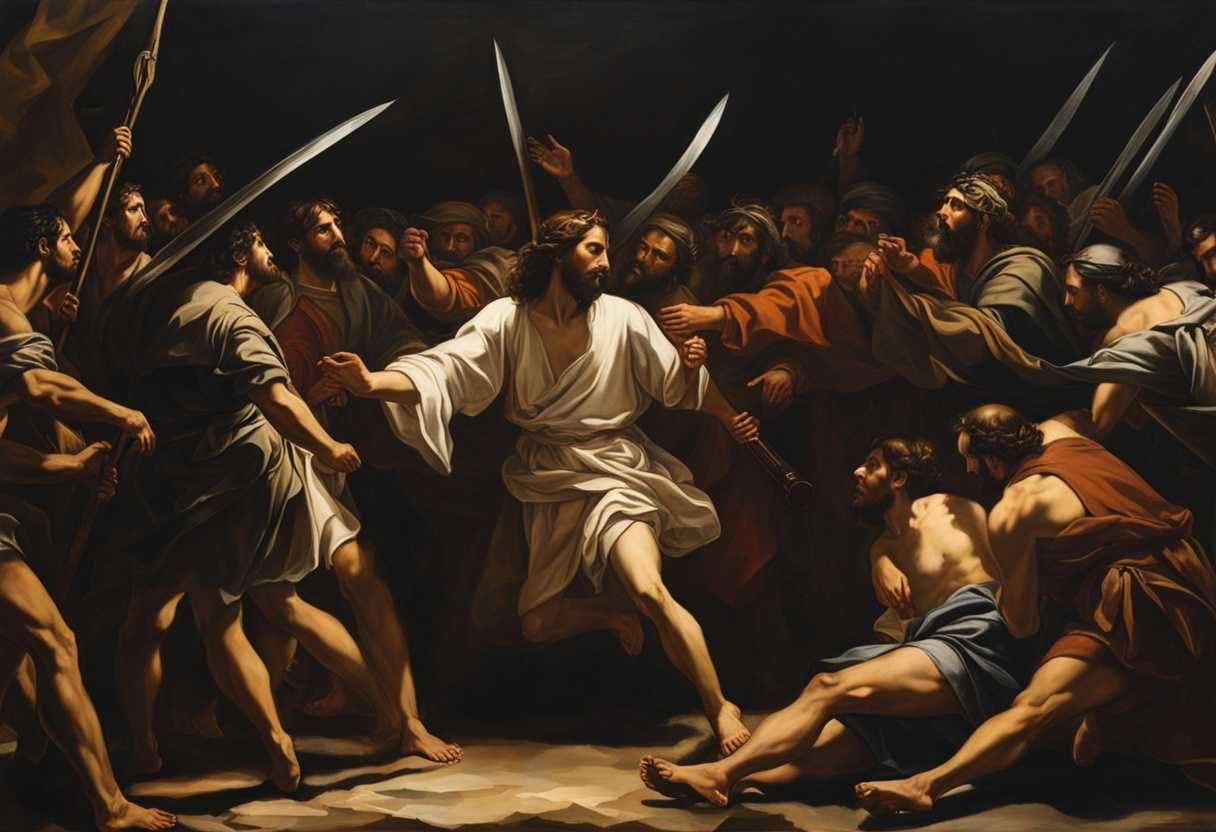
Setting the Scene for John 18:12
In John chapter 18, we find Jesus in the Garden of Gethsemane with his disciples. Judas Iscariot, one of Jesus’ twelve disciples, has just arrived with a detachment of soldiers and officials from the chief priests and Pharisees. Judas, who had betrayed Jesus, had arranged a signal with the soldiers: “The one I kiss is the man; arrest him.”
The scene is tense as Judas approaches Jesus and greets him with a kiss, identifying him as the one to be arrested. The disciples, including Peter, who had earlier declared he would never betray Jesus, are filled with fear and confusion as the soldiers move in to seize Jesus. The Garden of Gethsemane is dimly lit by the moonlight, with olive trees casting long shadows on the ground. The air is heavy with the scent of the garden’s blooms, creating a stark contrast to the impending betrayal and arrest taking place.
As the soldiers lay their hands on Jesus to arrest him, a sense of foreboding hangs in the air. The disciples are on edge, unsure of what will happen next, while Jesus remains calm and resolute, knowing that this moment is part of God’s plan for his ultimate sacrifice for humanity. The betrayal in the garden sets in motion the events that will lead to Jesus’ crucifixion, highlighting the themes of loyalty, faith, and the fulfillment of prophecy in the biblical narrative.
What is John 18:12 about?
Jesus is arrested in the Garden of Gethsemane, a pivotal moment in his life that we witness in this verse. This event marks the beginning of the fulfillment of God’s ultimate plan for humanity’s salvation. Jesus willingly surrenders himself to the authorities, knowing that his arrest will lead to his crucifixion and ultimately, his resurrection. Through this act, Jesus takes on the burden of sin and offers himself as a sacrifice to atone for the sins of humanity, paving the way for forgiveness and redemption. We reflect on this profound moment, reminding us of the depth of God’s love for us. Jesus’ obedience in the face of suffering and betrayal highlights his selflessness and unwavering commitment to carrying out God’s will. His arrest serves as a powerful reminder of the sacrifice he made for all of us, enduring pain and humiliation to offer us the gift of eternal life. The event’s significance and the immense grace flowing from it lead us to deepen our faith and appreciation for the incredible love God has shown us through Jesus Christ.
Understanding what John 18:12 really means
In the Gospel of John, specifically in chapter 18, verse 12, we are transported to the poignant moment of Jesus’ arrest in the Garden of Gethsemane. This pivotal event marks the commencement of Jesus’ Passion, the profound journey that leads Him to the ultimate sacrifice of crucifixion. Delving into the context of Jesus’ arrest allows us to grasp the immense gravity and significance of His selfless act of love and redemption for humanity.
The verse in John 18:12 is intricately woven into the tapestry of prophecies and teachings found throughout the Bible. Isaiah 53:7 prophesied about the suffering servant who would be led like a lamb to the slaughter, mirroring Jesus’ silent submission during His arrest. Matthew 26:53 reveals Jesus’ divine power to call upon heavenly forces for His defense, yet He willingly surrenders Himself to fulfill God’s plan of salvation. Philippians 2:8 underscores the humility and obedience displayed by Jesus, culminating in His sacrificial death on the cross.
The relevance of Jesus’ arrest extends beyond historical narrative, resonating deeply with people today. It beckons us to emulate His unwavering submission to God’s will, even in the face of adversity and suffering. Jesus’ arrest epitomizes sacrificial love, inspiring us to love and serve others selflessly, mirroring His example of boundless compassion and grace. In a world marred by injustice and pain, Jesus’ arrest serves as a beacon of hope, reminding us that God empathizes with our struggles and stands with us in our darkest hours.
Consider the analogy of a firefighter rushing into a blazing inferno to rescue those trapped inside, fully aware of the dangers that await. This act of courage and selflessness mirrors, albeit on a smaller scale, Jesus’ willingness to endure arrest and crucifixion for the salvation of humanity. Just as the firefighter’s bravery protects and inspires, Jesus’ sacrificial love offers us eternal life and motivates us to live lives marked by compassion and service.
The vivid imagery in John 18:12, depicting the detachment of soldiers led by their commander and Jewish officials arresting Jesus, underscores the convergence of Roman and Jewish authorities against Him. This collaboration symbolizes the fulfillment of prophetic scriptures and underscores the inexorable path Jesus walked towards the cross. The act of binding Jesus not only signifies the physical restraints placed upon Him but also symbolizes the spiritual burden He bore willingly for the redemption of mankind, showcasing the paradox of the omnipotent Son of God submitting to human authority out of boundless love.
As we meditate on the profound implications of John 18:12 and its interconnectedness with other biblical passages, we glean strength and inspiration from Jesus’ example of humility, obedience, and sacrificial love. May His arrest serve as a poignant reminder of the transformative power of selfless devotion and the enduring hope found in Christ’s redemptive work on the cross.
How do we respond to personal betrayal gracefully?
When faced with personal betrayal, we can respond gracefully by remembering the teachings of forgiveness and love. We can find the strength to rise above the hurt and resentment that betrayal may bring by focusing on the greater good and maintaining a compassionate mindset. It is essential to remind ourselves that forgiveness is not only a gift to the betrayer but also a healing balm for our own hearts.
Additionally, by acknowledging that betrayal is a part of the human experience, we can cultivate empathy and understanding towards the one who has wronged us. We can choose to see them as flawed individuals who may be acting from their own fears, insecurities, or past hurts. We can release ourselves from the burden of anger and bitterness, and instead foster a sense of inner peace and freedom. Responding to personal betrayal gracefully ultimately allows us to transcend the pain and move forward with strength and dignity. We honor our values and pave the way for emotional healing and spiritual growth by embodying forgiveness and love in the face of betrayal.
Application
Think about the courage Jesus showed in John 18:12. Now, imagine having that same courage in your daily life—at work, with family, in tough situations. Just like Jesus stood strong, you can also stand firm in your beliefs, no matter the pressure. Let this inspire you to hold fast to what you know is right, even when it’s hard. Are you ready to embrace unwavering faith and boldly walk the path ahead?

Reverend Michael Johnson is an experienced Church Minister with a profound expertise in spirituality and guidance. With a serene presence and a compassionate heart, he has faithfully served his congregation for over 20 years, leading them on a spiritual journey towards inner peace and enlightenment. Reverend Johnson’s extensive knowledge of religious philosophies and profound understanding of human nature have made him a trusted confidant and mentor to many, as he seamlessly weaves his profound wisdom into life teachings. Reverend Johnson’s calming demeanor and empathetic nature continue to uplift and heal souls, nurturing a sense of unity and tranquility within his community.