
John 18:15-18 is about Peter’s denial of Jesus three times before the rooster crowed, illustrating the fragility of human faith and the inevitability of moments of weakness even for the most devoted followers.
15 Simon Peter followed Jesus, and so did another disciple. Since that disciple was known to the high priest, he entered with Jesus into the courtyard of the high priest,
16 but Peter stood outside at the door. So the other disciple, who was known to the high priest, went out and spoke to the servant girl who kept watch at the door, and brought Peter in.
17 The servant girl at the door said to Peter, “You also are not one of this man’s disciples, are you?” He said, “I am not.”
18 Now the servants and officers had made a charcoal fire, because it was cold, and they were standing and warming themselves. Peter also was with them, standing and warming himself.
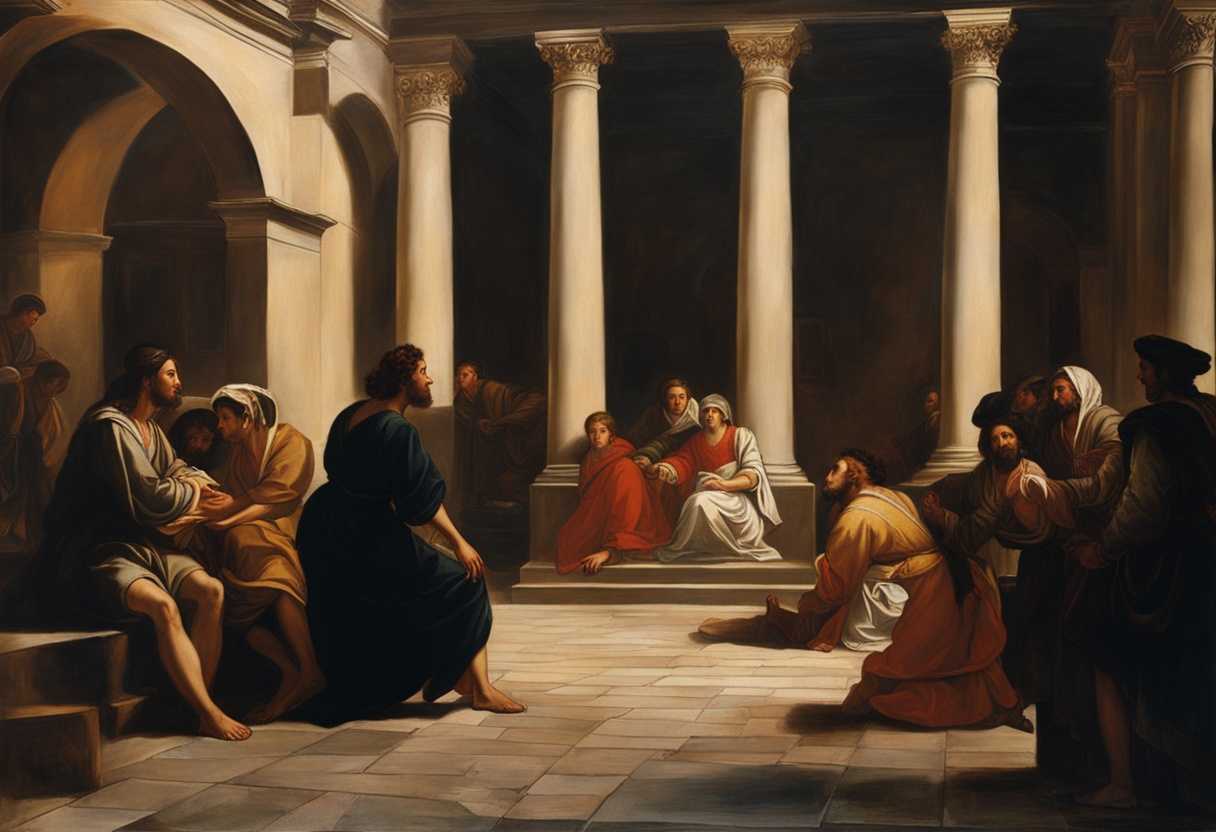
Setting the Scene for John 18:15-18
In John chapter 18, we find Peter and another disciple following Jesus after His arrest in the Garden of Gethsemane. The scene is tense and filled with apprehension as they make their way to the high priest’s courtyard. The night is cool, with a slight breeze rustling through the olive trees, adding an eerie atmosphere to the unfolding events.
As they enter the courtyard, Peter and the other disciple find themselves amidst a group of people gathered around a fire. The fire crackles and casts flickering shadows on the faces of those present. The high priest’s servants and guards are milling about, some casting curious glances at the newcomers. Peter, eager to see what will happen to Jesus, lingers near the fire, trying to blend in with the crowd.
The other disciple, perhaps more cautious, stays a bit further back, observing the proceedings with a mix of fear and determination. As the events of that fateful night continue to unfold, the tension in the air is palpable, foreshadowing the trials and tribulations that are about to befall Jesus and His disciples.
What is John 18:15-18 about?
We witness a powerful moment in the story of Jesus and his disciples in this verse. Peter, one of Jesus’ closest followers, denies knowing Jesus three times, just as Jesus had forewarned. This event serves as a reminder of the frailty of human nature and the struggles we face in times of adversity. Despite Peter’s strong declarations of loyalty to Jesus, fear and pressure led him to deny his association with Jesus, a humbling reminder of the complexities of faith and human behavior.
Imagine the weight of Peter’s emotions as he realizes he has denied his beloved teacher and friend. Have you ever faced a situation where fear or uncertainty caused you to act in a way that contradicted your beliefs or values? This verse prompts us to reflect on our own actions and responses in challenging moments, urging us to strive for integrity and steadfastness in our faith. It also highlights the importance of forgiveness and redemption, as Peter’s story does not end with his denial but continues with his eventual reconciliation and restoration with Jesus.
Understanding what John 18:15-18 really means
In the Gospel of John, we witness a poignant moment in the life of Peter, one of Jesus’ closest disciples. Following Jesus’ arrest, Peter, along with another disciple, follows Him to the high priest’s courtyard. It is here that Peter’s faith is tested as he denies knowing Jesus three times, fulfilling the prophecy Jesus had earlier made about Peter’s denial. This sequence of events highlights the human struggle between faith and fear, showcasing Peter’s vulnerability in the face of adversity.
The phrase “Simon Peter followed Jesus, and so did another disciple” captures Peter’s initial courage and loyalty. However, as the pressure mounts, Peter succumbs to fear and denies his association with Jesus. The mention of the servant girl who kept the door underscores the significant role seemingly insignificant individuals play in God’s plan. Through Peter’s denial, when he emphatically states, “I am not,” we are confronted with the stark reality of human weakness and the power of fear to lead us astray from our convictions.
In related passages such as Matthew 26:34, we see Jesus predicting Peter’s denial, showcasing His foreknowledge and the fulfillment of prophecy. Luke 22:61-62 depicts Peter’s deep remorse and repentance after his denials, emphasizing the themes of forgiveness and restoration. In John 21:15-17, Jesus reinstates Peter, symbolically addressing his three denials by asking him three times if he loves Him, highlighting the profound nature of forgiveness and the opportunity for redemption.
The narrative of Peter’s denial resonates with people today on various levels. It serves as a reminder of the common struggle with human weakness and fear, which often lead individuals to compromise their beliefs. However, just as Jesus forgave and restored Peter, there is hope for all who feel they have fallen short. The story also underscores the importance of courage and loyalty in the face of adversity, inspiring believers to stand firm in their faith despite challenges.
To illustrate the enduring relevance of this passage, consider a modern-day scenario where someone faces pressure to deny their faith in a secular environment. Like Peter, they may waver due to fear of judgment or consequences. Yet, just as Peter found forgiveness and strength to uphold his beliefs, individuals today can draw on the same well of grace and courage to navigate their own trials.
In conclusion, the account of Peter’s denial in John 18:15-18 serves as a poignant reflection on human frailty, the transformative power of repentance, and the boundless grace and forgiveness offered through Jesus. It encourages believers to find courage in their faith journey, knowing that God’s love and restoration are ever-present, even in moments of weakness and doubt.
What role does fear play in our faith?
Fear can play a significant role in our faith, as demonstrated in the passage you mentioned. Peter’s fear of being associated with Jesus led him to deny Jesus three times in this passage. This fear caused Peter to act in a way that contradicted his faith and loyalty to Jesus. Similarly, fear can sometimes cause us to act out of character or go against our beliefs.
However, it is essential to remember that fear should not define our faith. The passage serves as a reminder that we should strive to overcome our fears and stand firm in our beliefs, even in the face of adversity. We are encouraged to rely on our faith in moments of fear and trust that God will give us the strength to overcome any challenges we may face. Fear can ultimately test our faith. It is a reminder to turn to God for courage and strength, knowing that He is always with us, even in our moments of fear and doubt. We can find the resilience to stay true to our beliefs and remain steadfast in our commitment to following God by leaning on our faith in times of fear.
Application
Think about Peter denying Jesus three times before dawn. This story reminds us of the importance of staying true to our values, even when life gets tough. In our busy lives filled with work deadlines and family responsibilities, it can be easy to waver. But just like Peter, we can learn from our mistakes and find the strength to do better. Will you let Peter’s experience inspire you to stand firm in your beliefs, no matter what challenges come your way?

Reverend Michael Johnson is an experienced Church Minister with a profound expertise in spirituality and guidance. With a serene presence and a compassionate heart, he has faithfully served his congregation for over 20 years, leading them on a spiritual journey towards inner peace and enlightenment. Reverend Johnson’s extensive knowledge of religious philosophies and profound understanding of human nature have made him a trusted confidant and mentor to many, as he seamlessly weaves his profound wisdom into life teachings. Reverend Johnson’s calming demeanor and empathetic nature continue to uplift and heal souls, nurturing a sense of unity and tranquility within his community.