
John 18:4-9 is about Jesus willingly surrendering himself to be arrested, showcasing his divine power by confirming his identity as the Son of God and protecting his disciples from harm, ultimately fulfilling the prophecy and demonstrating his obedience to God’s plan.
4 Then Jesus, knowing all that would happen to him, came forward and said to them, “Whom do you seek?”
5 They answered him, “Jesus of Nazareth.” Jesus said to them, “I am he.” Judas, who betrayed him, was standing with them.
6 When Jesus said to them, “I am he,” they drew back and fell to the ground.
7 So he asked them again, “Whom do you seek?” And they said, “Jesus of Nazareth.”
8 Jesus answered, “I told you that I am he. So, if you seek me, let these men go.”
9 This was to fulfill the word that he had spoken: “Of those whom you gave me I have lost not one.”
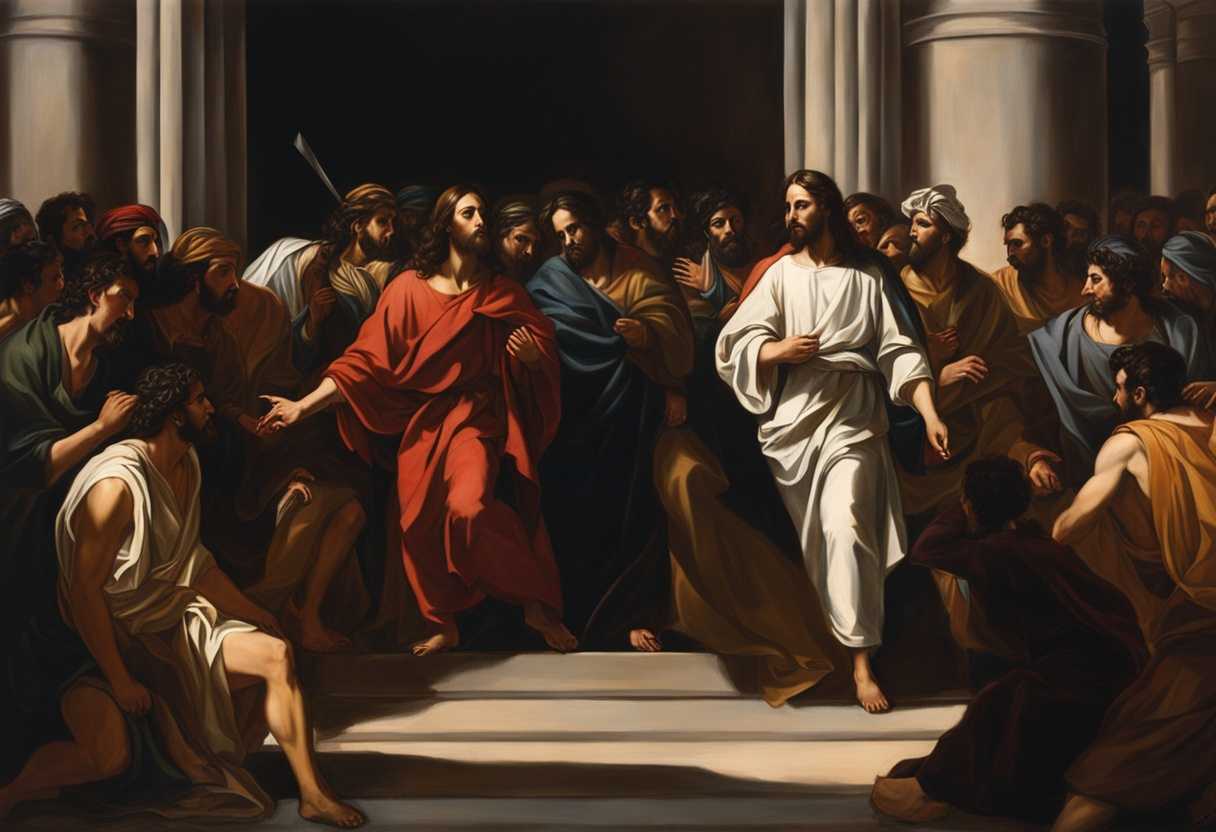
Setting the Scene for John 18:4-9
In John chapter 18, we find Jesus and his disciples in the Garden of Gethsemane. The scene is set late at night, with the moon casting a soft glow on the olive trees surrounding them. Jesus, knowing what is about to unfold, has come here to pray and seek solace from his Father before his impending arrest and crucifixion.
Accompanying Jesus are his closest disciples – Peter, James, and John. They had followed him to the garden after sharing the Passover meal together. The disciples, weary from the events of the evening, struggle to stay awake as Jesus moves a little further into the garden to pray. The atmosphere is heavy with anticipation and a sense of foreboding as Jesus grapples with the weight of what is to come.
Suddenly, the tranquility of the garden is shattered as a detachment of soldiers, along with Judas Iscariot, arrives to arrest Jesus. Judas, betraying Jesus with a kiss, identifies him to the soldiers. In the midst of this betrayal and impending arrest, Jesus displays his divine power by asking the soldiers who they seek. When they respond, “Jesus of Nazareth,” he utters the powerful words, “I am he,” causing the soldiers to fall to the ground. This dramatic scene in the Garden of Gethsemane marks the beginning of Jesus’ journey to the cross.
What is John 18:4-9 about?
Jesus’ profound demonstration of sacrifice and obedience to God’s plan is seen in this verse. Jesus epitomizes humility, obedience, and trust in God’s will by willingly surrendering himself. This act showcases his unwavering commitment to fulfilling the divine purpose for his life, which ultimately leads to his crucifixion for the salvation of humanity. This powerful act not only exemplifies Jesus’ selfless love but also serves as a model for us to follow in our own lives. We reflect on this verse, pondering the depth of Jesus’ sacrifice and considering the implications for our faith. How often do we willingly surrender our own desires and plans to align with God’s will? Do we trust in God’s greater purpose for our lives, even when it may lead us down a difficult path? Jesus’ act of surrender challenges us to examine our own hearts and commit to following God’s plan with unwavering faith and obedience. Let us imitate Jesus’ example of surrender and trust in God’s ultimate authority and protection over our lives and the lives of those around us.
Understanding what John 18:4-9 really means
In the narrative of Jesus’ arrest in the Garden of Gethsemane, the passage in John 18:4-9 reveals profound insights into Jesus’ character and mission. Jesus, fully aware of the impending events, displayed remarkable foreknowledge and unwavering resolve. His question to the arresting party, “Who is it you want?” not only showcased His control over the situation but also exemplified His role as the Good Shepherd, stepping forward to protect His disciples in their moment of vulnerability.
The phrase “Jesus, knowing all that was going to happen to him” underscores His omniscience and divine nature. Despite the imminent suffering, Jesus did not retreat but willingly embraced His fate. His declaration, “I am he,” echoes the divine name “I AM,” affirming His identity as God. Moreover, His directive to “Let these men go” reflects His sacrificial love and protective instincts towards His followers, prioritizing their safety even in the face of danger.
In parallel with John 18:4-9, other biblical passages shed light on Jesus’ sacrificial love and submission to God’s will. John 10:11 portrays Jesus as the Good Shepherd who lays down His life for His sheep, mirroring His actions in the garden. Isaiah 53:7’s prophecy of being led like a lamb to the slaughter aligns with Jesus’ calm acceptance of His arrest. Additionally, Matthew 26:53 emphasizes Jesus’ authority to call upon divine intervention yet His deliberate choice to fulfill God’s plan through His own sacrifice.
The relevance of this passage extends to contemporary believers, urging us to trust in God’s plan, emulate sacrificial love, and exhibit courage and faith in the face of challenges. Just as Jesus trusted in God’s sovereign plan despite the impending suffering, we are called to surrender our lives to His guidance, even amidst trials. Jesus’ selfless protection of His disciples serves as a model for us to love others sacrificially, prioritizing their well-being above our own comfort and safety.
To illustrate this profound message, envision a firefighter knowingly entering a collapsing building to rescue trapped individuals. This act of bravery and selflessness mirrors Jesus’ actions in the garden, where He willingly faced immense suffering to protect His disciples and fulfill His redemptive mission. Such stories of courage and self-sacrifice can inspire us to confront our own challenges with unwavering faith and selflessness, following Jesus’ example of sacrificial love and obedience to God’s will.
In conclusion, the passage in John 18:4-9 encapsulates the essence of Jesus’ divine knowledge, sacrificial love, and protective nature. It beckons us to trust in God’s providence, love others selflessly, and confront adversity with courage and faith, drawing strength from the ultimate example set by Christ in the Garden of Gethsemane.
How can we surrender to God’s will completely?
To surrender to God’s will completely means to submit ourselves entirely to His divine plan and purpose for our lives. This requires a deep trust in God’s wisdom and a willingness to let go of our own desires and personal agendas. We too must be willing to surrender our own will and trust in God’s greater plan, just as Jesus demonstrated in John 18:4-9 when he willingly submitted to the Father’s will by surrendering himself to be arrested and ultimately sacrificed for the salvation of humanity.
Surrendering to God’s will completely involves a daily commitment to seeking His guidance through prayer and meditation on His word. We are able to overcome our own fears and doubts and place our trust in His perfect plan for our lives by aligning our hearts and minds with God’s will. It is a process of continually letting go of our own desires and submitting to God’s wisdom and sovereignty, knowing that His plans are always good and that He works all things for our ultimate good.
Surrendering to God’s will completely also involves a humble attitude of obedience and a willingness to follow wherever He may lead us. It requires us to relinquish control and place our faith in His unfailing love and faithfulness. Surrendering our will to His allows us to experience a deeper sense of peace and fulfillment as we walk in alignment with the purpose for which we were created.
Application
Just like how Jesus fearlessly stood his ground in the face of adversity, let’s boldly proclaim our unwavering faith in Him, no matter what challenges come our way. It’s time to rise up and show the world where our loyalty lies. Will you stand tall with Christ when your faith is put to the test?

Reverend Michael Johnson is an experienced Church Minister with a profound expertise in spirituality and guidance. With a serene presence and a compassionate heart, he has faithfully served his congregation for over 20 years, leading them on a spiritual journey towards inner peace and enlightenment. Reverend Johnson’s extensive knowledge of religious philosophies and profound understanding of human nature have made him a trusted confidant and mentor to many, as he seamlessly weaves his profound wisdom into life teachings. Reverend Johnson’s calming demeanor and empathetic nature continue to uplift and heal souls, nurturing a sense of unity and tranquility within his community.