
John 19:17-20 is about Jesus carrying his own cross to the place of the skull, called Golgotha, where he was crucified alongside two others, fulfilling the depraved wishes of the chief priests and Jewish leaders who orchestrated his crucifixion.
17 and he went out, bearing his own cross, to the place called The Place of a Skull, which in Aramaic is called Golgotha.
18 There they crucified him, and with him two others, one on either side, and Jesus between them.
19 Pilate also wrote an inscription and put it on the cross. It read, “Jesus of Nazareth, the King of the Jews.”
20 Many of the Jews read this inscription, for the place where Jesus was crucified was near the city, and it was written in Aramaic, in Latin, and in Greek.
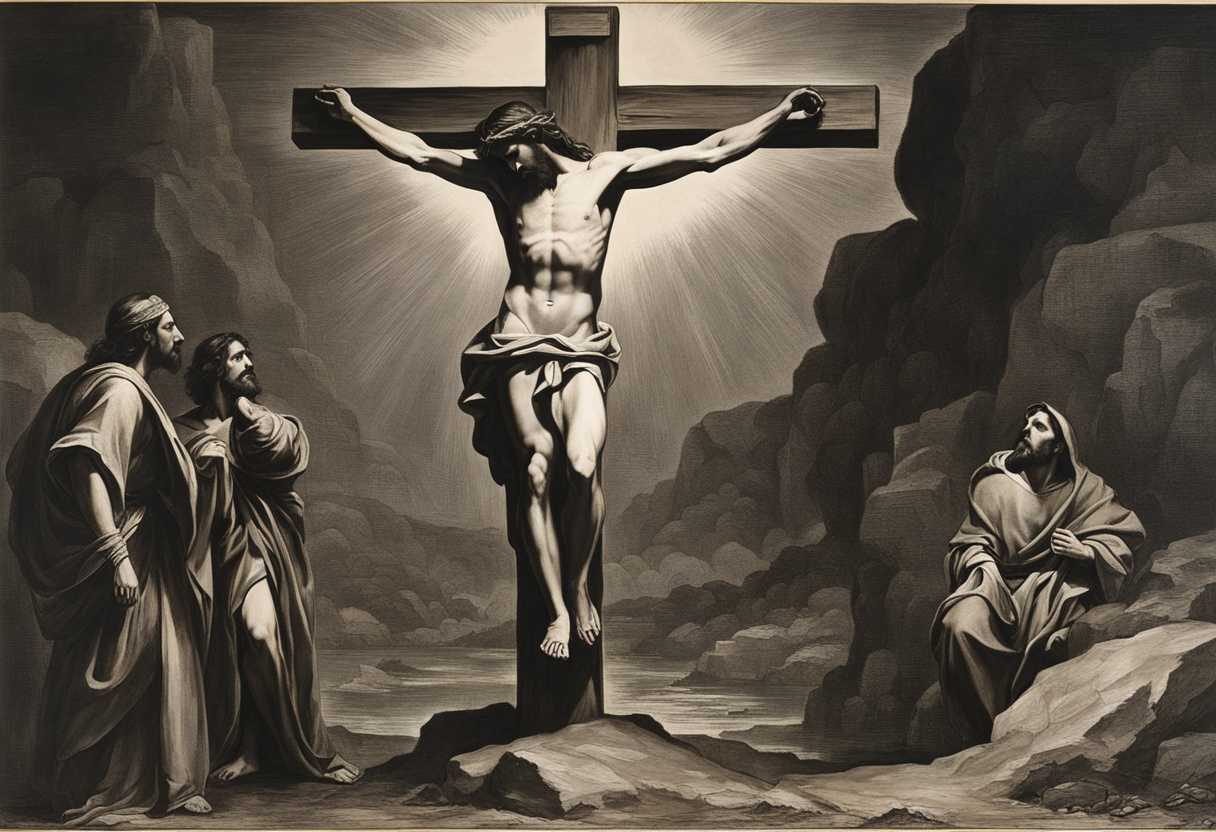
Setting the Scene for John 19:17-20
The scene described in John 19:17-20 takes place on the outskirts of Jerusalem, at a place called Golgotha, also known as the “Place of the Skull.” It is a rocky hill outside the city walls, where executions commonly took place. The sky is dark and ominous, as the events of the crucifixion unfold.
In the scene, we see Jesus carrying his own cross, with Simon of Cyrene assisting him. The soldiers lead the way, and a crowd follows, including Mary, the mother of Jesus, and some of his disciples like John. The atmosphere is heavy with sorrow and tension, as onlookers watch the procession to the place of execution.
At Golgotha, Jesus is crucified between two criminals, as Roman soldiers carry out the orders. The scene is chaotic, with the sound of hammering nails and the cries of those witnessing the crucifixion. The inscription placed above Jesus’ head reads, “Jesus of Nazareth, the King of the Jews,” causing controversy among the religious leaders present. The scene is a powerful and emotional moment in the biblical narrative, depicting the ultimate sacrifice made by Jesus for humanity.
What is John 19:17-20 about?
The verse you provided, about Jesus carrying His cross to Golgotha and being crucified for our sins, encapsulates the core belief of Christianity – that Jesus willingly sacrificed Himself to atone for the sins of humanity. This act of ultimate love and selflessness serves as a profound example of the depths of God’s love for us.
Reflect on the magnitude of Jesus’ journey to Golgotha – the physical pain and suffering, the emotional weight of bearing the sins of the world, and the spiritual significance of His sacrifice. Consider how His death impacts our faith and salvation. How does this selfless act inspire us to love and serve others in our own lives? How can we embody the same sacrificial love and forgiveness that Jesus demonstrated on the cross? Let us remember the incredible gift of grace that Jesus’s sacrifice represents. Let us honor His sacrifice by striving to live in a way that spreads love, compassion, and forgiveness to all those we encounter. And may we never forget the profound impact of Jesus’ journey to Golgotha on our faith and salvation.
Understanding what John 19:17-20 really means
The passage in John 19:17-20 paints a vivid picture of Jesus’ journey to Golgotha, bearing His cross amidst physical and emotional agony. This scene not only showcases the immense suffering Jesus endured but also fulfills Old Testament prophecies, emphasizing the divine plan unfolding. The inscription above Jesus’ head, written in multiple languages, serves as a powerful symbol of the universal significance of His sacrifice, transcending cultural and linguistic barriers to reach all people.
In Isaiah 53:3-5, we find a prophetic description of the suffering servant who would bear the sins of many, a direct parallel to Jesus’ sacrificial death on the cross. Luke 23:34 captures Jesus’ profound compassion and forgiveness, even in the midst of His own suffering, echoing His message of love and mercy. Paul’s words in Philippians 2:8 highlight Jesus’ humility and obedience unto death, exemplifying the ultimate act of selflessness and love.
Today, this passage resonates deeply with believers, reminding us of the sacrificial love that forms the foundation of our faith. It prompts introspection on the sacrifices we are willing to make for others, mirroring Jesus’ example of selfless love. In a world marked by pain and injustice, Jesus’ journey to the cross offers a beacon of hope and a model of unwavering faith and love for us to emulate.
Consider the analogy of a firefighter risking his life to save others—a modern-day reflection of sacrificial love akin to Jesus’ ultimate sacrifice. Just as the firefighter’s bravery inspires and brings hope, Jesus’ crucifixion offers eternal hope and redemption to all who believe in Him.
The phrase “carrying his own cross” symbolizes not only the weight of sin and suffering Jesus bore but also calls Christians to take up their crosses and follow Him, embracing self-denial and obedience. The significance of Golgotha, known as the place of the Skull, underscores the paradox of death giving way to victory over sin and death through Christ’s sacrifice. The inscription declaring Jesus as the King of the Jews in multiple languages emphasizes His universal kingship and the inclusive nature of His redemptive work for all humanity.
By delving into these aspects, we deepen our appreciation for the profound love and sacrifice Jesus demonstrated on the cross, recognizing its enduring impact on our lives and the transformative power it holds for all who believe.
How can we carry our cross for Christ daily?
To carry our cross for Christ daily means to embrace the challenges, suffering, and sacrifices that come with living a life of faith and obedience to Him. We are called to bear our burdens, trials, and hardships with humility, courage, and perseverance, just as Jesus carried His cross to Golgotha. It requires a willingness to deny ourselves, take up our cross, and follow Christ, even when it is difficult or costly.
Carrying our cross for Christ daily also involves a daily surrendering of our will, desires, and ambitions to Him. It means prioritizing His kingdom and righteousness above our own comfort, convenience, and preferences. It requires a constant commitment to do God’s will, walk in His ways, and remain faithful to Him regardless of the circumstances we face. We demonstrate our love for Jesus and our trust in His plan and purpose for our lives by taking up our cross daily.
Furthermore, carrying our cross for Christ daily involves a radical way of living that is centered on selflessness, love, and service to others. It means being willing to sacrifice our own needs and wants for the sake of others, just as Jesus did for us on the cross. We can bring glory to God and be a light to the world by following in His footsteps and imitating His example of sacrificial love, showing His transformative power and grace in our lives.
Application
Let’s dive into John 19:17-20, where Jesus carried his cross to Golgotha, a powerful reminder of sacrifice and love. This moment urges us to think about how we can display these virtues in our daily lives. Let’s not just ponder on this part but let it ignite a fire within us, inspiring us to spread love and kindness in our work and family circles. Will you take up the challenge to embody Christ’s love and make a difference in the world around you?

Reverend Michael Johnson is an experienced Church Minister with a profound expertise in spirituality and guidance. With a serene presence and a compassionate heart, he has faithfully served his congregation for over 20 years, leading them on a spiritual journey towards inner peace and enlightenment. Reverend Johnson’s extensive knowledge of religious philosophies and profound understanding of human nature have made him a trusted confidant and mentor to many, as he seamlessly weaves his profound wisdom into life teachings. Reverend Johnson’s calming demeanor and empathetic nature continue to uplift and heal souls, nurturing a sense of unity and tranquility within his community.