
John 19:23 is about the soldiers dividing Jesus’ garments among themselves and casting lots for his seamless tunic, illustrating the fulfillment of Old Testament prophecies and highlighting Jesus’ sacrificial offering for humanity’s sins.
23 When the soldiers had crucified Jesus, they took his garments and divided them into four parts, one part for each soldier; also his tunic. But the tunic was seamless, woven in one piece from top to bottom.
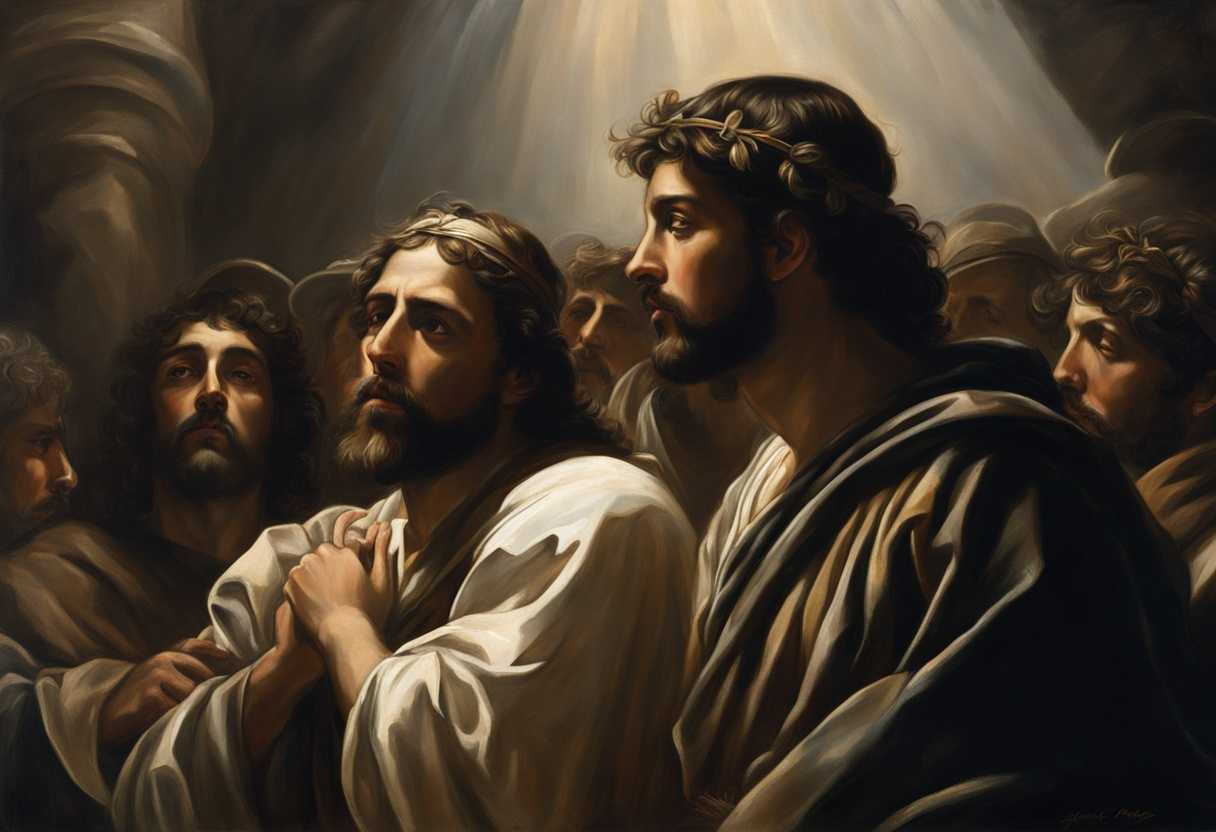
Setting the Scene for John 19:23
In John chapter 19, we find ourselves at the scene of Jesus’ crucifixion at Golgotha, also known as Calvary. The place is crowded with onlookers, soldiers, and religious leaders. Jesus is hanging on the cross, with two criminals crucified on either side of him. The atmosphere is heavy with sorrow and tension as the events unfold.
Among the crowd are Mary, the mother of Jesus, and some of Jesus’ disciples, including John, the beloved disciple. They are standing at the foot of the cross, witnessing the agonizing death of their beloved teacher and friend. Mary is heartbroken, her eyes filled with tears, as she watches her son suffer.
The soldiers are busy dividing Jesus’ garments among themselves, casting lots for his seamless tunic. The sound of hammering nails and the groans of the crucified men fill the air. The sky is darkened, adding to the somber mood of the scene. It is a moment of profound significance, as Jesus willingly lays down his life for the salvation of humanity.
What is John 19:23 about?
Soldiers casting lots for Jesus’ clothes is described in this verse. This action is significant because it fulfills a prophecy from the book of Psalms. Psalm 22:18 specifically predicts this event, indicating that even in the midst of Jesus’ suffering on the cross, there is a deeper spiritual significance at play. The act of dividing Jesus’ clothes symbolizes a violation of his dignity and further highlights the cruelty and mockery he endured during his crucifixion. This verse reminds us of the intricate ways in which prophecy and fulfillment are interwoven in the biblical narrative as we reflect on it. It prompts us to consider the intentional and predetermined nature of Jesus’ journey to the cross, as foretold by the prophets centuries before. We are invited to delve deeper into the layers of meaning behind Jesus’ crucifixion, highlighting the profound sacrifice he made for the redemption of humanity. It challenges us to contemplate the significance of these seemingly small details in the grand story of salvation and to appreciate the divine orchestration behind every moment of Jesus’ final hours.
Understanding what John 19:23 really means
In the Gospel of John, amidst the solemn scene of Jesus’ crucifixion, we encounter a seemingly mundane act with profound implications. The soldiers, callously indifferent to the suffering before them, divide Jesus’ garments among themselves. This division fulfills the ancient prophecy in Psalm 22:18, underscoring the meticulous fulfillment of Scripture even in the darkest hour. The act of dividing His garments symbolizes the stark contrast between the soldiers’ materialistic focus and the spiritual significance of Jesus’ sacrifice.
The mention of Jesus’ seamless tunic holds particular significance. Its seamless nature symbolizes not only the unity and perfection of Jesus but also His role as the High Priest, as Hebrews 4:14-16 portrays. This detail invites us to contemplate the completeness and wholeness found in Christ, contrasting sharply with the fragmented and materialistic mindset of the soldiers. It prompts us to reflect on the unity and perfection we should strive for in our spiritual lives, mirroring the seamless garment of our High Priest.
The parallel accounts in Matthew 27:35 and Mark 15:24 reinforce the significance of this event, emphasizing the fulfillment of prophecy and the meticulous orchestration of God’s plan. These passages serve as a reminder of the continuity and reliability of Scripture, reassuring believers of the sovereign hand guiding history. The soldiers’ actions, driven by greed and indifference, starkly contrast with the divine purpose unfolding through the fulfillment of prophecy.
In our contemporary context, this verse challenges us to confront the tension between materialism and spirituality. Just as the soldiers prioritized material gain over the sacred, we are prompted to examine our own hearts and consider where our priorities lie. Are we, like the soldiers, consumed by the pursuit of worldly possessions, or do we seek the unity and perfection found in Christ? This reflection invites us to realign our focus, prioritizing spiritual truths over fleeting material wealth.
Consider a poignant illustration: a family heirloom, a quilt symbolizing unity and heritage, torn apart in a dispute over shares. This image mirrors the soldiers’ actions, reminding us of the ease with which we can lose sight of what truly matters. Just as the value of the quilt lies in its wholeness and history, so too does the seamless tunic of Jesus symbolize the unity and perfection we should strive for in our spiritual lives. This analogy underscores the importance of unity, heritage, and spiritual wholeness in our journey of faith.
In conclusion, John 19:23, though seemingly a minor detail in the crucifixion narrative, carries profound implications for believers today. It challenges us to transcend materialistic pursuits, embrace the reliability of God’s Word, and seek unity and perfection in Christ. As we reflect on the soldiers’ actions, may we be reminded of the enduring truths encapsulated in this verse and be inspired to live lives marked by faith, unity, and spiritual wholeness.
What does it mean to cast lots for clothing?
Casting lots for clothing refers to the practice of using chance or random selection to determine who would receive certain items, in this case, the clothing of a condemned man. Soldiers would cast lots by throwing dice or using some other method to divide up the spoils of the executed criminal, such as his clothes. The soldiers did this to fulfill the prophecy that stated no bones of the Messiah would be broken, so they decided to cast lots for his garments instead.
This act of casting lots for clothing from the crucified man demonstrates the callousness and lack of compassion shown by the soldiers. Instead of recognizing the humanity of Jesus and showing respect for his body even in death, they treated him as if he were just another criminal being executed. The soldiers’ actions also fulfill the scriptural prophecy, showing how every detail of Jesus’ suffering and death had been foretold and was ultimately part of God’s plan for salvation.
This event serves as a powerful reminder of the depth of Christ’s sacrifice and the indifference of those who mocked and crucified him. It also highlights the fulfillment of prophecies regarding Jesus’ crucifixion, underscoring the divine orchestration of events that lead to the ultimate sacrifice for the redemption of humanity.
Application
Think about the time soldiers cast lots for Jesus’ clothes. It’s like workers at a busy office trying to divide up the last cup of coffee. This moment shows us the immense sacrifice made just for you. How will you take this incredible act of love and apply it to your work, family, or personal life? Who will you forgive today? How will you show gratitude?

Reverend Michael Johnson is an experienced Church Minister with a profound expertise in spirituality and guidance. With a serene presence and a compassionate heart, he has faithfully served his congregation for over 20 years, leading them on a spiritual journey towards inner peace and enlightenment. Reverend Johnson’s extensive knowledge of religious philosophies and profound understanding of human nature have made him a trusted confidant and mentor to many, as he seamlessly weaves his profound wisdom into life teachings. Reverend Johnson’s calming demeanor and empathetic nature continue to uplift and heal souls, nurturing a sense of unity and tranquility within his community.