
John 19:28-42 is about the fulfillment of scripture and the completion of Jesus’ earthly mission through his crucifixion, burial, and the symbolic act of Joseph of Arimathea and Nicodemus laying his body in the tomb, setting the stage for the resurrection and triumph over death.
28 After this, Jesus, knowing that all was now finished, said (to fulfill the Scripture), “I thirst.”
29 A jar full of sour wine stood there, so they put a sponge full of the sour wine on a hyssop branch and held it to his mouth.
30 When Jesus had received the sour wine, he said, “It is finished,” and he bowed his head and gave up his spirit.
31 Since it was the day of Preparation, and so that the bodies would not remain on the cross on the Sabbath (for that Sabbath was a high day), the Jews asked Pilate that their legs might be broken and that they might be taken away.
32 So the soldiers came and broke the legs of the first, and of the other who had been crucified with him.
33 But when they came to Jesus and saw that he was already dead, they did not break his legs.
34 But one of the soldiers pierced his side with a spear, and at once there came out blood and water.
35 He who saw it has borne witness—his testimony is true, and he knows that he is telling the truth—that you also may believe.
36 For these things took place that the Scripture might be fulfilled: “Not one of his bones will be broken.”
37 And again another Scripture says, “They will look on him whom they have pierced.”
38 After these things Joseph of Arimathea, who was a disciple of Jesus, but secretly for fear of the Jews, asked Pilate that he might take away the body of Jesus, and Pilate gave him permission. So he came and took away his body.
39 Nicodemus also, who earlier had come to Jesus by night, came bringing a mixture of myrrh and aloes, about seventy-five pounds in weight.
40 So they took the body of Jesus and bound it in linen cloths with the spices, as is the burial custom of the Jews.
41 Now in the place where he was crucified there was a garden, and in the garden a new tomb in which no one had yet been laid.
42 So because of the Jewish day of Preparation, since the tomb was close at hand, they laid Jesus there.
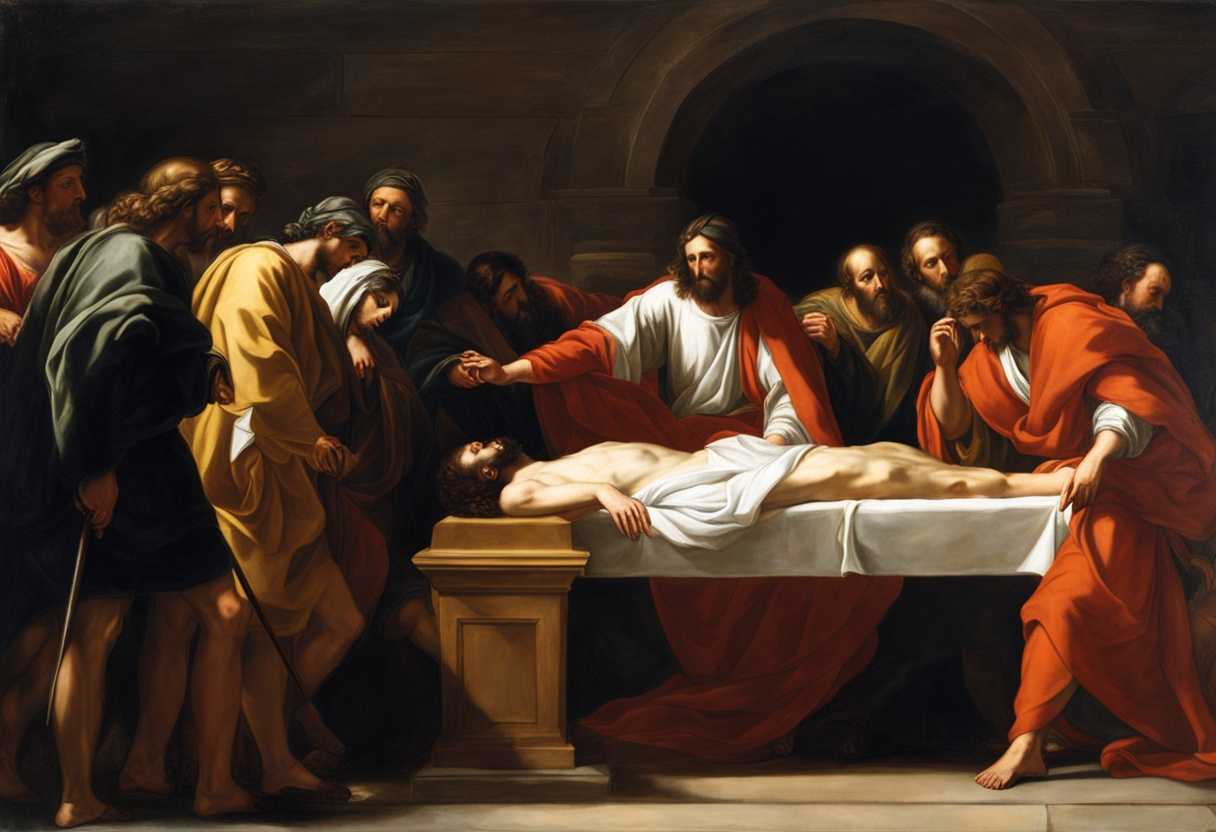
Setting the Scene for John 19:28-42
The scene in John chapter 19:28-42 takes place at Golgotha, the place of the Skull, where Jesus was crucified. The main characters in this scene are Jesus’ mother, Mary, Mary Magdalene, and the disciple whom Jesus loved, traditionally believed to be John. They are standing near the cross, witnessing the crucifixion of Jesus. The atmosphere is heavy with sorrow and anguish as they watch their beloved teacher and friend suffer.
The soldiers are also present, carrying out their duties, and the crowd of onlookers is murmuring and watching the events unfold. The sky is darkened, and there is a sense of foreboding as Jesus utters his last words before giving up his spirit. The scene is filled with emotion, as Mary weeps for her son and the disciples grapple with the reality of what is happening before their eyes.
As Jesus breathes his last, Joseph of Arimathea and Nicodemus arrive on the scene to take down his body from the cross and prepare it for burial. They wrap his body in linen cloths and place it in a tomb nearby, fulfilling the prophecy that he would be buried in a rich man’s tomb. The scene is a poignant moment of grief and reverence as Jesus is laid to rest, but it also foreshadows the hope of his resurrection to come.
What is John 19:28-42 about?
This verse encapsulates a pivotal moment in the Christian faith – the death and burial of Jesus Christ. It highlights the fulfillment of ancient prophecies that foretold His sacrificial death as a means of salvation for humanity. The symbolism of Jesus being buried in a tomb reinforces the finality of His earthly life, setting the stage for the miraculous resurrection that would follow. This sequence of events is central to Christian belief and serves as a profound demonstration of God’s love and redemptive plan for mankind.
Imagine the emotions of those who witnessed these events firsthand – the sorrow of seeing their beloved teacher and savior crucified, the despair of laying His lifeless body in a tomb. Yet, within this apparent tragedy lies the ultimate triumph of the resurrection, marking the victory over sin and death. The death and burial of Jesus serve as a powerful reminder of the depth of God’s love and the transformative power of faith. We reflect on this verse, contemplating the profound sacrifice of Jesus and the hope that His resurrection brings to all who believe in Him.
Understanding what John 19:28-42 really means
In the poignant account of John 19:28-42, we witness the culmination of Jesus’ earthly journey – His crucifixion, death, and burial. These final moments hold profound significance, underscoring the fulfillment of ancient prophecies, the humanity of Christ, and the profound impact of His sacrificial love. As we delve into the key phrases of this passage, we encounter layers of meaning that illuminate the depth of Jesus’ mission and the richness of His identity. When Jesus utters, “I am thirsty,” we are confronted with His tangible humanity, fulfilling the prophetic words of Psalm 69:21 and emphasizing His shared experience of physical need and suffering with humanity.
Moreover, the resounding declaration, “It is finished,” reverberates with profound implications, signifying the completion of Jesus’ redemptive work. This statement not only marks the fulfillment of Old Testament prophecies but also heralds the end of the sacrificial system, as Jesus becomes the ultimate and final sacrifice for sin. The piercing of Jesus’ side, resulting in the flow of blood and water, serves as a symbolic moment rich in theological significance. This act not only points to the sacraments of the Eucharist and Baptism but also underscores the full humanity and divinity of Christ, encapsulating the essence of His sacrificial offering.
Drawing connections to related biblical passages, such as Psalm 22:15, Isaiah 53:5, and John 3:16, we witness the intricate tapestry of prophecy, suffering, and redemption woven throughout Scripture. These verses converge to illuminate the purpose and profound impact of Jesus’ sacrificial death, emphasizing the transformative power of His love and the eternal significance of His atoning work. In contemplating the relevance of these events to contemporary believers, we are invited to embrace the humanity of Jesus, finding solace in the fact that He understands our struggles and empathizes with our pain.
Furthermore, the completion of Jesus’ mission on the cross offers reassurance and hope to all who seek redemption and restoration. The symbolism of blood and water serves as a poignant reminder of the new covenant established through Christ’s sacrifice, inviting us to partake in the sacramental life and experience the transformative power of His grace. As we reflect on the profound implications of Jesus’ final moments, we are reminded of the depth of God’s love for humanity and the enduring promise of salvation through faith in Christ.
In a world marked by brokenness and uncertainty, the message of John 19:28-42 stands as a beacon of hope and redemption, inviting us to embrace the transformative power of Jesus’ sacrifice. Just as the words, “It is finished,” brought assurance and completion to His earthly mission, so too can they bring comfort and peace to all who seek forgiveness and restoration. May we, like the individual burdened by guilt and inadequacy, find solace in the finished work of Christ, knowing that His love is unconditional, His grace is boundless, and His sacrifice is eternally sufficient. The passage from John 19:28-42 serves as a powerful testament to the depth of God’s love and the redemptive power of Christ’s sacrifice, offering hope and salvation to all who believe.
How can we fulfill our destiny and purpose in life?
To fulfill our destiny and purpose in life, we must first trust in the divine plan set forth for us. We too must embrace the challenges and trials that come our way with faith and courage, just as Jesus fulfilled his purpose on earth by accepting his crucifixion for the redemption of mankind. Understanding that there is a greater purpose behind our struggles can help propel us towards fulfilling our destiny.
Additionally, we can seek guidance and strength through prayer and reflection. We can navigate the obstacles in life with grace and integrity by connecting with a higher power and aligning our actions with values of love, compassion, and service to others. Through prayer and meditation, we can gain clarity on our path and discern the steps needed to fulfill our purpose.
Lastly, we can look to Jesus as a role model for perseverance and sacrifice. We can stay committed to our purpose even in the face of adversity by following his example of selflessness and unwavering faith. Embracing humility, forgiveness, and love can help us fulfill our destiny and make a positive impact in the world around us.
Application
Think of Jesus’ sacrifice on the cross like clocking in extra hours at work just to support your family. In His final moments, He showed deep love and fulfilled a greater purpose. Don’t just remember this—honor it in your life. Spread love and compassion in your daily interactions, like sharing a smile during a busy commute or helping a colleague under pressure. Are you ready to live out His message of love and redemption every day?

Reverend Michael Johnson is an experienced Church Minister with a profound expertise in spirituality and guidance. With a serene presence and a compassionate heart, he has faithfully served his congregation for over 20 years, leading them on a spiritual journey towards inner peace and enlightenment. Reverend Johnson’s extensive knowledge of religious philosophies and profound understanding of human nature have made him a trusted confidant and mentor to many, as he seamlessly weaves his profound wisdom into life teachings. Reverend Johnson’s calming demeanor and empathetic nature continue to uplift and heal souls, nurturing a sense of unity and tranquility within his community.