
John 19:8 is about Pilate realizing the magnitude of Jesus’ divine nature and authority, leading him to be more afraid and desperate to release him.
8 When Pilate heard this statement, he was even more afraid.
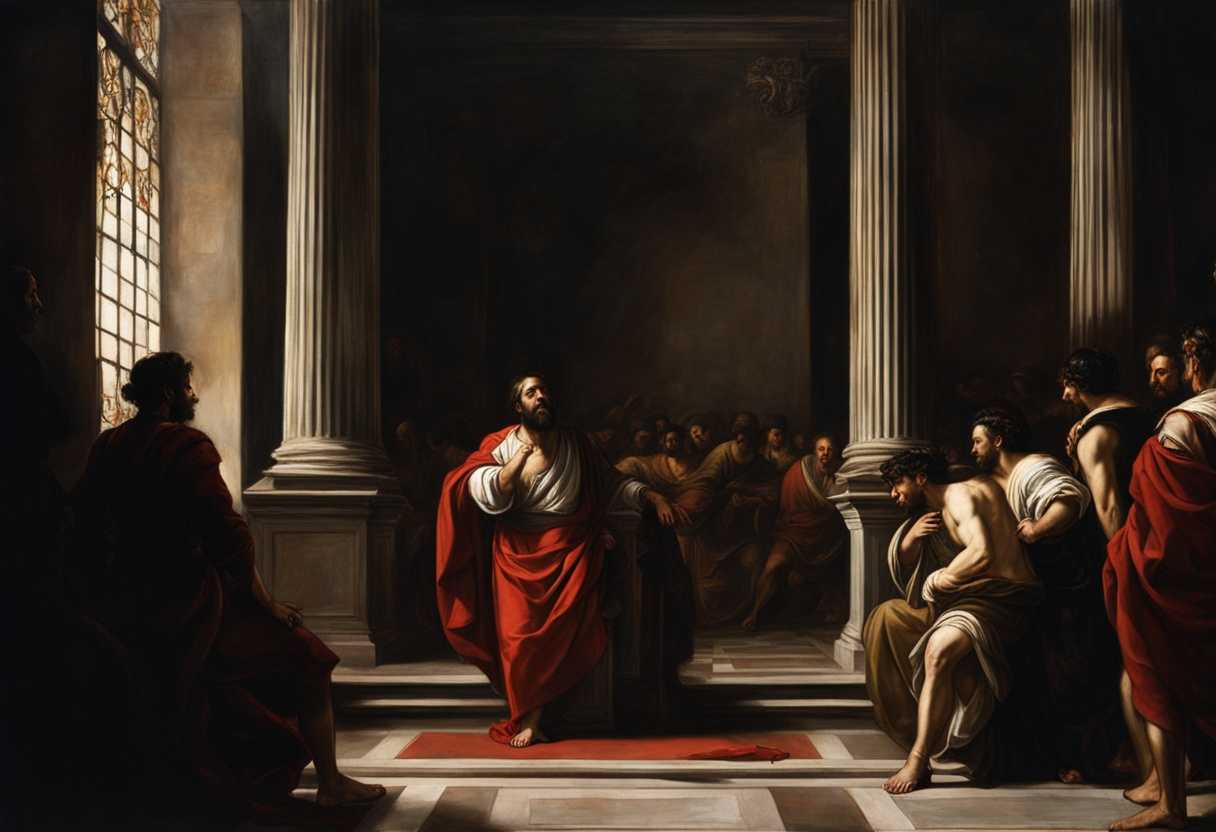
Setting the Scene for John 19:8
In John chapter 19, we find Pontius Pilate, the Roman governor of Judea, standing in front of a crowd with Jesus, who has been brought before him by the religious leaders. The scene is tense, with the Jewish leaders accusing Jesus of claiming to be the Son of God and seeking his execution. Pilate, unsure of what to do with Jesus, questions him further inside the Praetorium, while outside, the crowd grows restless.
The crowd gathered outside the Praetorium is a mix of Jewish religious leaders, Roman soldiers, and curious onlookers. Some are shouting for Jesus to be crucified, while others are questioning the accusations brought against him. The atmosphere is charged with emotion and political tension, as Pilate tries to navigate the situation and find a way to satisfy the crowd without condemning an innocent man.
As the conversation between Pilate and Jesus unfolds, the weight of the decision Pilate must make hangs heavy in the air. The Praetorium itself is a grand Roman building, a symbol of imperial power and authority, contrasting sharply with the humility and meekness of Jesus standing before Pilate. The clash of these two worlds, the divine and the earthly, sets the stage for a pivotal moment in the story of Jesus’ crucifixion.
What is John 19:8 about?
When Pilate heard these words, he was already wrestling with the weight of the situation before him. The pressure of making a decision regarding Jesus was already heavy on his shoulders, and the claims made about Jesus being the Son of God only added to his fear and uncertainty. This verse captures a pivotal moment in the trial of Jesus, where Pilate’s inner conflict and struggle become evident.
Imagine being in Pilate’s shoes, torn between his own judgment and the demands of the crowd. How would you feel if faced with such a monumental decision with so much at stake? Pilate’s fear here illustrates the intense internal turmoil he was experiencing, grappling with the truth of Jesus’ identity and the consequences of his actions. This verse challenges us to reflect on our own response when faced with difficult decisions or moments of truth in our lives. How do we navigate fear and uncertainty, and what do we ultimately choose to believe and act upon in those crucial moments?
Understanding what John 19:8 really means
In the midst of Jesus’ trial before Pontius Pilate, a pivotal moment unfolds in John 19:8. Pilate, the Roman governor, finds himself increasingly troubled by the situation and the claims surrounding Jesus’ identity. This hesitation and fear in Pilate’s demeanor offer a window into the gravity of the moment, where the clash between political expediency and moral truth becomes starkly apparent.
In exploring related passages, we encounter Matthew 27:19, where Pilate’s wife warns him about Jesus in a troubling dream, emphasizing the righteousness of this accused man. Jesus’ own words in John 18:37 echo with purpose as he speaks of bearing witness to the truth, setting the stage for the unfolding events. Acts 4:27-28 further illuminates the collusion against Jesus, underscoring the fulfillment of God’s overarching plan through human actions.
The relevance of Pilate’s dilemma extends to contemporary society, where individuals often grapple with moral quandaries akin to his. Fear and responsibility intertwine in the human experience, mirroring Pilate’s internal turmoil as he navigates the weight of his decisions. The divine purpose interwoven within the narrative reminds us that even amidst uncertainty and trepidation, God’s providence continues to unfold.
Consider a modern parallel to Pilate’s predicament: a CEO facing a decision with ethical implications, torn between profit and environmental impact. This anecdote underscores the enduring nature of moral dilemmas and the universal struggle with fear and consequence in decision-making processes. The timeless essence of Pilate’s struggle resonates in contemporary ethical quandaries, prompting reflection on the complexities of human choices.
Delving into the phrase “He was even more afraid,” we glimpse the depth of Pilate’s turmoil, transcending mere political caution to reveal a profound spiritual and moral conflict. The trigger for Pilate’s escalating fear, as indicated by “When Pilate heard this,” underscores the transformative power of new information, challenging preconceptions and prompting introspection.
In conclusion, John 19:8 beckons readers to introspection, urging contemplation of personal moments of fear and moral decision-making. Through Pilate’s narrative, we glean insights into the intersection of divine purpose with human agency, even amidst fear and uncertainty. By examining Pilate’s struggle, we are prompted to seek truth and righteousness in our own lives, even when faced with daunting choices.
What choice will you make in difficult times?
I will choose to stand firm in my beliefs and values, even if it means facing opposition or criticism from others in difficult times. I will not compromise my principles or integrity, but instead trust in God’s guidance and have the courage to do what is right. I will find strength and resilience to overcome challenges and remain steadfast in my commitment to following God’s will by staying true to my faith and convictions.
I will also strive to show compassion and forgiveness towards those who may wrong me or cause me harm. I will choose to respond with grace and kindness, knowing that true peace and healing come from letting go of resentment and extending forgiveness, just as Jesus demonstrated love and mercy, even in the face of betrayal and suffering. I will seek to bring about reconciliation and understanding, even in the midst of turmoil and adversity, by emulating Christ’s example of humility and compassion. I will ultimately put my trust in God’s plan and purpose for my life, knowing that He is in control and will never forsake me. I will lean on His promises and seek His wisdom in navigating difficult circumstances, knowing that through faith and perseverance, I can overcome any trial or tribulation that comes my way. With God as my strength and refuge, I will choose to walk in faith and obedience, trusting in His unfailing love and grace to see me through even the darkest of times.
Application
Reflect on your work and family life—are you easily swayed by others or do you stand firm? When faced with tough decisions, do you let your values guide you? Stand unshakable in your faith and commitments, just like you would protect your loved ones. Will you choose to stay true to what’s right, even if you’re standing alone?

Reverend Michael Johnson is an experienced Church Minister with a profound expertise in spirituality and guidance. With a serene presence and a compassionate heart, he has faithfully served his congregation for over 20 years, leading them on a spiritual journey towards inner peace and enlightenment. Reverend Johnson’s extensive knowledge of religious philosophies and profound understanding of human nature have made him a trusted confidant and mentor to many, as he seamlessly weaves his profound wisdom into life teachings. Reverend Johnson’s calming demeanor and empathetic nature continue to uplift and heal souls, nurturing a sense of unity and tranquility within his community.