
John 1:19-20 is about the Jewish religious leaders questioning John the Baptist, asking if he is the Messiah, to which John responds by denying it and instead pointing to someone greater who is to come.
19 And this is the testimony of John, when the Jews sent priests and Levites from Jerusalem to ask him, “Who are you?”
20 He confessed, and did not deny, but confessed, “I am not the Christ.”
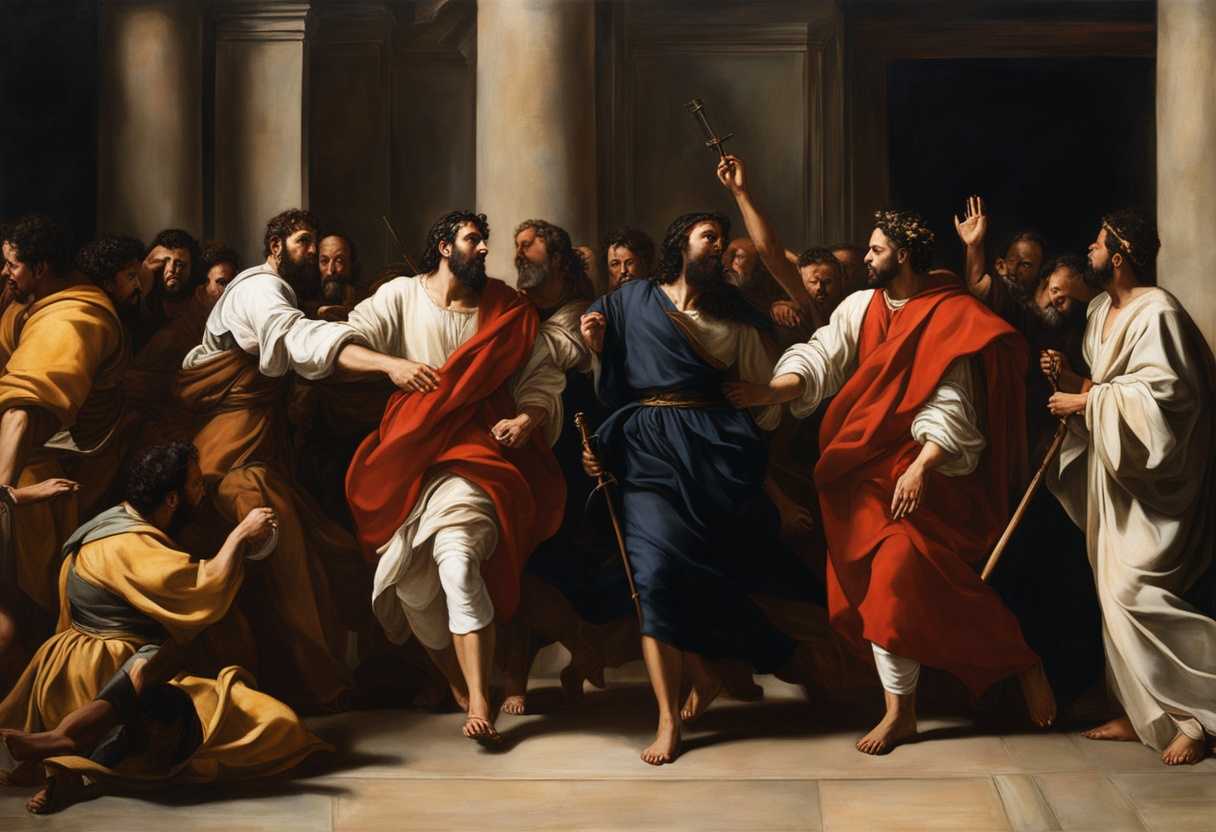
Setting the Scene for John 1:19-20
In John chapter 1, we find the scene set in the wilderness of Judea, where John the Baptist is preaching and baptizing people in the Jordan River. The atmosphere is charged with anticipation as crowds gather to hear this charismatic preacher who is proclaiming the coming of the Messiah. John’s message is one of repentance and preparation for the arrival of the long-awaited Savior.
Among the crowd are religious leaders and priests from Jerusalem who have come to investigate this unconventional figure who is causing a stir with his teachings and baptisms. They approach John with a sense of curiosity and perhaps skepticism, questioning him about his identity and purpose. John’s responses are bold and unapologetic, as he declares that he is not the Messiah but rather the voice crying out in the wilderness, preparing the way for the one who is to come.
As the sun beats down on the dusty wilderness, the tension in the air is palpable as John the Baptist stands firm in his mission, pointing towards the greater one who will follow him. The stage is set for the unfolding drama of the ministry of Jesus Christ, as John’s words echo through the wilderness, heralding the dawn of a new era in salvation history.
What is John 1:19-20 about?
John the Baptist demonstrates humility and selflessness in this verse as he denies being the Messiah and instead directs attention to Jesus as the Lamb of God. This act of humility serves as a powerful example for all of us, reminding us that it is not about seeking glory or recognition for ourselves, but rather about pointing others towards the ultimate source of salvation and grace. We are challenged to reflect on this verse, examine our own lives, and consider whether we are more focused on our own ambitions and desires, or if we are truly willing to humble ourselves and lift up others. John the Baptist’s actions demonstrate the importance of putting the needs and the glory of others above our own, just as Jesus did throughout his ministry.
So, let us be inspired by John the Baptist’s example, choosing to follow in his footsteps by acknowledging and exalting Jesus as the Lamb of God in our own lives. May we, like John, set aside our own pride and ambitions, so that we may point others towards the true source of life and salvation.
Understanding what John 1:19-20 really means
In the Gospel of John, we encounter a pivotal moment where John the Baptist is questioned by Jewish leaders about his identity and mission. These verses provide insight into John’s humility and his crucial role in pointing to Christ, setting the stage for the unfolding narrative of the Gospel. The testimony of John serves as a beacon, highlighting the significance of bearing witness and testifying to the truth of the coming Messiah. His unwavering commitment to his purpose is a model for all believers to follow.
John’s repeated confession, “I am not the Christ,” underscores his humility and self-awareness. Despite his prominent position as the forerunner of Jesus, he makes it clear that he is not the Savior but merely a messenger preparing the way. This humility is a stark contrast to the self-promotion often seen in today’s world, where individuals strive for personal glory. John’s example challenges us to embrace our roles with humility and clarity of purpose, focusing not on ourselves but on magnifying the name of Christ.
The prophecy from Isaiah 40:3, fulfilled in John the Baptist, emphasizes the importance of preparing the way for the Lord. Just as John paved the path for Jesus, believers today are called to prepare hearts for the coming of Christ in their lives and in the world. John’s words in John 3:28-30 and Matthew 3:11 echo through the ages, reminding us that Christ must increase while we decrease. This echoes the essence of humility and surrender to God’s greater plan.
In a society that often values self-promotion and individual achievement, John’s example stands out as a beacon of humility and purpose. His unwavering commitment to his role as a witness to Christ challenges us to consider how we use our platforms and influence. Just as John directed attention away from himself towards Jesus, we are called to bear witness to the truth and point others to the Savior.
Imagine a world where public figures use their influence not for personal gain but to uplift and highlight the importance of others. This modern-day scenario mirrors John the Baptist’s approach, where he leveraged his following to draw attention to the true Savior. By reflecting on John’s testimony, believers can glean valuable lessons on humility, purpose, and the profound impact of bearing witness to Christ. May we, like John, embrace our roles with humility and clarity, directing others towards the ultimate source of hope and salvation.
Are we humble enough to point others to Christ?
The passage from John 1:19-20 emphasizes the humility demonstrated by John the Baptist when questioned about his identity. Instead of pointing to himself or elevating his own status, John directed attention away from himself and toward the coming Messiah, Jesus Christ. This act of humility is a powerful example for us as believers to follow in our own lives. In today’s world, we easily fall into the trap of seeking recognition or validation for ourselves. However, like John the Baptist, we are called to instead point others to Jesus Christ. We demonstrate a genuine faith that seeks to uplift and glorify Him above all else by humbly redirecting the focus onto Christ and His message of salvation. True humility ultimately involves recognizing our own limitations and shortcomings, while exalting Christ as the ultimate source of hope and salvation. When we choose to point others to Jesus with humility and sincerity, we embody the essence of a servant-hearted follower of Christ.
Application
Friends, look at John’s humility in John 1:19-20. He knew he wasn’t the star, just like sometimes we’re not the lead at work or home. Let’s stop chasing titles and instead focus on true service. How will you set aside ego and elevate the true meaning of your actions today?

Reverend Michael Johnson is an experienced Church Minister with a profound expertise in spirituality and guidance. With a serene presence and a compassionate heart, he has faithfully served his congregation for over 20 years, leading them on a spiritual journey towards inner peace and enlightenment. Reverend Johnson’s extensive knowledge of religious philosophies and profound understanding of human nature have made him a trusted confidant and mentor to many, as he seamlessly weaves his profound wisdom into life teachings. Reverend Johnson’s calming demeanor and empathetic nature continue to uplift and heal souls, nurturing a sense of unity and tranquility within his community.