
John 1:19-23 is about the humility of John the Baptist, who recognizes and admits that he is not the Messiah but rather the one preparing the way for the coming of the Lord.
19 And this is the testimony of John, when the Jews sent priests and Levites from Jerusalem to ask him, “Who are you?”
20 He confessed, and did not deny, but confessed, “I am not the Christ.”
21 And they asked him, “What then? Are you Elijah?” He said, “I am not.” “Are you the Prophet?” And he answered, “No.”
22 So they said to him, “Who are you? We need to give an answer to those who sent us. What do you say about yourself?”
23 He said, “I am the voice of one crying out in the wilderness, ‘Make straight the way of the Lord,’ as the prophet Isaiah said.”
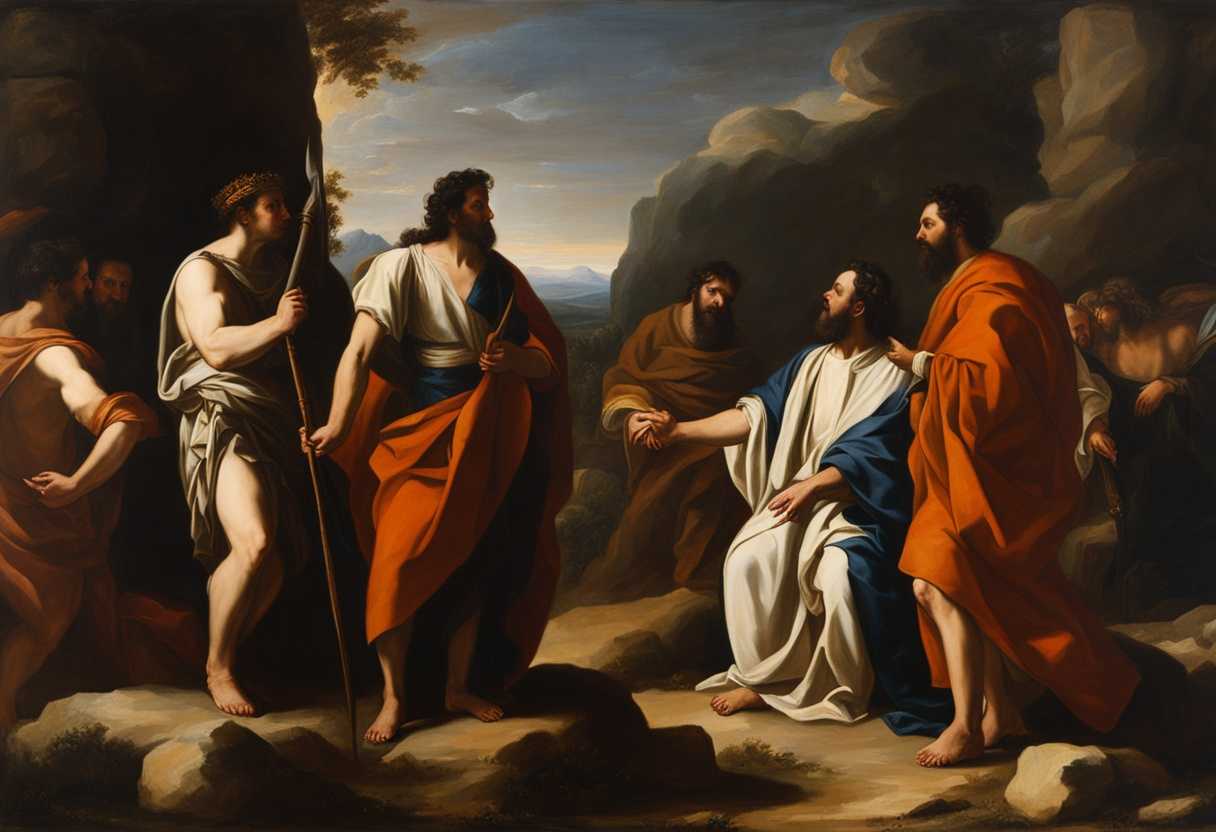
Setting the Scene for John 1:19-23
In John chapter 1, we find the scene set in the wilderness of Judea, where a group of priests and Levites are sent from Jerusalem to question John the Baptist. The priests and Levites were likely sent by the Pharisees to inquire about John’s identity and purpose, as he had been causing quite a stir with his preaching and baptizing in the Jordan River.
John the Baptist, a rugged and charismatic figure dressed in camel’s hair with a leather belt around his waist, stands confidently as the religious leaders approach him. His message is one of repentance and preparation for the coming of the Messiah. When asked if he is the Christ, Elijah, or the Prophet, John humbly declares that he is not, but rather the voice crying out in the wilderness, preparing the way for the Lord.
The wilderness setting adds a sense of mystery and anticipation to the encounter, as John the Baptist boldly proclaims his role in fulfilling the prophecy of Isaiah. The tension is palpable as the religious authorities press him for answers, setting the stage for the revelation of Jesus as the long-awaited Messiah.
What is John 1:19-23 about?
John the Baptist denies being the Messiah himself in this verse, humbly redirecting attention to Jesus as the Lamb of God. John recognized his role as the one preparing the way for Jesus, the promised Savior. John emphasizes Jesus’ sacrificial role in atoning for the sins of the world by acknowledging Jesus as the Lamb of God. Through his words, John not only demonstrates humility but also exemplifies the importance of pointing others towards the true source of salvation and redemption.
Have you ever been in a position where you had to redirect attention or praise to someone else, even if you deserved some recognition yourself? John the Baptist sets an incredible example of humility and selflessness in this situation. Just like John, we should also be willing to step back and acknowledge the greatness of others, especially when it comes to matters of spiritual significance. We can play a vital role in leading people closer to the source of eternal life and grace by recognizing and pointing others towards Jesus, the ultimate Lamb of God.
Understanding what John 1:19-23 really means
In the Gospel of John, we encounter a pivotal moment where John the Baptist’s testimony takes center stage. The scene unfolds as Jewish leaders, curious and perhaps threatened by John’s growing influence, send priests and Levites from Jerusalem to question him. John’s response is clear and unwavering: “I am not the Christ.” This declaration not only showcases John’s humility but also underscores his role as a witness to the coming of Christ, as previously introduced in John 1:6-8.
The leaders, seeking to categorize John within their expectations of prophetic figures, inquire further, asking if he is Elijah or the Prophet. John’s responses, a resounding “I am not,” reveal his steadfast commitment to his mission. He identifies himself with Isaiah’s prophecy, proclaiming, “I am the voice of one crying out in the wilderness, ‘Make straight the way of the Lord.’” Through these interactions, John exemplifies humility and a clear sense of purpose, traits that resonate deeply with believers today.
As we reflect on John’s unwavering testimony, we are reminded of the importance of understanding our own identity and purpose in God’s plan. Just as John knew his role in preparing the way for Christ, we are called to discern our unique mission in life. Consider the story of a young woman who, struggling with her career path, found solace in realizing her purpose was to serve others, akin to John’s service in pointing to Christ.
Moreover, John’s humility in acknowledging his limitations serves as a powerful lesson for us. His declaration, “I am not the Christ,” underscores the significance of humility and redirecting attention to Jesus. This humility is exemplified in the life of a successful businessman who, despite his achievements, always attributed his success to God’s grace, echoing John’s humility in his witness to Christ.
The phrase “The voice of one crying out in the wilderness” encapsulates John’s mission to prepare hearts for the Lord’s coming—a mission that remains relevant today as we strive to ready our hearts and those around us for Christ’s return. This passage challenges us to embrace our identity, embody humility, and faithfully bear witness to Christ in our daily lives. May we, like John the Baptist, boldly proclaim the truth and prepare the way for the Lord’s work in the world.
What is your identity and purpose before God?
I am a witness for God, called to testify about the light that has come into the world. My purpose is to make a way for the Lord in the wilderness of this world, just as John the Baptist prepared the way for Jesus. Like John, I am to proclaim the truth, point others to Christ, and decrease so that He may increase in all things.
My identity is found in serving God and fulfilling His calling for me. I am meant to shine His light, reflecting his glory to those around me. Through my words and actions, I should lead others to the Savior and be a living testimony of His grace and truth. I am called to live a life that points towards God’s redemptive plan for all humanity, just as John’s purpose was clear and focused.
Application
Think about the example John the Baptist set in John 1:19-23. Like John, we need to channel our actions and words to guide our friends, family, and coworkers towards true light. Be bold and unwavering in your faith, just as he was. Take a deep breath, step up, and share the Good News. Are you ready to guide those around you today?

Reverend Michael Johnson is an experienced Church Minister with a profound expertise in spirituality and guidance. With a serene presence and a compassionate heart, he has faithfully served his congregation for over 20 years, leading them on a spiritual journey towards inner peace and enlightenment. Reverend Johnson’s extensive knowledge of religious philosophies and profound understanding of human nature have made him a trusted confidant and mentor to many, as he seamlessly weaves his profound wisdom into life teachings. Reverend Johnson’s calming demeanor and empathetic nature continue to uplift and heal souls, nurturing a sense of unity and tranquility within his community.