
John 1:25 is about the Jewish leaders questioning John the Baptist about his identity and whether he is the Messiah or Elijah.
25 They asked him, “Then why are you baptizing, if you are neither the Christ, nor Elijah, nor the Prophet?”
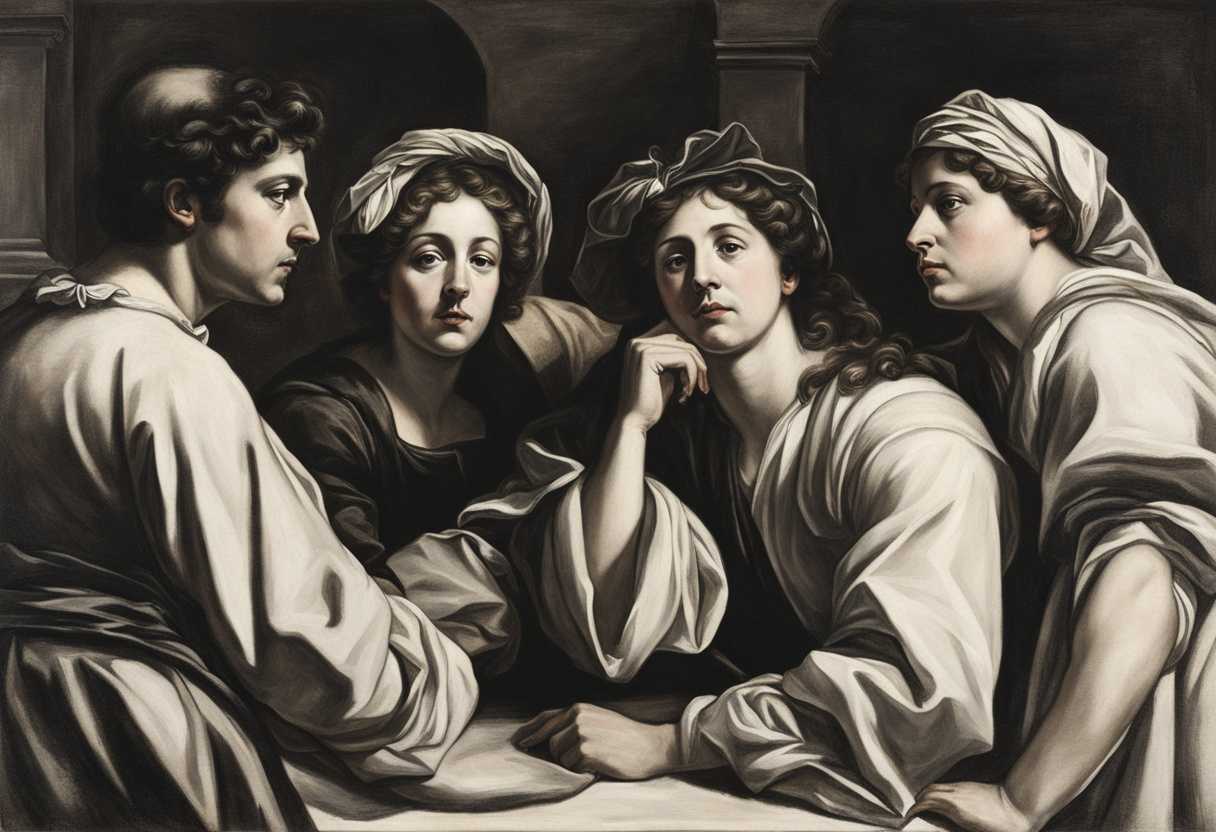
Setting the Scene for John 1:25
In John chapter 1, we find a scene where the religious leaders from Jerusalem send priests and Levites to question John the Baptist. The setting is the wilderness of Judea, where John has been baptizing people in the Jordan River. The priests and Levites are curious about John’s identity and mission, as he has been gaining attention for his preaching and baptizing.
As the priests and Levites approach John, the sun beats down on the arid landscape, casting long shadows across the dusty ground. John stands tall and resolute, his rough clothing and unkempt hair a stark contrast to the polished appearance of the religious officials. The air is filled with the sound of the flowing river and the murmurs of the crowd gathered to listen to John’s words.
The priests and Levites, representing the religious establishment, question John about whether he is the Messiah, Elijah, or the Prophet. John’s responses are humble yet powerful, as he declares that he is not the Christ but the voice of one crying out in the wilderness, preparing the way for the Lord. This encounter sets the stage for the revelation of Jesus as the long-awaited Messiah, who will soon begin his ministry alongside John in the same region.
What is John 1:25 about?
John the Baptist humbly denies that he is the long-awaited Messiah in this verse, redirecting the attention to the coming Christ. This act of humility and selflessness is a powerful example for all of us to follow. John knew his role in preparing the way for Jesus, and he embraced it wholeheartedly. This verse reminds us of the importance of staying true to our purpose and not seeking recognition or glory for ourselves.
Think about the humility and selflessness displayed by John the Baptist. How often do we find ourselves seeking validation and recognition for our accomplishments? John’s example challenges us to focus on serving a greater purpose rather than seeking personal glory. John highlights the importance of putting the needs of others above our own by redirecting the attention to the true Messiah. Let us reflect on this verse and strive to emulate John’s humility in our own lives.
Understanding what John 1:25 really means
In the dialogue between John the Baptist and the Pharisees, as captured in John 1:25, we witness a moment of questioning and clarification. The Pharisees, known for their strict adherence to religious laws and traditions, were seeking to understand John’s authority to baptize. Their inquiry reveals not only their skepticism but also their expectations regarding the arrival of significant figures like the Christ, Elijah, or the Prophet. This context sets the stage for a deeper exploration of the roles, identities, and expectations at play in this interaction.
John the Baptist’s response to the Pharisees’ questioning serves as a reminder of the importance of understanding one’s identity and purpose in God’s plan. Just as John knew his role as the voice crying in the wilderness, we are called to discern and embrace our unique place in furthering God’s kingdom. The passage prompts us to reflect on how we perceive and fulfill our own missions, recognizing that each of us has a part to play in preparing the way for Christ’s work in the world.
The relevance of this exchange extends beyond the historical context, resonating with contemporary challenges and inquiries. In a world where skepticism towards spiritual leaders and authorities abounds, we are reminded to approach questions of authority with discernment and humility. Like the Pharisees, who sought clarity on John’s legitimacy, we are encouraged to evaluate the sources of authority in our lives and communities, ensuring alignment with God’s truth and purpose.
Consider a scenario where a new pastor enters a community, met with skepticism and questioning akin to John the Baptist’s encounter with the Pharisees. As the pastor begins to fulfill his calling and minister to the people, perceptions shift, and the impact of his ministry becomes evident. This narrative mirrors the transformative power of authentic service and obedience to God’s calling, illustrating how actions rooted in faith can illuminate the path to Christ for others.
The probing question posed by the Pharisees, “Why then do you baptize,” challenges us to reflect on the motivations behind our actions and the authority we acknowledge in our lives. Similarly, their reference to specific prophetic figures highlights the danger of rigid expectations that may blind us to God’s work unfolding in unexpected ways. By remaining open to God’s guidance and recognizing His hand in diverse expressions of faith and service, we cultivate a spirit of receptivity and discernment essential for navigating our spiritual journeys.
In contemplating John 1:25 and its broader implications, we are invited to deepen our understanding of spiritual authority, personal calling, and the intricate tapestry of God’s redemptive plan. Just as John the Baptist prepared the way for Christ, may we embrace our roles as heralds of the Gospel, illuminating the path for others to encounter the transformative power of God’s love and grace.
What is the source of true authority in your life?
The source of true authority in my life comes from the One who is greater than all, the One whose Word is truth and whose power is unmatched. This authority is not found in any human or earthly institution, but in the divine wisdom and guidance of God. I am able to align my actions and decisions with His will by recognizing the supremacy and sovereignty of God, knowing that His authority is the ultimate standard by which I should live my life. The authority of God provides me with a solid foundation and a clear direction to follow in a world full of conflicting voices and shifting values. I can find true peace and purpose in my life by acknowledging His authority and submitting to His will. This source of authority brings clarity, certainty, and confidence in the midst of uncertainty and chaos, guiding me towards a life that is filled with meaning, joy, and fulfillment. I surrender to the authority of God in my life, reminding me that His ways are higher than my ways and His thoughts are higher than my thoughts. I yield to His wisdom and guidance in humility and trust, knowing that He alone holds the power to lead me on the path of righteousness and truth. Through His authority, I find strength, courage, and hope to face whatever challenges come my way, confident in the knowledge that His plans for me are good and His promises are true.
Application
Think of your faith as your home base in a busy world. Just like John did, you need to stand firm and confidently share your beliefs. When doubts and challenges come your way, proclaim your faith with courage, like declaring your love for family amidst life’s chaos. Will you rise up and let your light shine in a world that needs your truth?

Reverend Michael Johnson is an experienced Church Minister with a profound expertise in spirituality and guidance. With a serene presence and a compassionate heart, he has faithfully served his congregation for over 20 years, leading them on a spiritual journey towards inner peace and enlightenment. Reverend Johnson’s extensive knowledge of religious philosophies and profound understanding of human nature have made him a trusted confidant and mentor to many, as he seamlessly weaves his profound wisdom into life teachings. Reverend Johnson’s calming demeanor and empathetic nature continue to uplift and heal souls, nurturing a sense of unity and tranquility within his community.