
John 20:1-10 is about the resurrection of Jesus Christ from the dead and the astonishment and disbelief of the disciples as they encountered the empty tomb and the evidence of his miraculous return.
1 Now on the first day of the week Mary Magdalene came to the tomb early, while it was still dark, and saw that the stone had been taken away from the tomb.
2 So she ran and went to Simon Peter and the other disciple, the one whom Jesus loved, and said to them, “They have taken the Lord out of the tomb, and we do not know where they have laid him.”
3 So Peter went out with the other disciple, and they were going toward the tomb.
4 Both of them were running together, but the other disciple outran Peter and reached the tomb first.
5 And stooping to look in, he saw the linen cloths lying there, but he did not go in.
6 Then Simon Peter came, following him, and went into the tomb. He saw the linen cloths lying there,
7 and the face cloth, which had been on Jesus’ head, not lying with the linen cloths but folded up in a place by itself.
8 Then the other disciple, who had reached the tomb first, also went in, and he saw and believed;
9 for as yet they did not understand the Scripture, that he must rise from the dead.
10 Then the disciples went back to their homes.
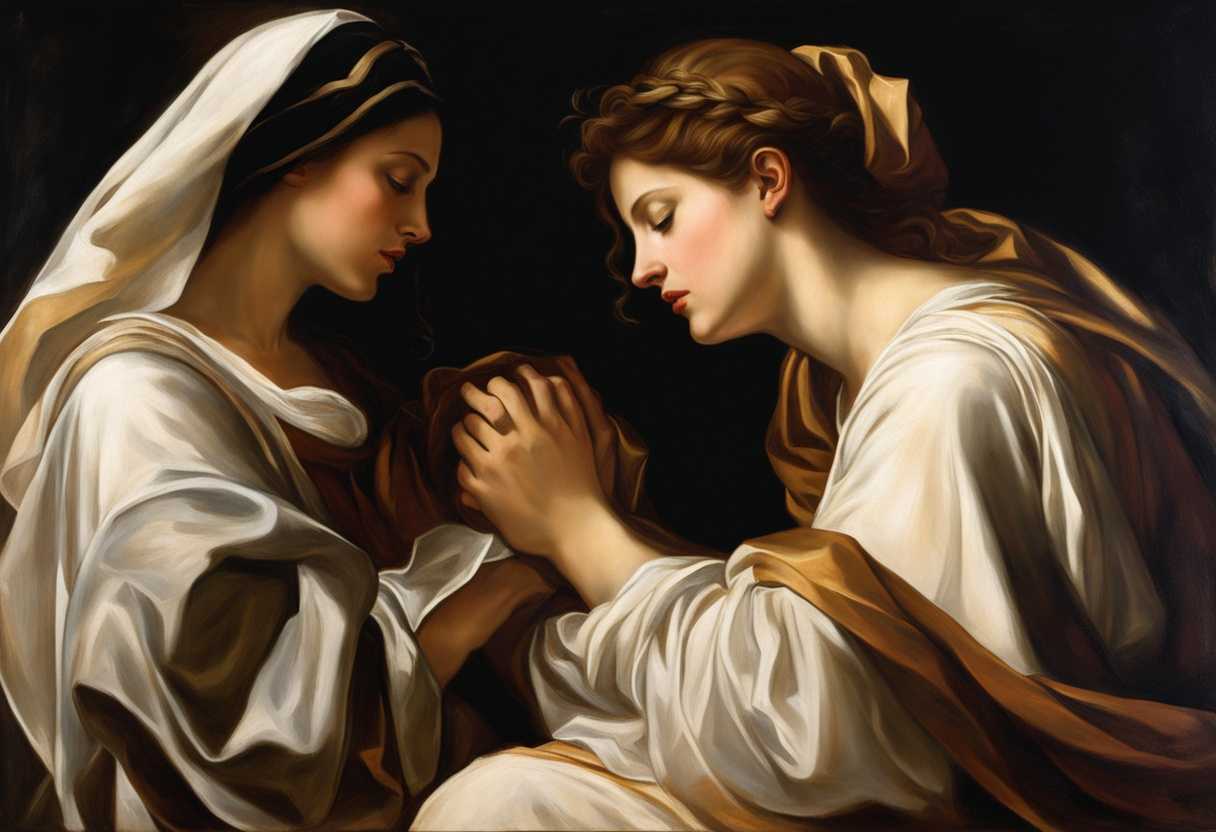
Setting the Scene for John 20:1-10
As the sun began to rise on the first day of the week, Mary Magdalene made her way to the tomb where Jesus had been laid after his crucifixion. She was accompanied by a few other women who had been followers of Jesus, carrying spices to anoint his body. The atmosphere was heavy with grief and confusion as they walked through the quiet garden towards the burial site.
Upon reaching the tomb, they were shocked to find the large stone rolled away from the entrance. Mary’s heart raced as she peered inside, only to discover that the body of Jesus was missing. Panic and fear gripped the group as they tried to make sense of what they were seeing. Mary, unable to contain her distress, ran to find Peter and John, two of Jesus’ closest disciples, to tell them what she had found.
Peter and John quickly followed Mary back to the tomb, their minds racing with disbelief and uncertainty. The scene before them was one of confusion and mystery, as they tried to comprehend the empty tomb and the linen cloths lying neatly folded inside. The reality of Jesus’ resurrection began to dawn on them, filling their hearts with a mixture of awe and wonder at the miraculous event that had taken place.
What is John 20:1-10 about?
The verses in John 20:1-10 hold a profound significance in Christian faith, as they depict the pivotal moment of the discovery of Jesus’ empty tomb. This event marks the resurrection of Jesus Christ, a core belief in Christianity. The empty tomb serves as a powerful symbol of hope, renewal, and the victory over death. We, as readers, are invited to reflect on the miraculous nature of Jesus’ resurrection and the profound impact it has on our lives.
Imagine the emotions Mary Magdalene and the disciples must have felt as they encountered the empty tomb – confusion, fear, wonder, and ultimately, awe at the miraculous event that had taken place. This passage invites us to contemplate the transformative power of faith and the triumph of light over darkness. It challenges us to ponder the implications of Jesus’ resurrection in our own lives and how it can inspire us to live with hope, courage, and unwavering faith. Let us delve into John 20:1-10, immersing ourselves in the profound depth of this passage and allowing it to ignite a renewed sense of faith and purpose within us.
Understanding what John 20:1-10 really means
The resurrection of Jesus is a pivotal event in Christian faith, symbolizing victory over sin and death. In John 20:1-10, we witness the aftermath of this miraculous event as Mary Magdalene discovers the empty tomb. The context of this passage is set against the backdrop of Jesus’ crucifixion and burial, underscoring the profound sacrifice he made for humanity. As Mary Magdalene visits the tomb early on the first day of the week, we are transported to a moment of profound significance in the Christian narrative.
The mention of the stone being removed from the entrance of the tomb holds deep symbolic meaning. Just as the temple veil was torn in Matthew 27:51, signifying direct access to God, the rolled-away stone represents the removal of barriers between humanity and the divine. This act foreshadows the resurrection and the restoration of the relationship between God and His people. When John, the disciple whom Jesus loved, saw the empty tomb, he believed. This simple phrase, “He saw and believed,” underscores the importance of faith in the resurrection. It echoes Jesus’ words in John 20:29, where he blesses those who believe without seeing.
Despite witnessing the empty tomb, the disciples still did not fully grasp the significance of Jesus’ resurrection as foretold in Scripture. This lack of understanding points to the fulfillment of Old Testament prophecies, such as Isaiah 53:10-12, which speaks of the suffering servant who will see the light of life. The resurrection narrative continues to resonate with believers today, offering hope and assurance of eternal life. It serves as a reminder to have faith even when faced with uncertainty and to trust in God’s plan, even when it may not be fully understood.
Consider the story of an individual who, like Mary Magdalene, faced seemingly insurmountable challenges but found strength and hope through their faith in the resurrection. Just as the stone was rolled away from the tomb, symbolizing the overcoming of obstacles, so too can personal struggles be conquered through unwavering faith. As we reflect on the significance of the resurrection, let us be inspired to seek a deeper understanding of Scripture and to cultivate a steadfast faith in the face of life’s trials.
In conclusion, the resurrection of Jesus stands as a cornerstone of the Christian faith, embodying the triumph of life over death. It underscores the importance of belief, even in the absence of physical proof, and the fulfillment of divine promises as revealed in Scripture. Let us take this opportunity to reflect on our own faith journeys, drawing strength from the resurrection narrative and seeking a deeper connection with God through His word.
What does it mean to truly believe?
To truly believe means to have faith in something without a doubt or hesitation. It means to hold a firm conviction in your heart and mind, and to trust in the truth and promises of God. True belief involves a deep commitment and allegiance to the teachings and principles of Christianity. It requires a strong sense of conviction that cannot be easily swayed or shaken.
Belief, in the context of the verse provided, speaks to the faith of the disciples in the resurrection of Jesus Christ. It points to their unwavering trust in the fulfillment of God’s promise and the power of Jesus’ teachings. To truly believe, as demonstrated in this passage, means to have faith in the unseen and to stand firm in the face of doubt and uncertainty. It signifies a profound trust in God’s plan and a willingness to accept His will, even when circumstances seem bleak or unclear.
Application
When work deadlines loom, you hustle. When your family needs you, you’re there in an instant. Apply that same urgency to your faith. Just like the disciples ran to the tomb, let’s run towards a deeper connection with Christ. Let’s chase after truth and purpose with passion. Will you take action and seek the risen Lord right now?

Reverend Michael Johnson is an experienced Church Minister with a profound expertise in spirituality and guidance. With a serene presence and a compassionate heart, he has faithfully served his congregation for over 20 years, leading them on a spiritual journey towards inner peace and enlightenment. Reverend Johnson’s extensive knowledge of religious philosophies and profound understanding of human nature have made him a trusted confidant and mentor to many, as he seamlessly weaves his profound wisdom into life teachings. Reverend Johnson’s calming demeanor and empathetic nature continue to uplift and heal souls, nurturing a sense of unity and tranquility within his community.