
John 20:1-2 is about the discovery of the empty tomb by Mary Magdalene and the disciples, symbolizing the beginning of Jesus’ resurrection and the fulfillment of prophecies foretelling His victory over death.
1 Now on the first day of the week Mary Magdalene came to the tomb early, while it was still dark, and saw that the stone had been taken away from the tomb.
2 So she ran and went to Simon Peter and the other disciple, the one whom Jesus loved, and said to them, “They have taken the Lord out of the tomb, and we do not know where they have laid him.”
Setting the Scene for John 20:1-2
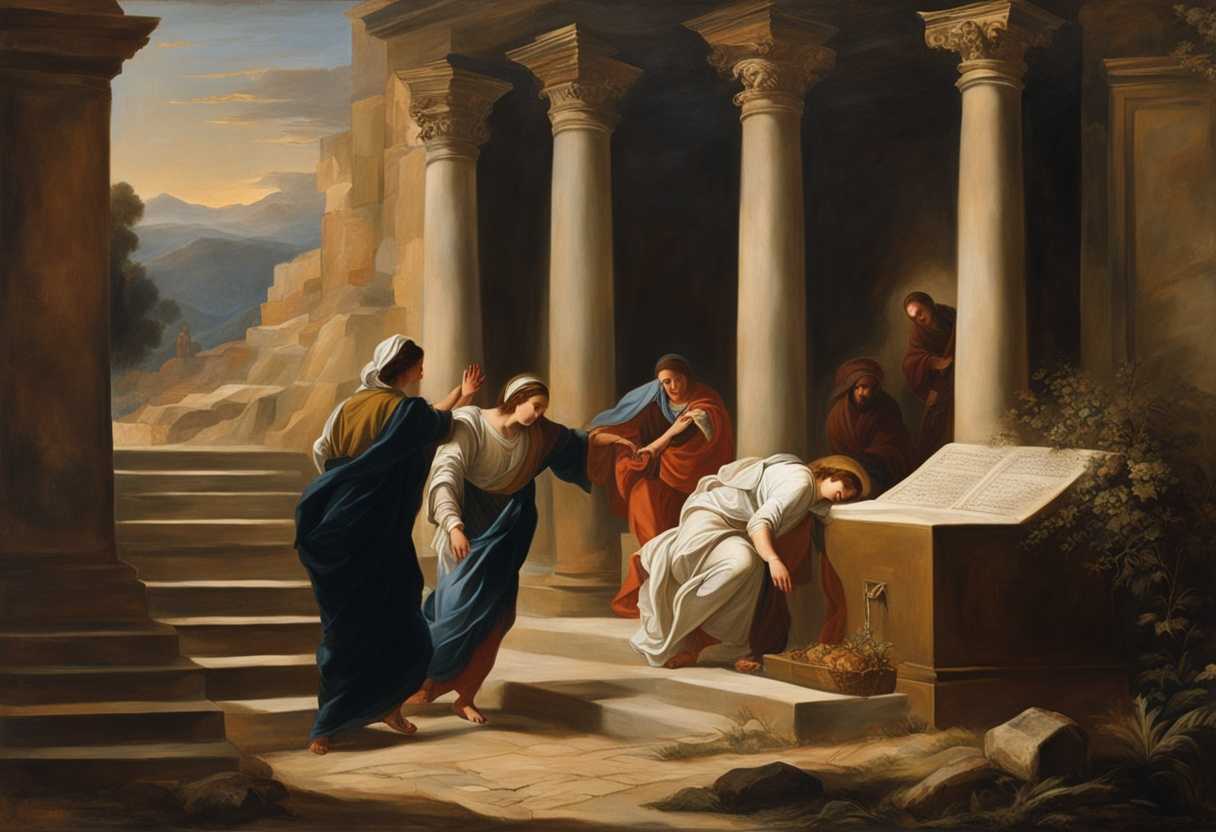
In John chapter 20, we find Mary Magdalene arriving at the tomb of Jesus early in the morning while it was still dark. She had come to the tomb to anoint Jesus’ body with spices, as was the custom in Jewish burial practices. Mary Magdalene was accompanied by a few other women who had been followers of Jesus and were also grieving his death.
As they approached the tomb, the women were filled with sorrow and confusion, still trying to come to terms with the events of Jesus’ crucifixion. The atmosphere was heavy with grief and uncertainty as they made their way to the burial site. The surroundings were quiet and somber, with the first light of dawn just beginning to break through the darkness, casting a soft glow over the garden where the tomb was located.
The scene was one of deep emotion and anticipation, as Mary Magdalene and the other women were about to encounter a miraculous event that would change the course of history. Little did they know that they were about to witness the greatest miracle of all – the resurrection of Jesus Christ.
What is John 20:1-2 about?
This passage from the Gospel of John captures a pivotal moment in the Christian faith: the discovery of the empty tomb of Jesus by Mary Magdalene. This event marks the beginning of the resurrection story, a central tenet of Christian belief. Mary Magdalene likely reacts with shock and confusion as she arrives at the tomb and finds it empty. The emptiness of the tomb raises questions about what has happened to Jesus and what it means for his followers.
Through this verse, we are invited to reflect on the mystery and wonder of the resurrection, a foundational belief in Christianity. It prompts us to contemplate the significance of this moment in the larger narrative of Jesus’ life, death, and eventual triumph over death. Mary Magdalene’s role in this story also underscores the importance of bearing witness to the transformative power of faith and the unexpected ways in which divine intervention can manifest in our lives. We are challenged to consider how we respond to moments of uncertainty and how we make sense of the seemingly inexplicable events in our own lives as we ponder this passage. The story of Mary Magdalene at the empty tomb reminds us that even in times of confusion and doubt, there is the potential for hope, renewal, and the possibility of encountering the divine. Like Mary, may we approach the empty tomb with open hearts and minds, ready to witness the miraculous unfolding of God’s plan in our lives.
Understanding what John 20:1-2 really means
The passage in John 20:1-2 unveils a momentous event in Christian history—the discovery of the empty tomb by Mary Magdalene on the first day of the week. This occurrence is not merely a historical anecdote but a foundational pillar of the Christian faith, signifying the resurrection of Jesus Christ. The resurrection stands as a beacon of hope, triumphing over death and offering believers the assurance of eternal life.
In parallel with other Gospel accounts, such as Matthew 28:1-10, Mark 16:1-8, and Luke 24:1-12, the narrative of the empty tomb underscores the consistency and significance of this pivotal event in Christian theology. These passages collectively emphasize the profound impact of Jesus’ resurrection on the early followers and the enduring message of hope it conveys to believers across generations.
The relevance of the resurrection story extends beyond its historical context, resonating with people today as a source of solace and renewal. In moments of despair or loss, the resurrection narrative serves as a poignant reminder that amidst life’s trials, there exists the promise of new beginnings and the comforting embrace of God’s eternal plan.
Consider the poignant imagery of a grieving individual finding solace in the story of the empty tomb—a narrative that transcends time and offers reassurance that death is not the final chapter. Just as Mary Magdalene encountered the risen Christ, individuals grappling with loss can find comfort in the belief that reunion and restoration await beyond the veil of mortality.
Delving into the nuances of phrases like “first day of the week,” “Mary Magdalene came to the tomb early,” “the stone had been taken away,” and “they have taken the Lord out of the tomb,” we unravel deeper layers of symbolism and meaning within the resurrection account. These details underscore themes of new beginnings, unwavering devotion, divine intervention, and the gradual comprehension of the miraculous nature of Christ’s resurrection.
By immersing ourselves in the intricacies of the resurrection narrative and contemplating its implications for our faith and daily struggles, we unearth a reservoir of hope, resilience, and spiritual fortitude. The story of the empty tomb beckons us to embrace the transformative power of Christ’s resurrection, inviting us to navigate life’s challenges with unwavering faith in the promise of new life and eternal redemption.
What is the significance of the resurrection of Jesus?
The significance of the resurrection of Jesus lies in the fulfillment of his promise to rise again after three days. This event proved his divinity and power over death, showcasing his victory over sin and providing hope for all believers. Through his resurrection, Jesus conquered the ultimate consequence of sin and offered the possibility of eternal life for those who put their faith in him. The resurrection of Jesus validated his teachings, ministry, and sacrificial death on the cross. It confirmed his authority and the truth of his message, demonstrating that he is truly the Son of God. This pivotal moment in Christian faith solidified the foundation of the belief in Christ as the Savior, who offers forgiveness, redemption, and a new life to all who come to him in faith. The resurrection of Jesus is a cornerstone of the Christian faith and serves as a beacon of hope and assurance for believers of all generations.
Application
Think about Mary Magdalene’s dedication in John 20:1-2, who ventured out while it was still dark. In our busy lives, like balancing work and family, can you find time for unwavering commitment to spiritual growth? Just as Mary sought the Lord, are you ready to seek truth and presence even in tough times? Will you rise up and seek the Lord with the same diligence, especially in your darkest moments?

Reverend Michael Johnson is an experienced Church Minister with a profound expertise in spirituality and guidance. With a serene presence and a compassionate heart, he has faithfully served his congregation for over 20 years, leading them on a spiritual journey towards inner peace and enlightenment. Reverend Johnson’s extensive knowledge of religious philosophies and profound understanding of human nature have made him a trusted confidant and mentor to many, as he seamlessly weaves his profound wisdom into life teachings. Reverend Johnson’s calming demeanor and empathetic nature continue to uplift and heal souls, nurturing a sense of unity and tranquility within his community.