
John 20:1-23 is about the resurrection of Jesus Christ and the commissioning of his disciples to continue his work and spread the message of salvation to the world through the power of the Holy Spirit.
1 Now on the first day of the week Mary Magdalene came to the tomb early, while it was still dark, and saw that the stone had been taken away from the tomb.
2 So she ran and went to Simon Peter and the other disciple, the one whom Jesus loved, and said to them, “They have taken the Lord out of the tomb, and we do not know where they have laid him.”
3 So Peter went out with the other disciple, and they were going toward the tomb.
4 Both of them were running together, but the other disciple outran Peter and reached the tomb first.
5 And stooping to look in, he saw the linen cloths lying there, but he did not go in.
6 Then Simon Peter came, following him, and went into the tomb. He saw the linen cloths lying there,
7 and the face cloth, which had been on Jesus’ head, not lying with the linen cloths but folded up in a place by itself.
8 Then the other disciple, who had reached the tomb first, also went in, and he saw and believed;
9 for as yet they did not understand the Scripture, that he must rise from the dead.
10 Then the disciples went back to their homes.
11 But Mary stood weeping outside the tomb, and as she wept she stooped to look into the tomb.
12 And she saw two angels in white, sitting where the body of Jesus had lain, one at the head and one at the feet.
13 They said to her, “Woman, why are you weeping?” She said to them, “They have taken away my Lord, and I do not know where they have laid him.”
14 Having said this, she turned around and saw Jesus standing, but she did not know that it was Jesus.
15 Jesus said to her, “Woman, why are you weeping? Whom are you seeking?” Supposing him to be the gardener, she said to him, “Sir, if you have carried him away, tell me where you have laid him, and I will take him away.”
16 Jesus said to her, “Mary.”
17 Jesus said to her, “Do not cling to me, for I have not yet ascended to the Father; but go to my brothers and say to them, ‘I am ascending to my Father and your Father, to my God and your God.’”
18 Mary Magdalene went and announced to the disciples, “I have seen the Lord”—and that he had said these things to her.
19 On the evening of that day, the first day of the week, the doors being locked where the disciples were for fear of the Jews, Jesus came and stood among them and said to them, “Peace be with you.”
20 Then the disciples were glad when they saw the Lord.
21 Jesus said to them again, “Peace be with you. As the Father has sent me, even so I am sending you.”
22 And when he had said this, he breathed on them and said to them, “Receive the Holy Spirit.
23 If you forgive the sins of any, they are forgiven them; if you withhold forgiveness from any, it is withheld.”
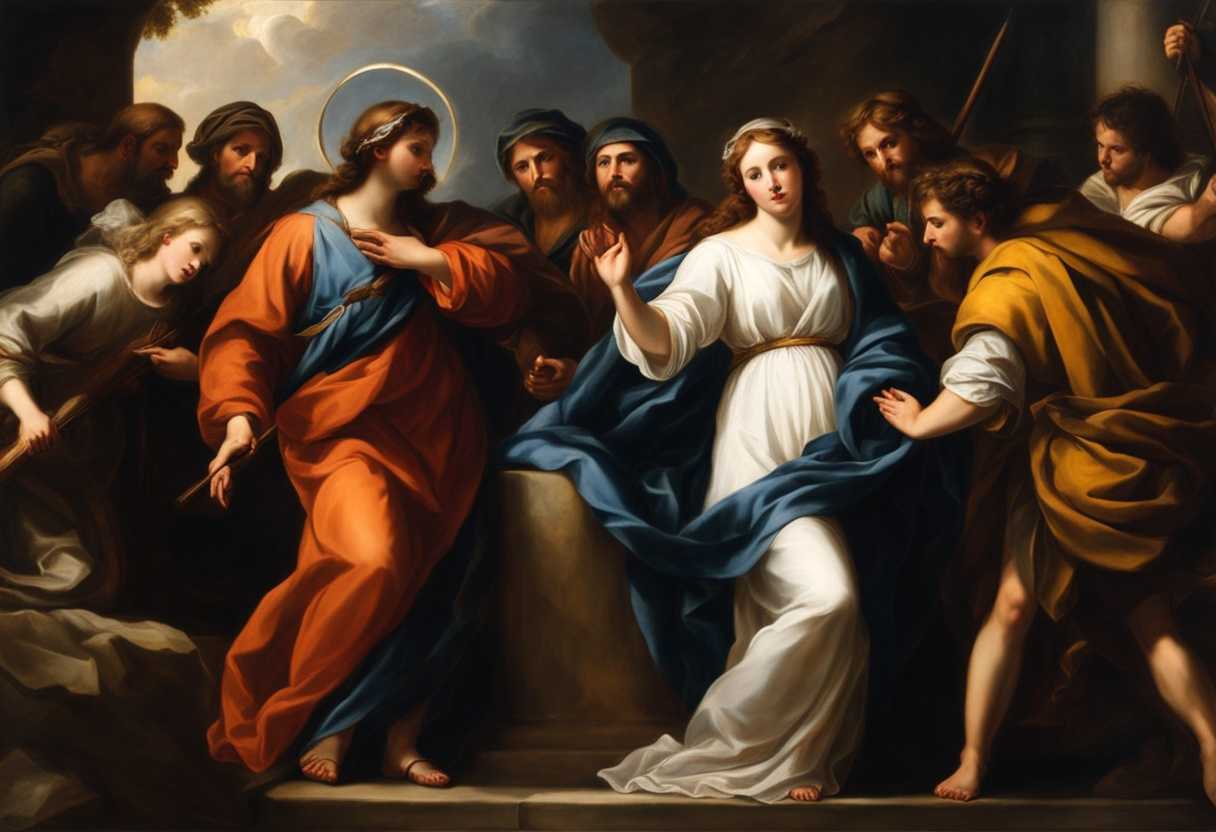
Setting the Scene for John 20:1-23
The scene in John chapter 20 opens with Mary Magdalene arriving at the tomb of Jesus early in the morning while it was still dark. She had come to the tomb to anoint Jesus’ body with spices, but upon reaching the tomb, she found the stone rolled away. Distressed and assuming that someone had taken the body of Jesus, she ran to tell Peter and John about what she had seen.
Peter and John, upon hearing Mary’s report, immediately set out for the tomb. They both ran, but John, being the younger of the two, outran Peter and reached the tomb first. Peering inside, he saw the linen cloths lying there but did not enter. Peter arrived shortly after and went straight into the tomb, where he also saw the linen cloths and the face cloth that had been on Jesus’ head neatly folded in a separate place. The disciples were puzzled by what they saw but soon realized the significance of the empty tomb and the folded cloths.
The scene is set in the early hours of the morning, with the first light of dawn breaking over the horizon. The tomb is located in a garden, surrounded by the peaceful stillness of the morning. The atmosphere is filled with a mix of confusion, wonder, and awe as Mary Magdalene, Peter, and John grapple with the mystery of the empty tomb and the implications of Jesus’ resurrection.
What is John 20:1-23 about?
This verse holds significant meaning in the Christian faith as it marks the pivotal moment when Jesus, after his resurrection, appears before his disciples to commission them with a powerful message. Through this act, Jesus not only affirms his victory over death but also entrusts his followers with the crucial mission of spreading his teachings of forgiveness and the promise of the Holy Spirit. This moment solidifies the disciples’ role as messengers of hope and salvation, carrying forward the message of Jesus’ resurrection and the transformative power of his love.
Imagine being one of the disciples, filled with awe and wonder as you witness the risen Christ standing before you, giving you a sacred task to fulfill. How would you feel knowing that you have been chosen to continue the work of spreading God’s love and forgiveness to all corners of the world? This verse reminds us of the profound responsibility we have as believers to share the good news of Jesus’ resurrection and offer hope and redemption to those in need. It challenges us to reflect on how we can embody the message of forgiveness and the transformative power of the Holy Spirit in our own lives, just as the disciples were called to do.
Understanding what John 20:1-23 really means
In John 20:1-23, we delve into the profound events that unfolded following the resurrection of Jesus Christ. This passage holds immense significance in the Christian faith as it solidifies the foundational belief in the resurrection, a pivotal tenet of Christianity. We witness Mary Magdalene’s unwavering devotion as she ventures to the tomb in the early hours of the day, symbolizing her deep love for Jesus. The narrative captures the initial confusion and despair of the disciples upon discovering the empty tomb, reflecting their struggle to comprehend the miraculous resurrection.
As Mary stands bewildered outside the tomb, her encounter with the risen Jesus transforms her grief into overwhelming joy. The moment Jesus calls her by name, “Mary,” and she recognizes Him as her Teacher, underscores the intimate and personal relationship between Jesus and His followers. This interaction serves as a poignant reminder of the profound connection individuals can experience in their personal relationship with Christ, echoing the timeless message of love and redemption.
Jesus’ appearance to His disciples following His resurrection marks a pivotal moment as He commissions them with a divine mission. His words, “Peace be with you! As the Father has sent me, I am sending you,” resonate through the ages, emphasizing the continuity of His work through His followers. This commissioning underscores the enduring relevance of Jesus’ teachings, urging believers to carry forth His message of love, compassion, and salvation.
The themes and phrases woven throughout this passage echo across related biblical accounts, such as Matthew 28:1-10 and Luke 24:1-12, offering complementary perspectives on the resurrection narrative. Additionally, Paul’s summary in 1 Corinthians 15:3-8 reinforces the historical authenticity of the resurrection appearances, affirming the foundational truth of Christ’s victory over death.
Today, the resurrection narrative continues to hold profound relevance for individuals seeking hope and renewal in the face of adversity. Just as Mary’s encounter with the risen Jesus brought forth joy from sorrow, the resurrection symbolizes the triumph of life over death, offering a beacon of hope in times of darkness. Moreover, the commissioning of the disciples underscores the enduring mission and purpose bestowed upon believers, calling them to share the transformative message of Christ’s love and redemption.
In contemplating the resurrection of Jesus, we are invited to reflect on the enduring impact of this pivotal event in human history. The resurrection transcends mere historical significance, serving as a living reality that offers solace, inspiration, and purpose to all who embrace its profound message. As we navigate the complexities of life, may the resurrection narrative remind us of the enduring hope, personal relationship, and divine mission that define our faith journey.
How can we experience peace through the Holy Spirit?
We can experience peace through the Holy Spirit by allowing Him to dwell within us and guide our thoughts and emotions. The Holy Spirit can bring a sense of calm and tranquility to our minds, even in the midst of chaos or uncertainty. Surrendering to the leading of the Holy Spirit can help us find peace that transcends understanding and surpasses the circumstances of the world.
When we receive the Holy Spirit into our lives, we are filled with His peace that comes from knowing we are loved and cared for by God. This peace is not dependent on our external circumstances but stems from a deep-rooted trust in God’s sovereignty and goodness. Letting the Holy Spirit work in our hearts and minds can lead us to a place of inner peace that sustains us through life’s challenges and trials.
Application
Imagine working tirelessly, balancing family and job, but discovering a higher calling within your reach. Just as the disciples met the risen Christ, find renewed strength and purpose to spread hope. Dive deep into prayer and scripture, drawing courage from their boldness. Will you rise to share this hope and love with a world yearning for it?

Reverend Michael Johnson is an experienced Church Minister with a profound expertise in spirituality and guidance. With a serene presence and a compassionate heart, he has faithfully served his congregation for over 20 years, leading them on a spiritual journey towards inner peace and enlightenment. Reverend Johnson’s extensive knowledge of religious philosophies and profound understanding of human nature have made him a trusted confidant and mentor to many, as he seamlessly weaves his profound wisdom into life teachings. Reverend Johnson’s calming demeanor and empathetic nature continue to uplift and heal souls, nurturing a sense of unity and tranquility within his community.