
John 20:1-30 is about the resurrection of Jesus Christ, emphasizing the importance of faith in believing in his miraculous return from the dead as the Son of God.
1 Now on the first day of the week Mary Magdalene came to the tomb early, while it was still dark, and saw that the stone had been taken away from the tomb.
2 So she ran and went to Simon Peter and the other disciple, the one whom Jesus loved, and said to them, “They have taken the Lord out of the tomb, and we do not know where they have laid him.”
3 So Peter went out with the other disciple, and they were going toward the tomb.
4 Both of them were running together, but the other disciple outran Peter and reached the tomb first.
5 And stooping to look in, he saw the linen cloths lying there, but he did not go in.
6 Then Simon Peter came, following him, and went into the tomb. He saw the linen cloths lying there,
7 and the face cloth, which had been on Jesus’ head, not lying with the linen cloths but folded up in a place by itself.
8 Then the other disciple, who had reached the tomb first, also went in, and he saw and believed;
9 for as yet they did not understand the Scripture, that he must rise from the dead.
10 Then the disciples went back to their homes.
11 But Mary stood weeping outside the tomb, and as she wept she stooped to look into the tomb.
12 And she saw two angels in white, sitting where the body of Jesus had lain, one at the head and one at the feet.
13 They said to her, “Woman, why are you weeping?” She said to them, “They have taken away my Lord, and I do not know where they have laid him.”
14 Having said this, she turned around and saw Jesus standing, but she did not know that it was Jesus.
15 Jesus said to her, “Woman, why are you weeping? Whom are you seeking?” Supposing him to be the gardener, she said to him, “Sir, if you have carried him away, tell me where you have laid him, and I will take him away.”
16 Jesus said to her, “Mary.”
17 Jesus said to her, “Do not cling to me, for I have not yet ascended to the Father; but go to my brothers and say to them, ‘I am ascending to my Father and your Father, to my God and your God.’”
18 Mary Magdalene went and announced to the disciples, “I have seen the Lord”—and that he had said these things to her.
19 On the evening of that day, the first day of the week, the doors being locked where the disciples were for fear of the Jews, Jesus came and stood among them and said to them, “Peace be with you.”
20 Then the disciples were glad when they saw the Lord.
21 Jesus said to them again, “Peace be with you. As the Father has sent me, even so I am sending you.”
22 And when he had said this, he breathed on them and said to them, “Receive the Holy Spirit.
23 If you forgive the sins of any, they are forgiven them; if you withhold forgiveness from any, it is withheld.”
24 Now Thomas, one of the twelve, called the Twin, was not with them when Jesus came.
25 So the other disciples told him, “We have seen the Lord.” But he said to them, “Unless I see in his hands the mark of the nails, and place my finger into the mark of the nails, and place my hand into his side, I will never believe.”
26 Eight days later, his disciples were inside again, and Thomas was with them. Although the doors were locked, Jesus came and stood among them and said, “Peace be with you.”
27 Then he said to Thomas, “Put your finger here, and see my hands; and put out your hand, and place it in my side. Do not disbelieve, but believe.”
28 Thomas answered him, “My Lord and my God!”
29 Jesus said to him, “Have you believed because you have seen me? Blessed are those who have not seen and yet have believed.”
30 Now Jesus did many other signs in the presence of the disciples, which are not written in this book.
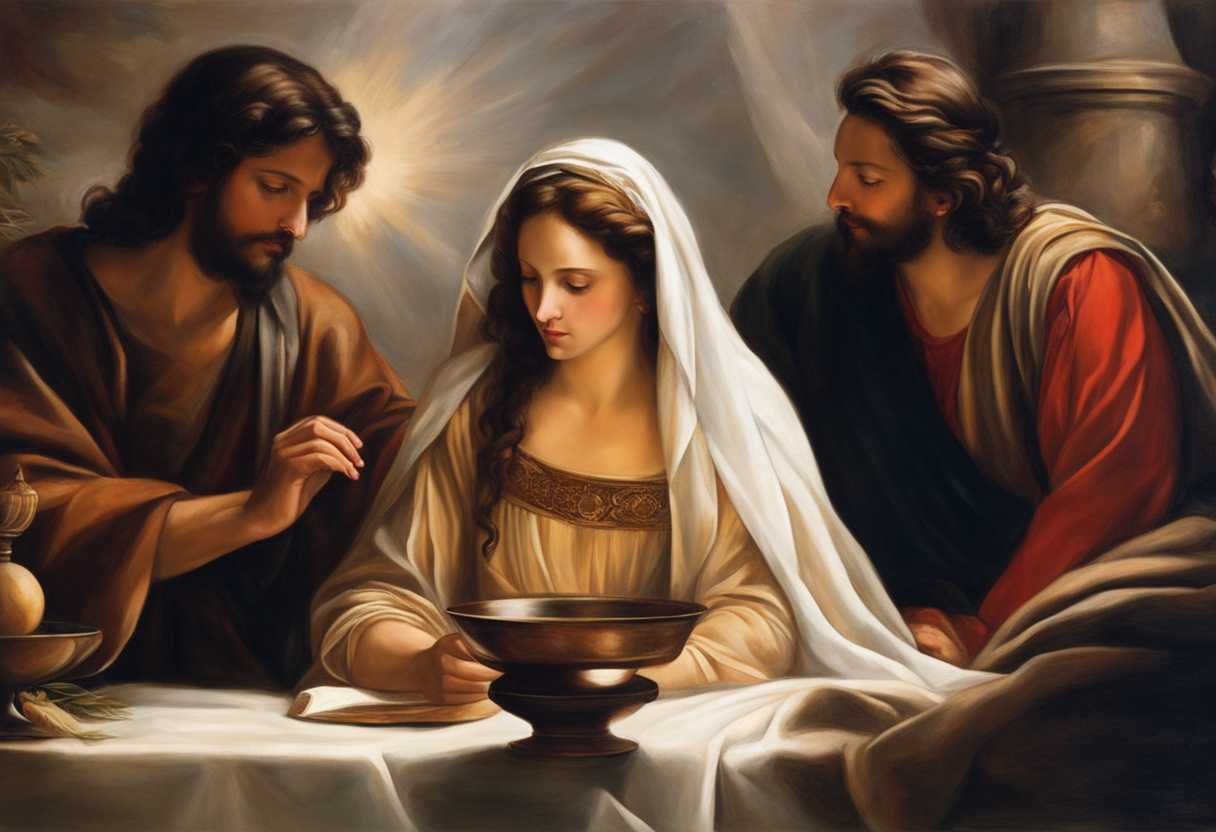
Setting the Scene for John 20:1-30
The scene in John chapter 20 opens with Mary Magdalene arriving at the tomb of Jesus early in the morning while it was still dark. She had come to the tomb to anoint Jesus’ body with spices, but upon reaching the tomb, she found the stone rolled away. Distressed and assuming that someone had taken the body of Jesus, she ran to tell Peter and John about the empty tomb.
Peter and John, upon hearing Mary’s news, immediately set out for the tomb. They ran together, with John outrunning Peter and reaching the tomb first. As they entered the tomb, they found the linen cloths that had been wrapped around Jesus’ body lying there, but the body was not there. The disciples were puzzled and amazed at what they saw, not yet understanding the significance of Jesus’ resurrection. This pivotal moment in the chapter sets the stage for the disciples’ eventual realization of Jesus’ victory over death and the beginning of a new era for humanity.
What is John 20:1-30 about?
This verse from John beautifully captures the transformational moment when Jesus rises from the dead. It is a powerful reminder of hope, faith, and the unwavering love that Jesus has for his followers. The resurrection of Jesus signifies a new beginning, a triumph over death, and a promise of eternal life in the midst of darkness and despair. It is a testament to the power of God’s love and the fulfillment of his divine plan for salvation. We reflect on this verse, pondering the significance of Jesus’ resurrection in our own lives. How does this miraculous event inspire us to renew our faith, to trust in God’s plan, and to seek the light and hope that Christ brings? How can we emulate the disciples’ unwavering belief and joy upon witnessing the risen Lord? We too can invite Jesus’ presence into our hearts and allow his transformative love to guide us in our daily lives, just as he appeared to his disciples to offer them peace and reassurance. We should embrace the message of resurrection as a beacon of hope and a source of strength, knowing that Christ’s victory over death is a testament to the boundless love and grace of God.
Understanding what John 20:1-30 really means
The passage in John 20:1-30 recounts the pivotal events surrounding the resurrection of Jesus Christ. It begins with Mary Magdalene’s discovery of the empty tomb, a moment that marks the beginning of a profound shift in the disciples’ understanding of Jesus’ teachings. The significance of the resurrection cannot be overstated, as it stands as the cornerstone of the Christian faith, symbolizing victory over death and offering the promise of eternal life to all believers.
One of the key phrases in this passage is “The stone had been removed from the entrance,” a powerful symbol of the barriers between humanity and God being lifted. This act signifies that through Jesus’ resurrection, the way to eternal life is opened for all who believe. Another notable phrase is “He saw and believed,” referring to the disciple John. This highlights the importance of faith, even in the absence of complete understanding, as John’s belief in the resurrection was not immediate but grew as he witnessed the evidence before him.
Jesus’ greeting to His disciples, “Peace be with you,” carries profound significance as it offers comfort and reassurance in a time of fear and uncertainty. Furthermore, His command to “Receive the Holy Spirit” marks the beginning of the disciples’ mission to spread the Gospel, emphasizing the empowerment that comes from the indwelling of the Holy Spirit.
Related passages such as Matthew 28:1-10, 1 Corinthians 15:3-8, and Acts 1:8 provide additional perspectives on the resurrection and the subsequent commissioning of the disciples. These passages serve to reinforce the truth and significance of the resurrection, as well as the fulfillment of Jesus’ promise to send the Holy Spirit.
The message of the resurrection remains relevant to people today, offering hope in times of difficulty, encouraging unwavering faith, and empowering believers for their mission to share the good news of Jesus Christ. Just as the disciples were initially in despair before experiencing the joy and renewed purpose brought by the resurrection, individuals today can find strength and hope in their faith, knowing that Jesus’ victory over death promises new beginnings and eternal life.
In conclusion, John 20:1-30 serves as a powerful reminder of the transformative power of the resurrection. It calls believers to live with hope, faith, and a sense of mission, empowered by the Holy Spirit to proclaim the message of Jesus Christ to a world in need of redemption.
How can we believe without seeing?
The verse you are referring to addresses the concept of faith in the absence of physical evidence. It highlights the importance of believing even when we cannot see and touch for ourselves. This challenges us to trust in something beyond our own limited perceptions and understanding. The verse reminds us that true belief requires a level of trust and surrender to something greater than ourselves by asking us to have faith without seeing. It encourages us to rely on our spiritual senses rather than solely on our physical senses. This kind of faith goes beyond tangible proof and relies on a deep conviction and trust in the unseen. The verse ultimately teaches us that we make a choice of faith, even when we cannot physically see or touch what we are asked to believe. It challenges us to have confidence in what we hope for and assurance about what we do not see. It reminds us to have faith in the unseen and trust in the promises of God, even when we cannot perceive them with our physical senses.
Application
Imagine your daily grind, juggling work, family, and endless to-do lists. Now, consider John 20:1-30 as your blueprint for real transformation. Don’t just read these words; absorb them. Just like a major project at work demands your all, let this belief in the resurrection fuel your life decisions. Live your faith boldly and let compassion guide your actions. Are you ready to let this powerful message reshape your daily journey?

Reverend Michael Johnson is an experienced Church Minister with a profound expertise in spirituality and guidance. With a serene presence and a compassionate heart, he has faithfully served his congregation for over 20 years, leading them on a spiritual journey towards inner peace and enlightenment. Reverend Johnson’s extensive knowledge of religious philosophies and profound understanding of human nature have made him a trusted confidant and mentor to many, as he seamlessly weaves his profound wisdom into life teachings. Reverend Johnson’s calming demeanor and empathetic nature continue to uplift and heal souls, nurturing a sense of unity and tranquility within his community.