
John 20:10 is about Mary Magdalene discovering the empty tomb of Jesus and running to tell the disciples, illustrating the beginning of the disciples’ journey to understanding and believing in Jesus’ resurrection.
10 Then the disciples went back to their homes.
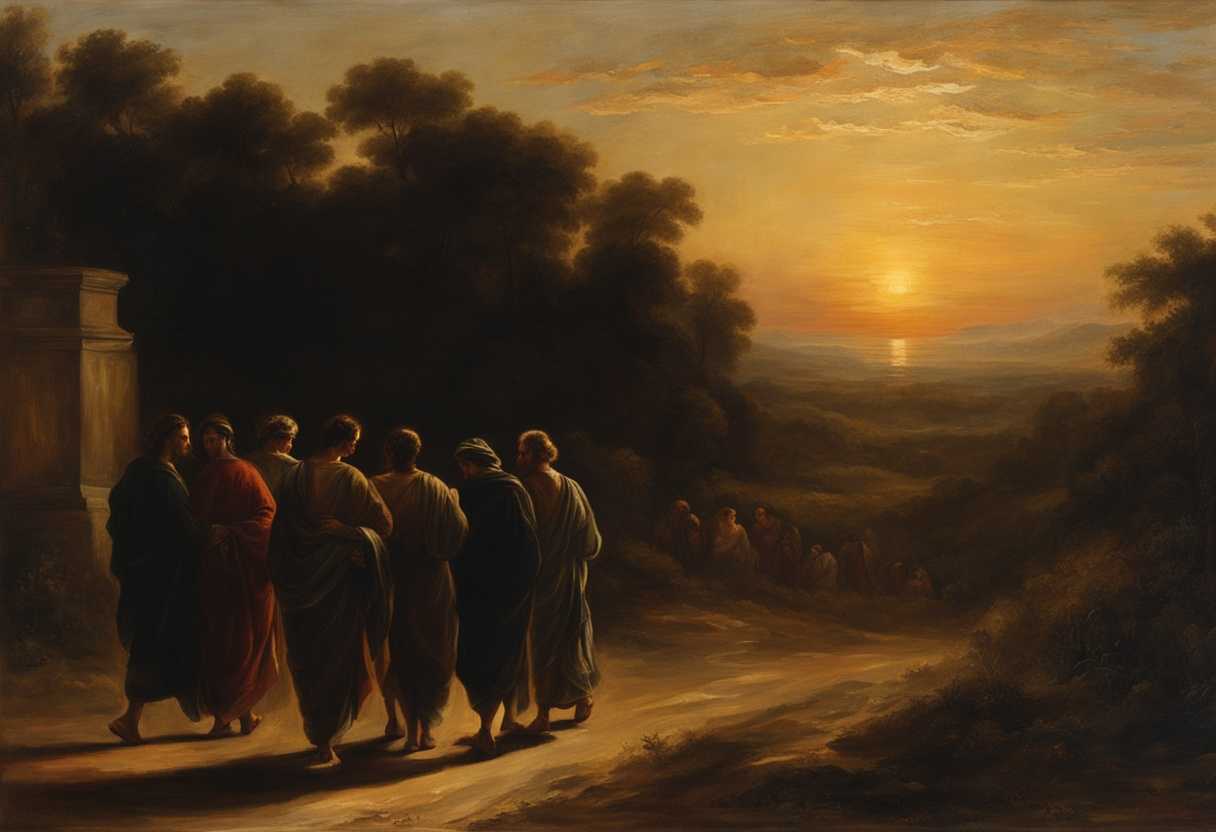
Setting the Scene for John 20:10
In John chapter 20, we find Mary Magdalene standing outside the tomb of Jesus, weeping. She had come to the tomb early in the morning, while it was still dark, to anoint the body of Jesus with spices. However, upon reaching the tomb, she found the stone rolled away and the body of Jesus missing. Distraught and confused, Mary ran to tell Peter and John about the empty tomb.
Peter and John, upon hearing Mary’s news, immediately set out for the tomb. They ran together, with John outrunning Peter and reaching the tomb first. As they entered the tomb, they found the linen cloths that had been wrapped around Jesus’ body lying there, but the body was not there. The scene was one of confusion and disbelief as they tried to make sense of what had happened. This moment marked the beginning of the disciples’ realization that Jesus had indeed risen from the dead, just as He had foretold.
What is John 20:10 about?
This verse from the Book of John captures a pivotal moment in the disciples’ journey of faith and understanding. Imagine the mixture of emotions they must have felt as they encountered the empty tomb – confusion, doubt, hope, and wonder all swirling within them. But above all, there must have been a dawning realization that something extraordinary had happened. The resurrection of Jesus was not just a story they had heard; it was becoming a reality before their very eyes.
Think about the significance of this moment. The disciples, who had followed Jesus closely during His ministry and witnessed His crucifixion, were now witnessing the fulfillment of His promise to rise again. The empty tomb was a powerful symbol of hope, of new beginnings, and of the triumph of life over death. It marked the beginning of their journey towards a deeper understanding of Jesus’ teachings and mission. The disciples in that moment were not just seeing an empty tomb – they were beginning to see the limitless possibilities of what faith in the risen Christ could mean for their lives.
So, as we reflect on this verse, let us also consider our own journey of faith. Are there moments in our lives when we have encountered the emptiness of doubt or despair, only to discover the transformative power of belief and hope? Just like the disciples, may we too be open to the miracles that unfold before us, even in the most unexpected ways. Approach each day with the same sense of wonder and awe that the disciples felt at the sight of the empty tomb, knowing that with faith, all things are possible.
Understanding what John 20:10 really means
In the Gospel of John, the verse John 20:10 is nestled within the profound narrative of Jesus’ resurrection. It comes on the heels of Mary Magdalene’s discovery of the empty tomb and the subsequent visit by Peter and another disciple. To truly grasp the depth of this verse, one must delve into the context of the resurrection account, understanding the mix of emotions and reactions that followed such a monumental event.
In John 20:1-9, we witness the initial reactions of the disciples to the empty tomb, setting the stage for the events that unfold. Peter’s amazement, as described in Luke 24:12, mirrors the bewilderment felt by many encountering the resurrection for the first time. The angel’s instruction in Mark 16:7 and Jesus’ appearance to the women in Matthew 28:8-10 further enrich the tapestry of events leading up to this moment of reflection and contemplation.
This verse resonates with people today by highlighting the human response to divine mysteries. It underscores the journey from doubt to belief, a path many navigate in a world rife with uncertainty. Just as the disciples grappled with confusion before fully comprehending the resurrection, we too may find solace in knowing that doubt is a natural part of faith’s evolution.
Consider a scenario where unexpected news rocks someone’s world, leaving them in a state of shock. Similarly, the disciples’ return to their homes signifies a period of processing and reflection after encountering the resurrected Christ. This parallels modern-day experiences of needing time to grasp the magnitude of miraculous events, like a sudden and miraculous recovery from illness.
The phrase “Then the disciples went back to their homes” encapsulates a profound truth about the human experience. It signifies a return to normalcy after encountering the divine, emphasizing the importance of personal reflection and internalization. Just as the disciples sought solace in their homes to ponder the resurrection, we too require moments of solitude to contemplate spiritual truths and integrate them into our lives.
In conclusion, John 20:10 serves as a poignant reminder that even the most faithful can grapple with doubt and confusion. It encourages believers to embrace moments of reflection and seek understanding in their spiritual journey. The disciples’ actions remind us that it is acceptable to return to our daily routines while we process and nurture our faith, allowing it to grow and flourish in the midst of life’s uncertainties.
Do you believe in the resurrection of Jesus Christ?
Yes, the event in John 20 portrays the resurrection of Jesus Christ. This resurrection signifies the ultimate triumph over death and the fulfillment of the prophecies regarding the Messiah. The resurrection of Jesus is a central tenet of the Christian faith, illustrating His divine power and victory over sin and death. It is through his resurrection that believers are granted the hope of eternal life and reconciliation with God.
The account in John 20 showcases the disbelief and confusion of Jesus’ disciples upon finding the empty tomb. However, as they encounter the risen Christ, their faith is solidified, and they come to understand the significance of His resurrection. This transformation in perception and understanding serves as a powerful testament to the reality of the resurrection and the enduring impact it had on those who witnessed it. The resurrection of Jesus in John 20 ultimately stands as a foundational event in Christianity, affirming the identity of Jesus as the Son of God and the savior of humanity.
Application
When your work feels overwhelming, and family life pulls you in every direction, take a moment to think about John 20:10. Just as the disciples ran to the empty tomb, eager to see the truth for themselves, you too can seek Jesus in your times of doubt. Don’t let confusion or fear hold you back; He’s there, ready to reveal Himself to you. Are you willing to chase after those moments of clarity and peace with the same determination?

Reverend Michael Johnson is an experienced Church Minister with a profound expertise in spirituality and guidance. With a serene presence and a compassionate heart, he has faithfully served his congregation for over 20 years, leading them on a spiritual journey towards inner peace and enlightenment. Reverend Johnson’s extensive knowledge of religious philosophies and profound understanding of human nature have made him a trusted confidant and mentor to many, as he seamlessly weaves his profound wisdom into life teachings. Reverend Johnson’s calming demeanor and empathetic nature continue to uplift and heal souls, nurturing a sense of unity and tranquility within his community.