
John 20:11-20 is about the disciples discovering Jesus had risen from the dead and appearing to them, offering peace, commissioning them to spread the good news, and showing them that belief in Him leads to blessing.
11 But Mary stood weeping outside the tomb, and as she wept she stooped to look into the tomb.
12 And she saw two angels in white, sitting where the body of Jesus had lain, one at the head and one at the feet.
13 They said to her, “Woman, why are you weeping?” She said to them, “They have taken away my Lord, and I do not know where they have laid him.”
14 Having said this, she turned around and saw Jesus standing, but she did not know that it was Jesus.
15 Jesus said to her, “Woman, why are you weeping? Whom are you seeking?” Supposing him to be the gardener, she said to him, “Sir, if you have carried him away, tell me where you have laid him, and I will take him away.”
16 Jesus said to her, “Mary.”
17 Jesus said to her, “Do not cling to me, for I have not yet ascended to the Father; but go to my brothers and say to them, ‘I am ascending to my Father and your Father, to my God and your God.’”
18 Mary Magdalene went and announced to the disciples, “I have seen the Lord”—and that he had said these things to her.
19 On the evening of that day, the first day of the week, the doors being locked where the disciples were for fear of the Jews, Jesus came and stood among them and said to them, “Peace be with you.”
20 Then the disciples were glad when they saw the Lord.
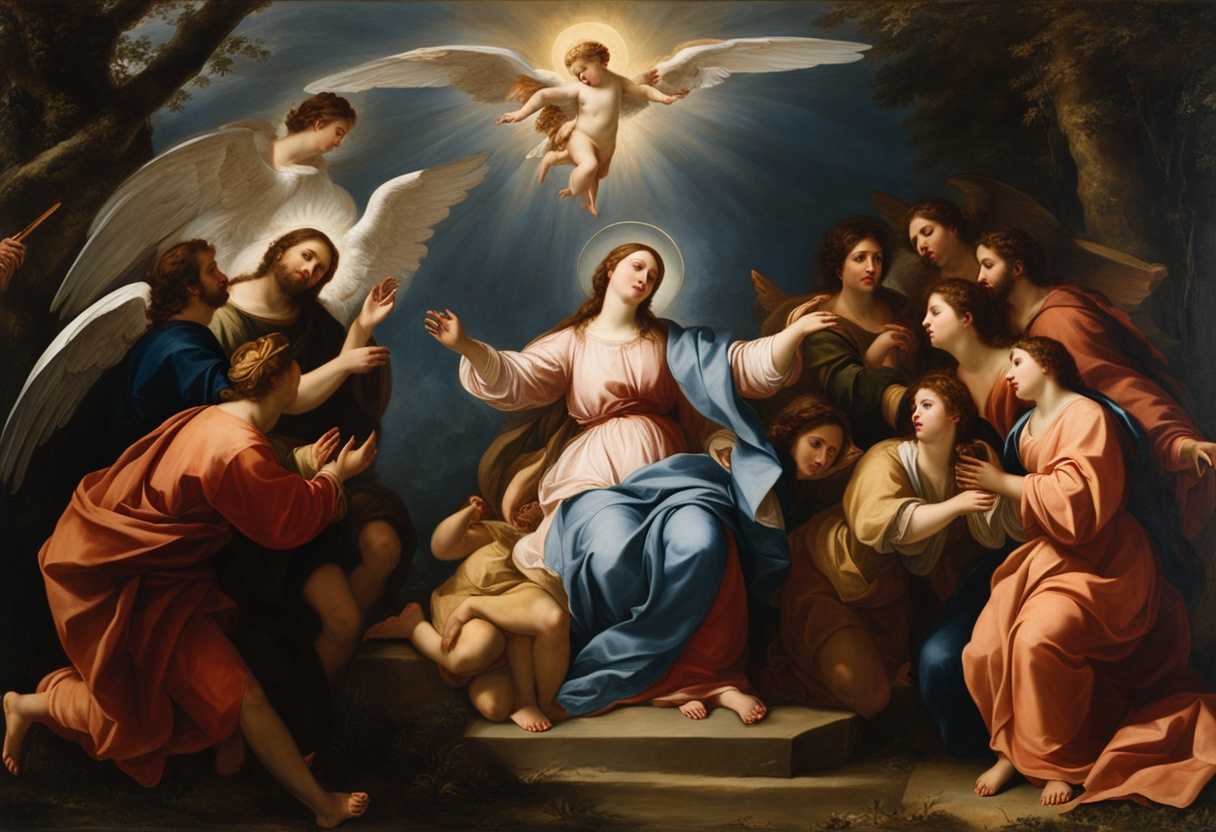
Setting the Scene for John 20:11-20
In John chapter 20, we find Mary Magdalene standing outside the tomb of Jesus, weeping. She had come to the tomb early in the morning, still grieving over the loss of her beloved teacher and friend. As she looked into the tomb, she saw two angels in white sitting where Jesus’ body had been laid. They asked her why she was crying, and she explained that they had taken her Lord away, and she did not know where they had put Him.
As Mary turned around, she saw a man standing there, whom she thought was the gardener. Little did she know that this man was actually Jesus, risen from the dead. Jesus asked her why she was crying and whom she was looking for. It was only when Jesus called her by name that Mary recognized Him. Overjoyed, she reached out to Him, but Jesus told her not to hold on to Him as He had not yet ascended to the Father.
The scene is filled with raw emotion and disbelief turning into overwhelming joy as Mary realizes that Jesus is alive. The tomb, still and quiet in the early morning light, becomes a place of miraculous revelation as Mary encounters her risen Lord. The presence of the angels adds a sense of the divine, underscoring the significance of this moment in history. Mary Magdalene’s encounter with Jesus at the tomb is a powerful testament to the resurrection and the hope it brings to all who believe.
What is John 20:11-20 about?
When Jesus appeared to Mary Magdalene after His resurrection, it was a profound moment of love, grace, and assurance. Jesus demonstrated His victory over death and fulfilled the promise of His resurrection in this encounter. It was a powerful reminder of His divine presence and the fulfillment of God’s plan for salvation.
Through this encounter, Mary Magdalene’s faith was deepened, and she received the affirmation that Jesus was indeed the risen Savior. It was a moment of joy and awe, as she witnessed the miraculous power of God. This verse reminds us of the transformative power of encountering the risen Christ and the hope and joy that come from believing in Him.
Reflect on the significance of this moment and the impact it has on our faith. How does this encounter with Jesus challenge us to deepen our own faith and trust in Him as our Savior? Let Mary Magdalene’s experience inspire you to seek a deeper relationship with the risen Savior and to find hope and assurance in His resurrection.
Understanding what John 20:11-20 really means
The passage in John 20:11-20 captures the poignant moment when Mary Magdalene encounters the risen Jesus outside the empty tomb. Mary’s deep grief and initial confusion give way to profound joy and a divine commission. As we delve into the breakdown of these verses, we witness the transformation from sorrow to joy, the personal encounter with Jesus, and the call to share the good news of His resurrection.
Mary’s sorrow is palpable as she stands weeping outside the tomb, symbolizing the human experience of grief and loss. The appearance of two angels in white signifies the divine presence and the pivotal nature of the moment. This scene echoes the sentiment expressed in Psalm 30:5, where we learn that weeping may endure for a night, but joy comes in the morning, illustrating the transformative power of faith in the face of sorrow.
When Jesus appears to Mary, her initial lack of recognition mirrors the common theme of post-resurrection appearances. However, the moment Jesus calls her by name, saying “Mary,” underscores the personal relationship and intimate knowledge He has of each individual. This act of naming is reminiscent of John 10:3, where Jesus is likened to a shepherd who calls his own sheep by name, emphasizing His personal care for His followers.
As Mary responds to Jesus and receives His instruction not to cling to Him but to go and share the good news with His disciples, we witness a shift in their relationship. This moment echoes the commission given in Matthew 28:10, emphasizing the mission to spread the message of the resurrection and the transformative power of encountering the risen Christ.
When Jesus appears to the disciples, offering them peace and showing them His hands and side as proof of His resurrection, He fulfills His promise and solidifies their faith. The phrase “Peace be with you” goes beyond a mere greeting; it embodies a profound gift of divine peace that Jesus imparts to His followers, as highlighted in Philippians 4:7, where the peace of God transcends all understanding.
Today, this passage remains relevant as it speaks to the personal encounter individuals can have with Jesus, the transformation of sorrow into joy through faith, and the mission to share the good news of His resurrection. Just as Mary found hope and purpose in her encounter with Jesus, believers today are called to experience His resurrection power in their lives and share it with others.
In conclusion, the account of Mary Magdalene’s encounter with the risen Jesus serves as a powerful reminder of the hope and joy that the resurrection brings, the personal relationship believers can have with Christ, and the imperative to share the good news with others. I encourage you to reflect on how you can experience and proclaim the transformative power of the resurrection in your own life, just as Mary did on that momentous day outside the empty tomb.
How can we recognize Jesus in our lives today?
We can recognize Jesus in our lives today by seeing the ways in which He reveals Himself to us through moments of deep connection, understanding, and love. We can also recognize Him when we experience His presence speaking to our hearts in moments of prayer, reflection, or through the words and actions of others, just as Mary Magdalene recognized Jesus at the tomb when He called her name. We can see Jesus working in our lives and guiding us on our journey of faith by remaining faithful and attuned to His voice.
Jesus can also be recognized in our lives when we encounter Him in unexpected places and in unexpected faces. Like the disciples who encountered Jesus in the locked room, we too can experience His presence breaking through barriers of fear, doubt, and uncertainty. We can see Jesus at work in the world around us, bringing comfort, healing, and peace to those in need, by remaining open to the possibility of encountering Him in the midst of our daily lives.
Finally, we can recognize Jesus in our lives today by following His example of love, compassion, and service to others. We can reflect His love to others through our own acts of kindness, generosity, and forgiveness, just as Jesus showed His disciples His hands and side as a sign of His love and sacrifice. We bear witness to His presence in our lives and spread His light to those around us by embodying the values and teachings of Jesus in our words and deeds.
Application
Think about Mary Magdalene’s relentless search for the risen Jesus. Just like her, let this be the day you fuel your faith with unwavering dedication. Dive deep into a relationship with Jesus, and let His presence light up your work, family, and every corner of your life. Transform your world through His love and redemption. Are you ready to seek Him with the same determination Mary did?

Reverend Michael Johnson is an experienced Church Minister with a profound expertise in spirituality and guidance. With a serene presence and a compassionate heart, he has faithfully served his congregation for over 20 years, leading them on a spiritual journey towards inner peace and enlightenment. Reverend Johnson’s extensive knowledge of religious philosophies and profound understanding of human nature have made him a trusted confidant and mentor to many, as he seamlessly weaves his profound wisdom into life teachings. Reverend Johnson’s calming demeanor and empathetic nature continue to uplift and heal souls, nurturing a sense of unity and tranquility within his community.