
John 20:27 is about the Apostle Thomas being encouraged by Jesus to believe without seeing physical proof of his resurrection, emphasizing the importance of faith.
27 Then he said to Thomas, “Put your finger here, and see my hands; and put out your hand, and place it in my side. Do not disbelieve, but believe.”
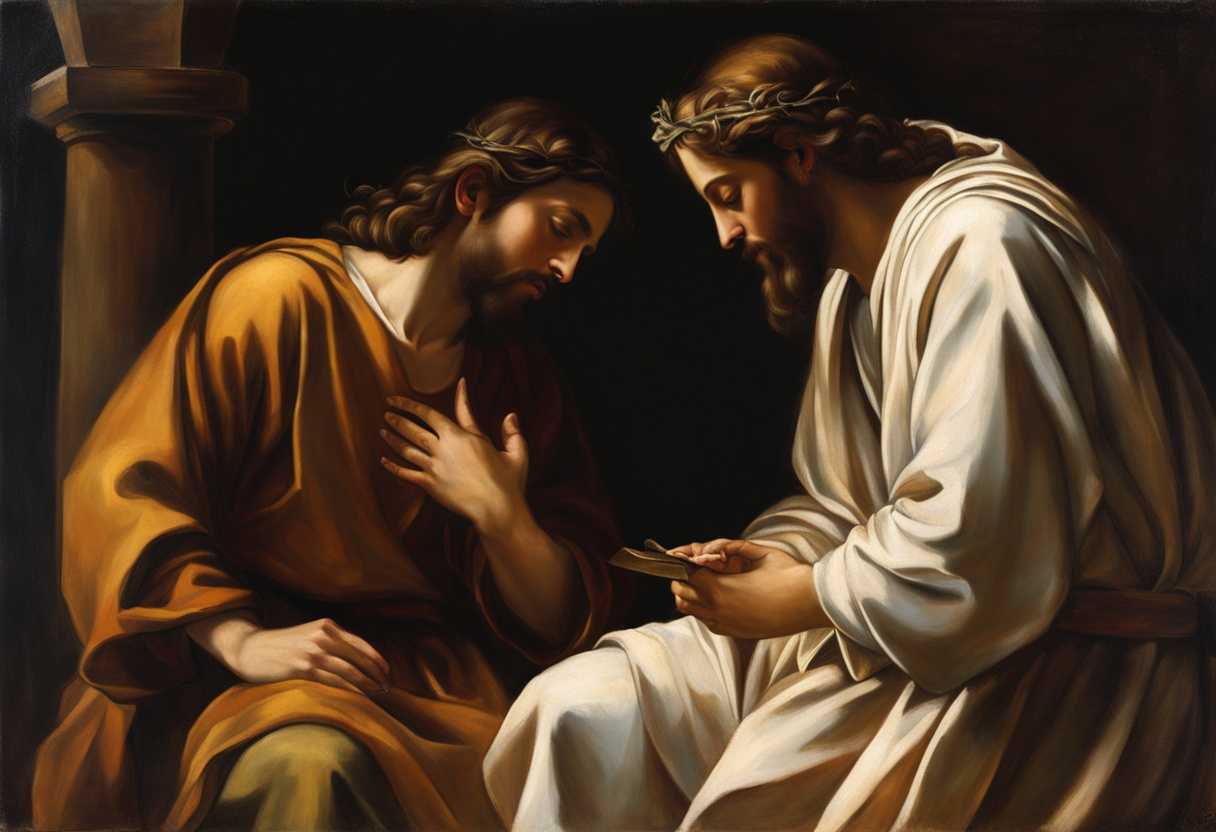
Setting the Scene for John 20:27
The scene in John chapter 20 takes place in a room where the disciples had gathered after the resurrection of Jesus. The disciples were filled with fear and uncertainty following the crucifixion of Jesus, and they were hiding behind closed doors. Among them were Thomas, who was not present when Jesus first appeared to the disciples after His resurrection. Thomas expressed doubt about the resurrection, stating that he would not believe unless he saw the nail marks in Jesus’ hands and put his finger in the wounds.
Suddenly, Jesus appeared in the midst of the disciples, even though the doors were locked. He greeted them with peace and then turned to Thomas, inviting him to touch His wounds and believe. Thomas was overwhelmed with emotion and declared, “My Lord and my God!” This powerful moment of doubt turning into faith is a testament to the miraculous nature of Jesus’ resurrection and His ability to bring hope and belief to even the most skeptical hearts. The room was filled with awe and wonder as the disciples witnessed the risen Christ in their midst, reaffirming their faith and mission to spread the good news to the world.
What is John 20:27 about?
Jesus demonstrates his compassion and understanding towards Thomas’s doubts in this verse. Instead of scolding him for his skepticism, Jesus offers Thomas a tangible way to strengthen his faith. Jesus provides physical proof of His resurrection by inviting Thomas to touch His wounds, guiding Thomas towards belief through his senses. This moment also showcases Jesus’s deep desire for Thomas to experience the truth for himself, fostering a relationship of trust and intimacy between them.
Isn’t it remarkable how Jesus meets us where we are, understanding our doubts and gently leading us towards belief? Just like Thomas, we may struggle to have unwavering faith at times, but Jesus’s willingness to show us His wounds and offer evidence of His love reminds us that it’s okay to question and seek understanding. This verse reflects the grace and patience that Jesus extends to each of us, always ready to guide us on our journey of faith and empower us to experience His presence in a personal and meaningful way. Jesus invites us all to seek closeness with Him and believe in His transformative power by inviting Thomas to touch His wounds.
Understanding what John 20:27 really means
In the narrative of Jesus’ post-resurrection appearances to His disciples, John 20:27 stands out as a significant moment where Jesus directly addresses the doubts of Thomas, one of His twelve disciples. Jesus, in His compassion and understanding, invites Thomas to physically touch His wounds, saying, “Put your finger here; see my hands,” providing tangible proof of His resurrection. This gesture emphasizes the reality of Jesus’ suffering and the physicality of His resurrection, offering Thomas undeniable evidence to dispel his doubts.
Furthermore, Jesus goes on to extend His invitation by saying, “Reach out your hand and put it into my side,” allowing Thomas to touch the wound in His side inflicted during the crucifixion. This act of openness and vulnerability on Jesus’ part is a profound demonstration of His willingness to meet Thomas in his doubt, showing that He understands our need for tangible reassurance in moments of uncertainty. Through these gestures, Jesus not only provides evidence of His resurrection but also offers a personal encounter that addresses Thomas’ specific doubts.
The command, “Stop doubting and believe,” encapsulates Jesus’ call for Thomas to transition from skepticism to faith. This gentle yet firm directive serves as both a gentle rebuke and an invitation to trust in the reality of Jesus’ resurrection. It challenges Thomas to move beyond his doubts and embrace a deeper level of belief in the miraculous truth of Jesus’ victory over death.
In a contemporary context where skepticism and doubt are prevalent, this verse remains relevant by highlighting the importance of faith and the tangible reality of Jesus’ resurrection. It encourages believers to seek personal encounters with Jesus, even in the midst of their doubts, reminding them that Jesus meets us where we are and provides the assurance we need to believe.
Consider a scenario where an individual grappling with faith due to a personal crisis encounters someone who shares a testimony of experiencing God’s tangible presence during a similar struggle. This encounter serves as a catalyst for the individual to transition from doubt to faith, mirroring Thomas’ experience with Jesus. It illustrates how personal testimonies and encounters can bridge the gap between doubt and belief, offering reassurance and strengthening one’s faith journey.
In conclusion, John 20:27 serves as a poignant reminder that Jesus meets us in our doubts and provides the evidence we need to believe. It challenges us to move beyond skepticism, embrace faith, and trust in the reality of Jesus’ resurrection and His continual presence in our lives. Just as Jesus addressed Thomas’ doubts with compassion and evidence, He invites us to encounter Him personally, transforming our doubts into unwavering faith in His resurrection and His abiding presence.
How can we have faith without seeing?
We can have faith without seeing by believing in the testimony of others who have witnessed the truth of God’s love and power. We may also have moments of doubt in our faith, just as Thomas doubted until he was able to see and touch Jesus. However, as Jesus told Thomas, “Blessed are those who have not seen and yet have believed.” This shows us that true faith does not rely on physical evidence, but rather on trusting in the unseen and having confidence in the promises of God.
Faith is a gift from God that allows us to believe in things that are beyond our human understanding. It is about trusting in the unseen and having assurance in what is hoped for. This kind of faith is not based on physical evidence or tangible proof, but rather on a deep conviction in the truth of God’s Word. It is through faith that we can experience the peace, hope, and joy that comes from knowing and believing in God’s love and plan for our lives.
Application
Think of a deadline at work or an important family commitment—you face it head-on, no doubts, just action. John 20:27 pushes us to confront our uncertainties just like that. Thomas needed proof, but what if we just took that leap? Let go of hesitations and trust in something bigger. Will you take that step of faith and trust in Jesus today?

Reverend Michael Johnson is an experienced Church Minister with a profound expertise in spirituality and guidance. With a serene presence and a compassionate heart, he has faithfully served his congregation for over 20 years, leading them on a spiritual journey towards inner peace and enlightenment. Reverend Johnson’s extensive knowledge of religious philosophies and profound understanding of human nature have made him a trusted confidant and mentor to many, as he seamlessly weaves his profound wisdom into life teachings. Reverend Johnson’s calming demeanor and empathetic nature continue to uplift and heal souls, nurturing a sense of unity and tranquility within his community.