
John 20:3-4 is about Peter and another disciple running to the tomb of Jesus after hearing that it was empty, symbolizing their eagerness and desire to find Jesus and their initial confusion and disbelief at his resurrection.
3 So Peter went out with the other disciple, and they were going toward the tomb.
4 Both of them were running together, but the other disciple outran Peter and reached the tomb first.
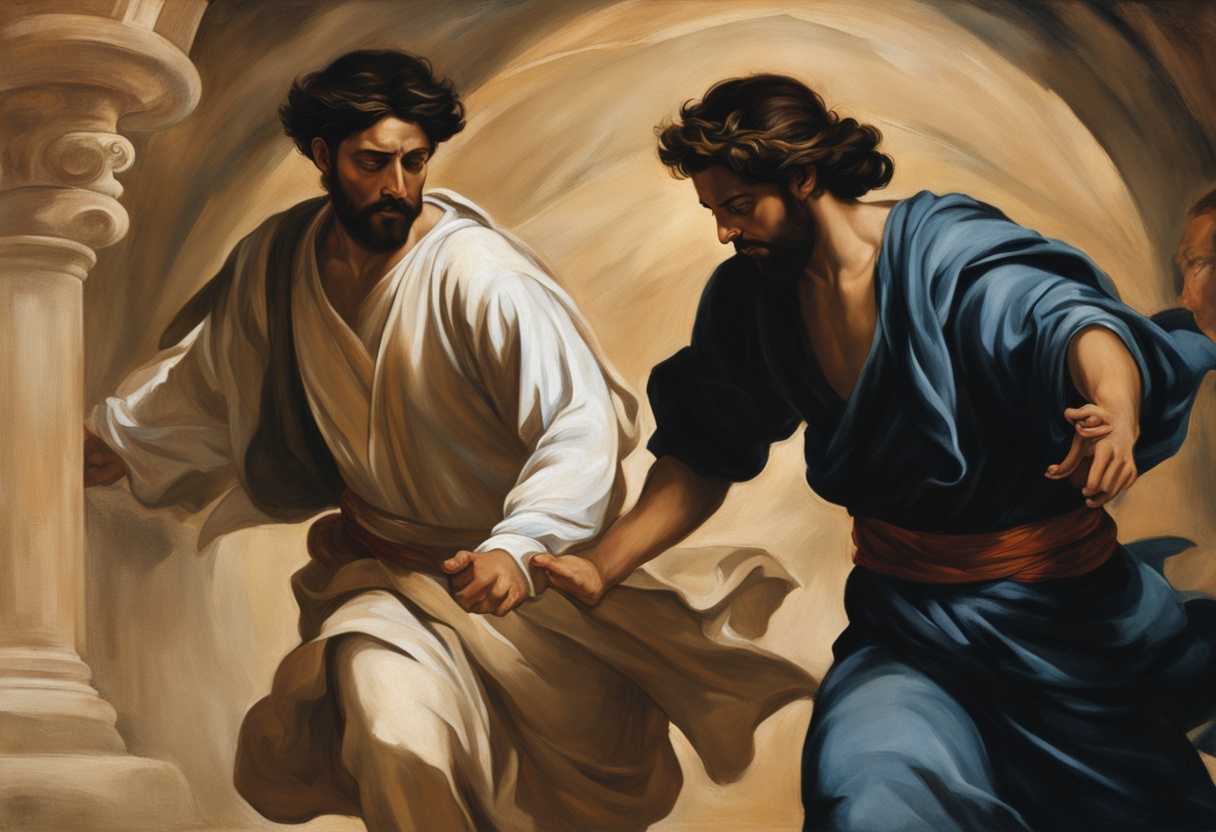
Setting the Scene for John 20:3-4
In John chapter 20, we find the scene where Mary Magdalene has just discovered the empty tomb of Jesus and runs to tell Peter and John about it. The setting is early in the morning on the first day of the week, just after the Sabbath. The atmosphere is filled with a mix of confusion, fear, and anticipation as the disciples process the news of the missing body of their beloved teacher.
Peter and John, upon hearing Mary’s report, immediately set out to the tomb to see for themselves. The two disciples, with a sense of urgency and disbelief, make their way to the burial site. As they run, their footsteps echo in the quiet morning, and the sun begins to rise, casting long shadows across the path. The surroundings are still and solemn, with the scent of spices lingering in the air from the burial preparations.
As Peter and John arrive at the tomb, they find the stone rolled away and the burial cloths lying there. The scene is one of astonishment and wonder as they try to make sense of what they are seeing. The light of the dawn illuminates their faces, revealing a mix of emotions – hope, confusion, and perhaps a glimmer of understanding beginning to dawn. This pivotal moment sets the stage for the disciples to grapple with the reality of Jesus’ resurrection and the profound implications it holds for their faith and the world.
What is John 20:3-4 about?
We witness a pivotal moment in the aftermath of Jesus’ resurrection in John 20:3-4. Peter and John rush to the tomb upon hearing the news that it is empty. This act of haste and urgency symbolizes their eagerness to comprehend the miracle that has just taken place. Their quick movement reflects a deep sense of curiosity and devotion to their teacher, Jesus. We delve into the meaning of this verse, prompting us to ponder the disciples’ emotions and thoughts at that moment. How did their hearts race with anticipation and wonder as they navigated towards the tomb? What thoughts must have crossed their minds as they grappled with the reality of Jesus’ resurrection? Through their actions, we are reminded of the profound impact Jesus had on his disciples and the intensity of their faith in him.
The image of Peter and John running to the tomb invites us to reflect on our own spiritual journey. Are we as eager and committed to seeking truth and understanding in our faith? How can we demonstrate a similar sense of urgency and passion in our pursuit of God’s presence in our lives? We should approach our faith with unwavering determination and a yearning to encounter the risen Christ, just as Peter and John ran towards the tomb in search of answers.
Understanding what John 20:3-4 really means
The verses in John 20:3-4 capture a moment of urgency and anticipation as Peter and another disciple rush to the tomb upon hearing the news of Jesus’ missing body. This event unfolds on the morning of the resurrection, a pivotal moment that underpins the Christian faith. The phrase “Peter therefore went out, and the other disciple” signifies the immediate response to the possibility of Jesus’ resurrection, highlighting the gravity of the situation. Their determination is evident in the phrase “And were going to the tomb,” showcasing their resolve to seek the truth firsthand.
As they both run together, the unity and shared purpose between Peter and the other disciple become apparent. This unity in seeking Jesus reflects the importance of community and fellowship in our spiritual journey. Even in their haste, the detail that “the other disciple outran Peter and came to the tomb first” subtly hints at the eagerness and perhaps the youthful vigor of John compared to Peter. This eagerness to witness the resurrection can serve as an inspiration for believers today to seek Jesus with fervor and zeal.
The related passages in Luke 24:12, Mark 16:7, and 1 Corinthians 15:4 further emphasize the significance of Jesus’ resurrection. Peter’s reaction to the empty tomb in Luke 24:12 underscores his amazement and confusion, echoing the mix of emotions that the disciples must have felt. The angel’s instruction in Mark 16:7 to specifically mention Peter in the news of Jesus’ resurrection highlights Peter’s importance in the narrative. Paul’s affirmation in 1 Corinthians 15:4 reinforces the foundational role of Jesus’ resurrection in Christian faith, offering hope and assurance of eternal life.
To illustrate the disciples’ reaction, consider a group of friends discovering that a long-lost friend, presumed gone forever, has been found alive. The immediate rush to see this friend, filled with hope, disbelief, and excitement, mirrors the disciples’ emotions and underscores the profound significance of the resurrection. Just as Peter and John ran to the tomb, we are called to actively seek Jesus in our lives, embodying their eagerness and determination. Their unity in purpose serves as a reminder for us to support and uplift one another in our faith communities, fostering a sense of shared mission and fellowship.
Ultimately, the resurrection story offers reassurance that even in moments of doubt and confusion, there is hope and the promise of new life. It stands as a cornerstone of Christian faith, providing a beacon of light in times of darkness and a source of unwavering hope for believers. The urgency, unity, and significance portrayed in these verses invite us to reflect on our own faith journey and the ways in which we can actively seek Jesus, support one another, and hold fast to the hope found in the resurrection narrative.
Can we have faith in the unseen like Thomas?
Yes, we can have faith in the unseen like Thomas. Thomas initially doubted the resurrection of Jesus in the Biblical context until he saw and touched the wounds of Jesus. However, after encountering Jesus and witnessing the miracle firsthand, Thomas proclaimed his belief. This incident demonstrates that while it is human nature to question and seek evidence, faith is ultimately about believing in the unseen and trusting in something beyond what our physical senses can perceive.
Just like Thomas had doubts but ultimately came to believe in the unseen, we too can strengthen our faith by seeking a personal encounter with God and reflecting on the eternal truths found in Scripture. Even when we have moments of doubt or struggle to comprehend the mysteries of faith, we can choose to trust in God’s promises and have confidence in the unseen realities of His presence, love, and power in our lives. This kind of faith enables us to navigate uncertainty and challenges with hope and assurance, knowing that our belief is grounded in something greater than what our eyes can see.
Application
Think of your faith journey like a race to meet your greatest ally. When hurdles at work or family responsibilities weigh you down, remember the disciples running to find Jesus. They didn’t hesitate; they ran with all their might. Will you summon the same passion and determination to seek Christ in your life?

Reverend Michael Johnson is an experienced Church Minister with a profound expertise in spirituality and guidance. With a serene presence and a compassionate heart, he has faithfully served his congregation for over 20 years, leading them on a spiritual journey towards inner peace and enlightenment. Reverend Johnson’s extensive knowledge of religious philosophies and profound understanding of human nature have made him a trusted confidant and mentor to many, as he seamlessly weaves his profound wisdom into life teachings. Reverend Johnson’s calming demeanor and empathetic nature continue to uplift and heal souls, nurturing a sense of unity and tranquility within his community.