
John 20:6-7 is about the discovery of the empty tomb by the disciples which signifies the resurrection of Jesus and the beginning of a new era of hope and redemption for humanity.
6 Then Simon Peter came, following him, and went into the tomb. He saw the linen cloths lying there,
7 and the face cloth, which had been on Jesus’ head, not lying with the linen cloths but folded up in a place by itself.
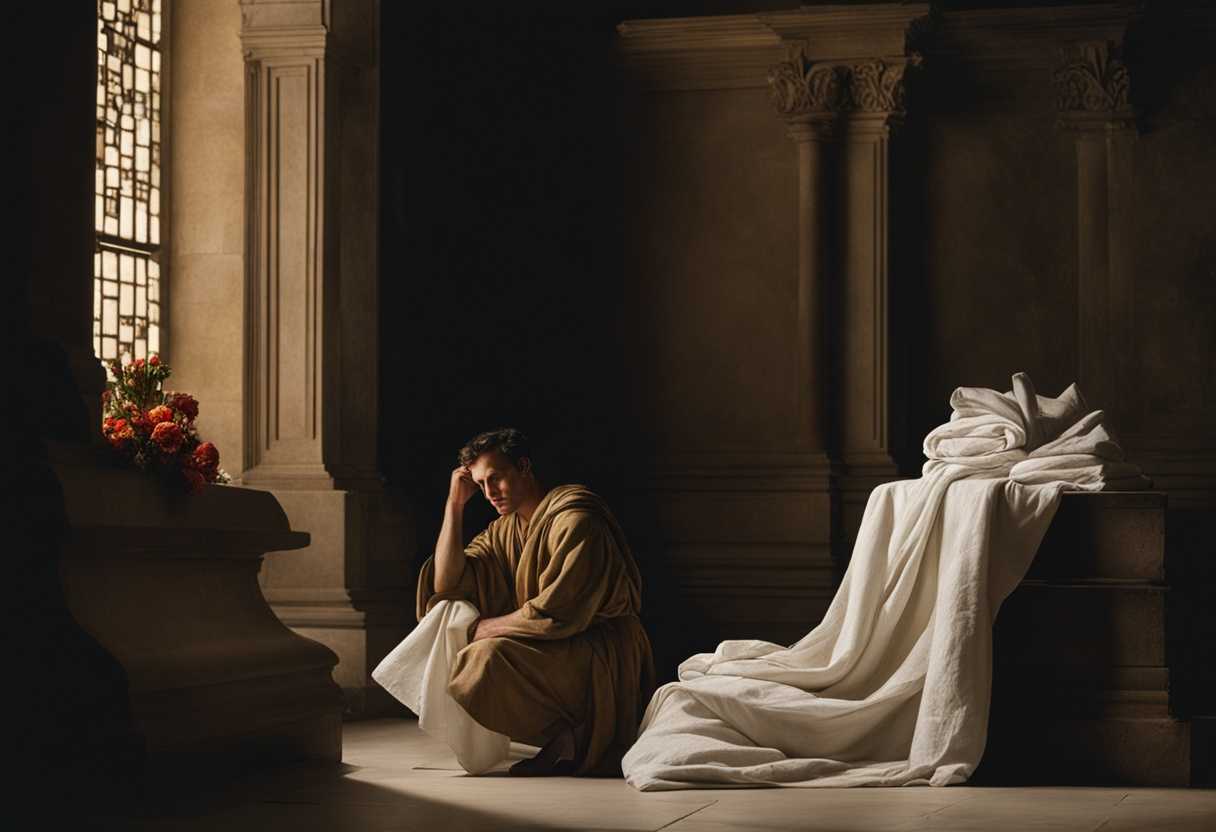
Setting the Scene for John 20:6-7
In John chapter 20, we find Mary Magdalene arriving at the tomb of Jesus early in the morning. She is accompanied by a few other women who had been followers of Jesus. The scene is set at the break of dawn, with the sun just beginning to rise, casting a soft golden light over the garden where the tomb is located. The air is cool and crisp, carrying the scent of blooming flowers.
As Mary Magdalene approaches the tomb, she is filled with grief and sorrow, still mourning the loss of her beloved teacher and friend. The other women are there to offer support and comfort, standing by her side as they make their way to the burial site. The atmosphere is heavy with emotion, a sense of sadness and longing hanging in the air.
Upon reaching the tomb, Mary Magdalene is shocked to find the stone rolled away from the entrance. Peering inside, she sees that the body of Jesus is missing. Confusion and fear grip her heart as she runs to tell the disciples what she has discovered. The women huddle together, trying to make sense of the empty tomb and the mysterious disappearance of Jesus’ body, their minds racing with questions and uncertainty.
What is John 20:6-7 about?
This verse about Jesus’ burial cloths left behind in the empty tomb conveys a powerful message of resurrection and victory over death. Imagine the scene: the tomb where Jesus had been placed, sealed with a large stone, now open and empty except for the cloths that had been wrapped around His body. This visual image symbolizes the defeat of death and the fulfillment of Jesus’ promise to rise again.
Why were the burial cloths left behind? It is as if Jesus deliberately left them there to show that He had conquered death and no longer needed them. The absence of Jesus’ body combined with the presence of the cloths serves as a tangible sign of His resurrection. This miraculous event signifies the beginning of a new era, where death has no power over those who believe in Him and follow His teachings. Knowing that Jesus is alive and that His victory over death is a promise for all who have faith in Him reminds us of the hope and assurance as we reflect on this verse. Let us leave behind our doubts, fears, and insecurities, and embrace the new life and eternal hope that Jesus offers to all who trust in Him, just as the burial cloths were left behind in the empty tomb.
Understanding what John 20:6-7 really means
In John 20:6-7, we witness a pivotal moment as Simon Peter enters the tomb where Jesus had been laid to rest. The sight that greets him is one of profound significance – the linen cloths that once enveloped Jesus’ body are now lying there, empty. This simple yet powerful image speaks volumes about the miraculous event that had taken place. The linen cloths, which had served as a shroud for Jesus, now lay discarded, no longer needed to cradle His resurrected form. And then, there is the face cloth, carefully folded and placed apart from the linen cloths. This deliberate act of folding signifies order and purpose, hinting at the divine orchestration behind Jesus’ resurrection.
Peter’s actions in this moment speak to his eagerness and boldness in seeking to understand the mystery unfolding before him. His decision to enter the tomb, to confront the tangible evidence of Jesus’ absence, reflects a deep longing to grasp the truth of what had transpired. The linen cloths, now vacant, bear witness to the miraculous nature of Jesus’ resurrection. They serve as a tangible reminder that death could not hold Him captive, that He had triumphed over the grave.
This scene echoes throughout the pages of Scripture, resonating with other accounts of resurrection and divine intervention. In Luke 24:12, Peter is similarly perplexed by the sight of the empty tomb and the linen cloths left behind. The contrast between Lazarus’ resurrection in John 11:44, where he emerges still bound in linen strips, and Jesus’ resurrection underscores the unique and unparalleled nature of Christ’s victory over death. In Matthew 28:6, the angel’s proclamation of Jesus’ resurrection echoes the truth revealed in the folded face cloth – He is risen, just as He said.
For believers today, these verses hold profound significance. They remind us that the resurrection of Jesus is not just a historical event but the cornerstone of our faith. It symbolizes hope, renewal, and the promise of eternal life. The folded face cloth, with its message of order and intention, serves as a beacon of assurance in a world marked by uncertainty and chaos. It speaks of Jesus’ deliberate and victorious act over death, offering comfort to those who place their trust in Him.
In our daily lives, amidst trials and tribulations, the message of the folded face cloth remains relevant. Just as it brought hope and peace to those who witnessed it in the tomb, so too can it bring solace to those who are grieving or struggling. The assurance that death is not the end, but a gateway to eternal life, is a source of comfort and strength for believers. Like the family finding solace in the knowledge that their departed loved ones are in God’s care, we too can find hope in the promise of resurrection and new life.
In conclusion, John 20:6-7 invites us to contemplate the profound implications of Jesus’ resurrection. The details of the linen cloths and the folded face cloth are not mere historical footnotes but powerful symbols of hope and assurance. They remind us that in Christ, we find victory over death, purpose in the midst of chaos, and the promise of eternal life. May we, like Peter, enter the tomb with boldness and faith, ready to encounter the transformative power of the risen Savior.
What does the empty tomb reveal about Jesus?
The empty tomb reveals that Jesus has risen from the dead, just as He had foretold to His disciples. The absence of His body signifies that He has triumphed over death and fulfilled His promise to conquer the grave. It demonstrates His power over sin and death, affirming His identity as the Son of God and the Savior of the world.
Furthermore, the empty tomb demonstrates the divine nature of Jesus and the fulfillment of God’s plan of salvation for humanity. It signifies the ultimate victory of good over evil and light over darkness. This pivotal moment in history changed the course of humanity, offering hope, redemption, and eternal life to all who believe in Him. The empty tomb is a powerful symbol of Jesus’ victory over death and His role as the bringer of new life and restoration to all who trust in Him.
Application
Think about John 20:6-7 as a daily reminder, like a morning coffee that fuels your day. The disciples ran to see the empty tomb and believed in the resurrection; likewise, run towards God with unwavering faith. Your work and family can be filled with purpose by seeking His guidance in every step. Embrace this moment to trust in His promises and find peace. Will you relentlessly pursue a deeper relationship with God today?

Reverend Michael Johnson is an experienced Church Minister with a profound expertise in spirituality and guidance. With a serene presence and a compassionate heart, he has faithfully served his congregation for over 20 years, leading them on a spiritual journey towards inner peace and enlightenment. Reverend Johnson’s extensive knowledge of religious philosophies and profound understanding of human nature have made him a trusted confidant and mentor to many, as he seamlessly weaves his profound wisdom into life teachings. Reverend Johnson’s calming demeanor and empathetic nature continue to uplift and heal souls, nurturing a sense of unity and tranquility within his community.