
John 21:1-19 is about Jesus revealing himself to his disciples by the Sea of Galilee and reinstating Peter after his denial, emphasizing the importance of faith, forgiveness, and the disciples’ calling to follow Jesus.
1 After this Jesus revealed himself again to the disciples by the Sea of Tiberias, and he revealed himself in this way.
2 Simon Peter, Thomas (called the Twin), Nathanael of Cana in Galilee, the sons of Zebedee, and two others of his disciples were together.
3 Simon Peter said to them, “I am going fishing.” They said to him, “We will go with you.” So they went out and got into the boat, but that night they caught nothing.
4 Just as day was breaking, Jesus stood on the shore; yet the disciples did not know that it was Jesus.
5 Jesus said to them, “Children, do you have any fish?” They answered him, “No.”
6 He said to them, “Cast the net on the right side of the boat, and you will find some.” So they cast it, and now they were not able to haul it in, because of the quantity of fish.
7 That disciple whom Jesus loved therefore said to Peter, “It is the Lord!” When Simon Peter heard that it was the Lord, he put on his outer garment, for he was stripped for work, and threw himself into the sea.
8 The other disciples came in the boat, dragging the net full of fish, for they were not far from the land, but about a hundred yards off.
9 When they got out on land, they saw a charcoal fire in place, with fish laid out on it, and bread.
10 Jesus said to them, “Bring some of the fish that you have just caught.”
11 So Simon Peter went aboard and hauled the net ashore, full of large fish, 153 of them. And although there were so many, the net was not torn.
12 Jesus said to them, “Come and have breakfast.” Now none of the disciples dared ask him, “Who are you?” They knew it was the Lord.
13 Jesus came and took the bread and gave it to them, and so with the fish.
14 This was now the third time that Jesus was revealed to the disciples after he was raised from the dead.
15 When they had finished breakfast, Jesus said to Simon Peter, “Simon, son of John, do you love me more than these?” He said to him, “Yes, Lord; you know that I love you.” Jesus said to him, “Feed my lambs.”
16 He said to him a second time, “Simon, son of John, do you love me?” He said to him, “Yes, Lord; you know that I love you.” He said to him, “Tend my sheep.”
17 He said to him the third time, “Simon, son of John, do you love me?” Peter was grieved because he said to him the third time, “Do you love me?” and he said to him, “Lord, you know everything; you know that I love you.” Jesus said to him, “Feed my sheep.
18 Truly, truly, I say to you, when you were young, you used to dress yourself and walk wherever you wanted, but when you are old, you will stretch out your hands, and another will dress you and carry you where you do not want to go.”
19 (This he said to show by what kind of death he was to glorify God.) And after saying this he said to him, “Follow me.”
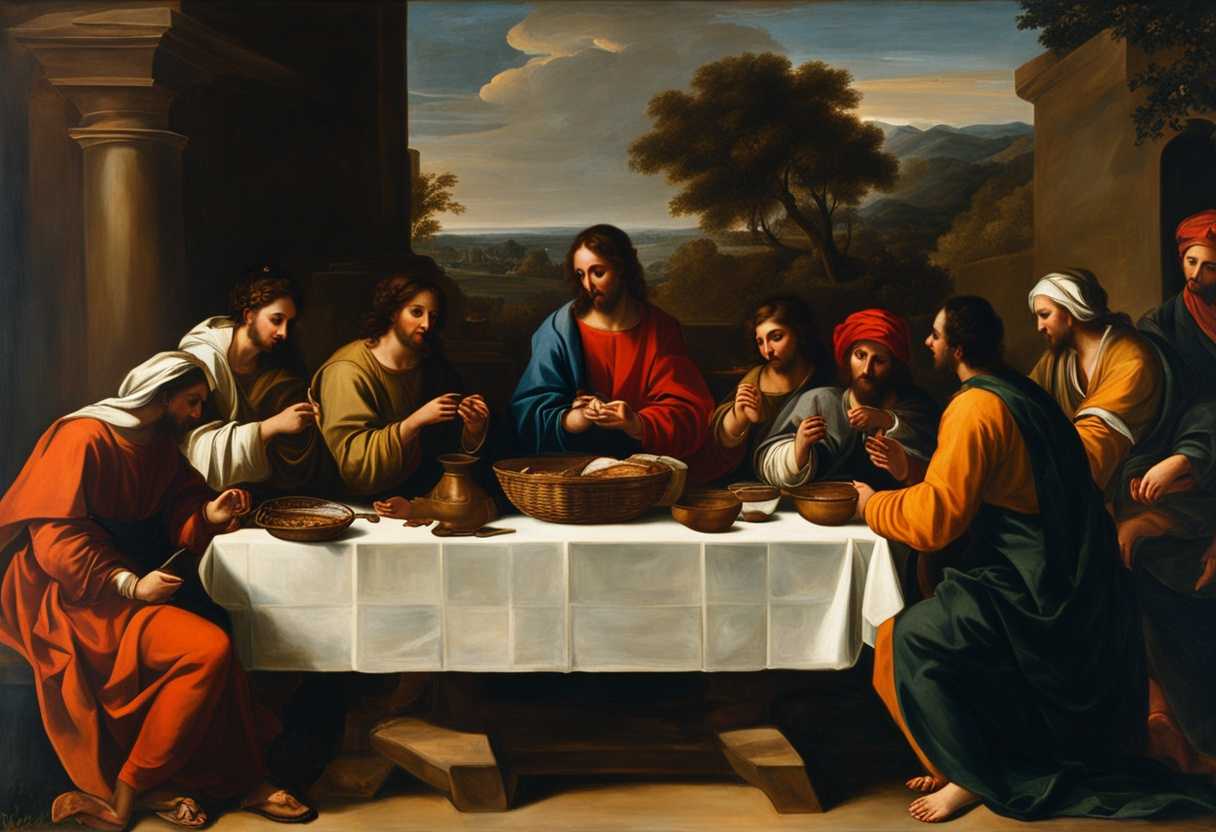
Setting the Scene for John 21:1-19
The scene in John chapter 21 opens with the disciples gathered by the Sea of Tiberias, also known as the Sea of Galilee. The disciples present include Simon Peter, Thomas (called Didymus), Nathanael from Cana in Galilee, the sons of Zebedee (James and John), and two other disciples. They had returned to Galilee after Jesus’ crucifixion and resurrection, unsure of what to do next.
Peter, feeling restless and perhaps seeking solace in the familiar act of fishing, suggests to the group that they go fishing. They set out in a boat and fish through the night but catch nothing. As dawn breaks, they see a figure standing on the shore, who calls out to them, asking if they have caught any fish. When they answer in the negative, the figure instructs them to cast their net on the right side of the boat, leading to a miraculous catch of fish.
Upon realizing that the figure on the shore is Jesus, Peter jumps into the water and swims to meet him. The disciples then gather around a charcoal fire where Jesus has prepared breakfast for them. In this intimate setting, Jesus reinstates Peter, who had denied him three times before the crucifixion, by asking him three times, “Do you love me?” Peter’s responses affirm his love for Jesus, and he is commissioned to feed and care for Jesus’ sheep, symbolizing his role in leading and shepherding the early Christian community.
What is John 21:1-19 about?
Jesus shows His unconditional love and forgiveness towards His disciples in this verse, especially Peter who had denied Him three times. Jesus not only reaffirms His presence in their lives but also seeks to reconcile with Peter by meeting them again by the Sea of Galilee. This moment symbolizes the power of redemption and second chances in the Christian faith, showing that no matter how far we may have strayed or denied our faith, Jesus is always there to welcome us back with open arms.
Have you ever felt like you’ve made a mistake that is beyond forgiveness? This verse reminds us that no sin is too big for God’s grace and that He is always willing to offer us a fresh start. He also reinstates us into His love and grace every time we seek repentance and turn back to Him, just as Jesus reinstated Peter. Let this verse be a source of hope and encouragement for you, knowing that no matter what you may have done, Jesus is there to forgive, restore, and empower you to continue your journey with Him.
Understanding what John 21:1-19 really means
In the passage of John 21:1-19, we witness a poignant moment where Jesus appears to His disciples by the Sea of Tiberias, emphasizing themes of restoration, forgiveness, and the call to discipleship. As the disciples toil in their fishing boats, Jesus stands on the shore, unrecognized at first. However, upon recognizing Him, the disciples exclaim, “It is the Lord!” This simple phrase holds profound meaning, signifying not only the physical presence of Jesus but also His divine nature and authority over all things.
Throughout this passage, Jesus poses a crucial question to Peter, asking him three times, “Do you love me?” This repetition serves to underscore the importance of love and commitment in discipleship. Each time Peter responds affirmatively, Jesus instructs him, “Feed my sheep,” symbolizing the pastoral care and leadership required of those who follow Christ. This call to nurture and guide others in faith is a central aspect of discipleship that resonates across time and cultures.
The parallels between this event in John 21 and other passages in the Bible further illuminate the significance of Jesus’ interactions with His disciples. In Luke 5:1-11, we see a similar miraculous catch of fish, highlighting Jesus’ power and the call to discipleship. Similarly, in Matthew 16:18, Jesus declares Peter as the rock on which He will build His church, emphasizing Peter’s role and the importance of his restoration after his denial of Christ. Peter himself later echoes this sentiment in 1 Peter 5:2-3, urging church leaders to shepherd the flock willingly and eagerly, reflecting his understanding of Jesus’ command to care for His followers.
The timeless message of John 21:1-19 remains relevant to people today in various ways. Just as Peter experienced restoration and forgiveness after his denial of Jesus, we too can find redemption and a renewed purpose in Christ, no matter our past mistakes. The command to “feed my sheep” serves as a reminder of our responsibility to support and care for one another in our faith journeys, embodying the selfless love and service exemplified by Jesus. In our daily lives, we are called to recognize and respond to Jesus’ presence and guidance, seeking to follow His teachings and emulate His compassion towards others.
Consider a modern-day individual who has faced significant failures and struggles with feelings of unworthiness. This passage offers them hope and assurance that, like Peter, they can experience restoration and discover a new calling in serving others. Whether through community service, ministry, or acts of kindness, they can find purpose and fulfillment in sharing Christ’s love with those around them. John 21:1-19 serves as a powerful reminder of Jesus’ unconditional love, His willingness to forgive, and the profound impact of answering His call to discipleship. It challenges us to recognize His presence in our lives, accept His forgiveness, and wholeheartedly commit to serving others in His name.
How can we show love for others like Jesus?
We can show love for others like Jesus by being willing to serve and sacrifice for them, just as Jesus did during his life on earth. Jesus showed his love for humanity by being a servant to those around him, meeting their needs and ultimately sacrificing himself for their salvation. We can emulate this example in our own lives by being willing to go the extra mile to help others, putting their needs before our own, and being willing to sacrifice our time, resources, and comfort for their benefit.
Additionally, we can show love for others like Jesus by extending grace and forgiveness. Jesus demonstrated a remarkable capacity for forgiveness, even in the face of betrayal and denial by his closest friends. We can follow in his footsteps by showing understanding, compassion, and forgiveness towards those who may have wronged us or hurt us in some way. We reflect the unconditional love that Jesus showed to all people during his time on earth by extending grace and forgiveness to others.
Finally, we can show love for others like Jesus by being a source of encouragement and support. Jesus often offered words of comfort, healing, and encouragement to those he encountered, lifting them up and helping them to see their worth and potential. Similarly, we can be a positive presence in the lives of those around us, offering words of encouragement, support, and affirmation to help them navigate life’s challenges and uncertainties. We can show love for others like Jesus did by being a source of light, hope, and positivity in the world.
Application
Think about the story of Jesus by the Sea of Tiberias. It’s a powerful lesson of forgiveness and a call to action. Imagine Jesus asking Peter to feed His sheep; what mission is He asking of you today? Are you ready to step up at work or be that rock for your family, even if it means stepping outside your comfort zone? Will you answer the call and take that leap of faith?

Reverend Michael Johnson is an experienced Church Minister with a profound expertise in spirituality and guidance. With a serene presence and a compassionate heart, he has faithfully served his congregation for over 20 years, leading them on a spiritual journey towards inner peace and enlightenment. Reverend Johnson’s extensive knowledge of religious philosophies and profound understanding of human nature have made him a trusted confidant and mentor to many, as he seamlessly weaves his profound wisdom into life teachings. Reverend Johnson’s calming demeanor and empathetic nature continue to uplift and heal souls, nurturing a sense of unity and tranquility within his community.