
John 21:15-21 is about Jesus reinstating Peter after his denial, emphasizing the importance of love, faith, and commitment in serving and following Him.
15 When they had finished breakfast, Jesus said to Simon Peter, “Simon, son of John, do you love me more than these?” He said to him, “Yes, Lord; you know that I love you.” Jesus said to him, “Feed my lambs.”
16 He said to him a second time, “Simon, son of John, do you love me?” He said to him, “Yes, Lord; you know that I love you.” He said to him, “Tend my sheep.”
17 He said to him the third time, “Simon, son of John, do you love me?” Peter was grieved because he said to him the third time, “Do you love me?” and he said to him, “Lord, you know everything; you know that I love you.” Jesus said to him, “Feed my sheep.
18 Truly, truly, I say to you, when you were young, you used to dress yourself and walk wherever you wanted, but when you are old, you will stretch out your hands, and another will dress you and carry you where you do not want to go.”
19 (This he said to show by what kind of death he was to glorify God.) And after saying this he said to him, “Follow me.”
20 Peter turned and saw the disciple whom Jesus loved following them, the one who also had leaned back against him during the supper and had said, “Lord, who is it that is going to betray you?”
21 When Peter saw him, he said to Jesus, “Lord, what about this man?”
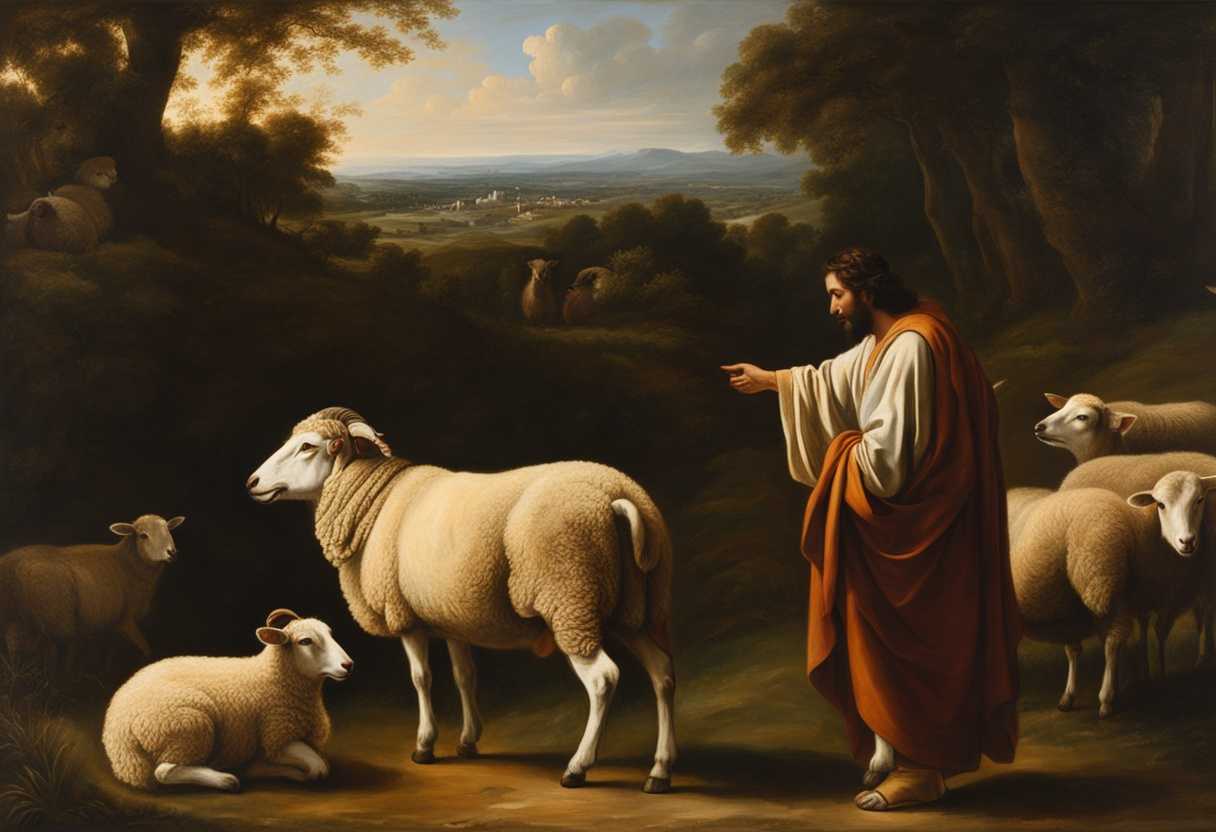
Setting the Scene for John 21:15-21
The scene in John chapter 21 takes place by the Sea of Galilee, where Jesus appears to his disciples after his resurrection. The disciples, including Peter, Thomas, Nathanael, the sons of Zebedee (James and John), and two other disciples, had been fishing all night but caught nothing. As morning breaks, Jesus stands on the shore, though they do not recognize him at first.
Jesus instructs the disciples to cast their net on the right side of the boat, resulting in a miraculous catch of fish. It is at this moment that John recognizes Jesus, and Peter, overcome with emotion, jumps into the water to swim to shore. Once they all come ashore, Jesus has prepared a charcoal fire with fish and bread. As they gather around the fire, Jesus asks Peter three times if he loves him, symbolically reinstating Peter after his denial before the crucifixion. This intimate and poignant scene by the sea solidifies the disciples’ faith and their commitment to following Jesus.
What is John 21:15-21 about?
Isn’t it fascinating how Jesus, in this moment, not only forgives Peter for his denial but also reaffirms his love and faithfulness to Him? It reminds us of the power of forgiveness and second chances, showing us that our past mistakes don’t define us. Instead, our sincerity and love for God are what truly matter. Through this act, Jesus emphasizes the importance of love and loyalty in our relationship with Him. It serves as a reminder that, despite our flaws and failures, we are still loved and valued by God, ready to be called into service for His kingdom.
This verse also challenges us to reflect on our own commitment to following Jesus. Do we love Him enough to overcome our doubts and fears? Are we willing to persevere through difficulties and challenges, just as Peter did? Jesus’s reinstatement of Peter serves as a call to all believers to recommit themselves to loving and following Him wholeheartedly, no matter what uncertainties lie ahead. Let us strive to take inspiration from Peter’s story and live out our faith with a steadfast dedication to our Lord and Savior.
Understanding what John 21:15-21 really means
In the post-resurrection encounter between Jesus and His disciples at the Sea of Galilee, a poignant dialogue unfolds between Jesus and Peter. Jesus, aware of Peter’s previous denial, seeks to reaffirm and reinstate him, asking, “Do you love me more than these?” This question delves deep into the essence of Peter’s devotion, challenging him to prioritize his love for Christ above all else, including his fellow disciples or his former occupation as a fisherman. It prompts us to reflect on the sincerity and depth of our own love for Jesus amidst the distractions and attachments of our lives.
The subsequent commands given by Jesus to Peter – “Feed my lambs,” “Take care of my sheep,” “Feed my sheep” – carry profound significance. They symbolize Jesus entrusting Peter with the crucial responsibility of shepherding and nurturing His followers, emphasizing the role of leadership and service within the Christian community. This directive extends beyond Peter to all believers, urging us to actively engage in caring for and guiding one another in our spiritual journeys. How are we fulfilling this call to nurture and support our fellow believers in their walk with Christ?
Jesus’ prophetic words regarding Peter’s future, contrasting his youth with his later years of sacrifice and martyrdom, serve as a sobering reminder of the sacrifices and commitment required in following Christ. The prediction of Peter’s eventual death for the sake of the Gospel underscores the theme of sacrifice and unwavering dedication to the faith. It challenges us to consider the extent of our own commitment to Christ and the willingness to endure hardships and persecution for His sake.
Drawing parallels to Peter’s journey of restoration and forgiveness, we find hope in the assurance that, like Peter, we too can experience the transformative power of Christ’s forgiveness and grace. Despite our failures and shortcomings, Jesus offers us redemption and a renewed purpose, inviting us to embrace our identity as forgiven and restored children of God. How does the story of Peter’s restoration inspire us to seek forgiveness and restoration in our own lives, knowing that Christ’s grace is always available to us?
In contemporary society, where themes of restoration, responsibility, and sacrifice resonate deeply, the narrative of Jesus and Peter’s interaction remains profoundly relevant. Just as Peter was called to feed and care for Jesus’ sheep, we are reminded of our own responsibility to serve and support one another within the body of Christ. The story of Peter’s journey from denial to restoration serves as a compelling example of the transformative power of grace and the enduring call to faithful discipleship. How can we embody Peter’s spirit of humility, service, and unwavering commitment to Christ in our daily lives?
In conclusion, the dialogue between Jesus and Peter in John 21:15-21 encapsulates timeless truths about grace, love, service, and commitment. It challenges us to examine the depth of our love for Christ, the extent of our service to others, and the steadfastness of our commitment to the faith. As we reflect on Peter’s journey of restoration and redemption, may we find encouragement to embrace our roles within the Christian community, knowing that in Christ, there is always forgiveness, purpose, and the strength to persevere in our faith journey.
Are you truly committed to following Jesus?
Yes, I am truly committed to following Jesus because I understand the importance of loving Him wholeheartedly and obeying his commands. Just like Peter’s response to Jesus in the verse you mentioned, I am dedicated to demonstrating my commitment to Jesus by feeding His sheep, which means caring for and nurturing others in the faith. This involves actively showing love and service to those around me, fulfilling the call to be a disciple of Christ. Peter denied Jesus, but I am willing to leave behind my past mistakes and shortcomings and focus on moving forward in faith and obedience. I can strive to follow Jesus more closely in my daily life by acknowledging my limitations and entrusting myself to His grace and forgiveness. Like Peter, I seek to have a humble and teachable heart, willing to learn from Jesus and grow in my understanding of His ways. I ultimately commit to following Jesus to deepen my relationship with Him and live out His teachings in a way that brings glory to God. Through prayer, study of the Scriptures, and fellowship with other believers, I seek to walk closely with Jesus and allow His love and grace to transform me from the inside out. My commitment is a response to the amazing love and sacrifice that Jesus has shown me, and I am determined to continue following Him wholeheartedly.
Application
Imagine your day as a bustling city, filled with responsibilities, like work deadlines and family commitments. In this chaos, remember Peter’s response to Jesus: to care for His flock with love and humility. Think of serving others as adding a spark to this city, bringing light and warmth to those around you. How will you shine your light and answer the call today?

Reverend Michael Johnson is an experienced Church Minister with a profound expertise in spirituality and guidance. With a serene presence and a compassionate heart, he has faithfully served his congregation for over 20 years, leading them on a spiritual journey towards inner peace and enlightenment. Reverend Johnson’s extensive knowledge of religious philosophies and profound understanding of human nature have made him a trusted confidant and mentor to many, as he seamlessly weaves his profound wisdom into life teachings. Reverend Johnson’s calming demeanor and empathetic nature continue to uplift and heal souls, nurturing a sense of unity and tranquility within his community.