
John 2:2-11 is about Jesus performing his first miracle by turning water into wine at a wedding in Cana, demonstrating his power to bring forth joy, abundance, and divine blessings in unexpected ways.
2 Jesus also was invited to the wedding with his disciples.
3 When the wine ran out, the mother of Jesus said to him, “They have no wine.”
4 And Jesus said to her, “Woman, what does this have to do with me? My hour has not yet come.”
5 His mother said to the servants, “Do whatever he tells you.”
6 Now there were six stone water jars there for the Jewish rites of purification, each holding twenty or thirty gallons.
7 Jesus said to the servants, “Fill the jars with water.” And they filled them up to the brim.
8 And he said to them, “Now draw some out and take it to the master of the feast.” So they took it.
9 When the master of the feast tasted the water now become wine, and did not know where it came from (though the servants who had drawn the water knew), the master of the feast called the bridegroom.
10 and said to him, “Everyone serves the good wine first, and when people have drunk freely, then the poor wine. But you have kept the good wine until now.”
11 This, the first of his signs, Jesus did at Cana in Galilee, and manifested his glory. And his disciples believed in him.
Setting the Scene for John 2:2-11
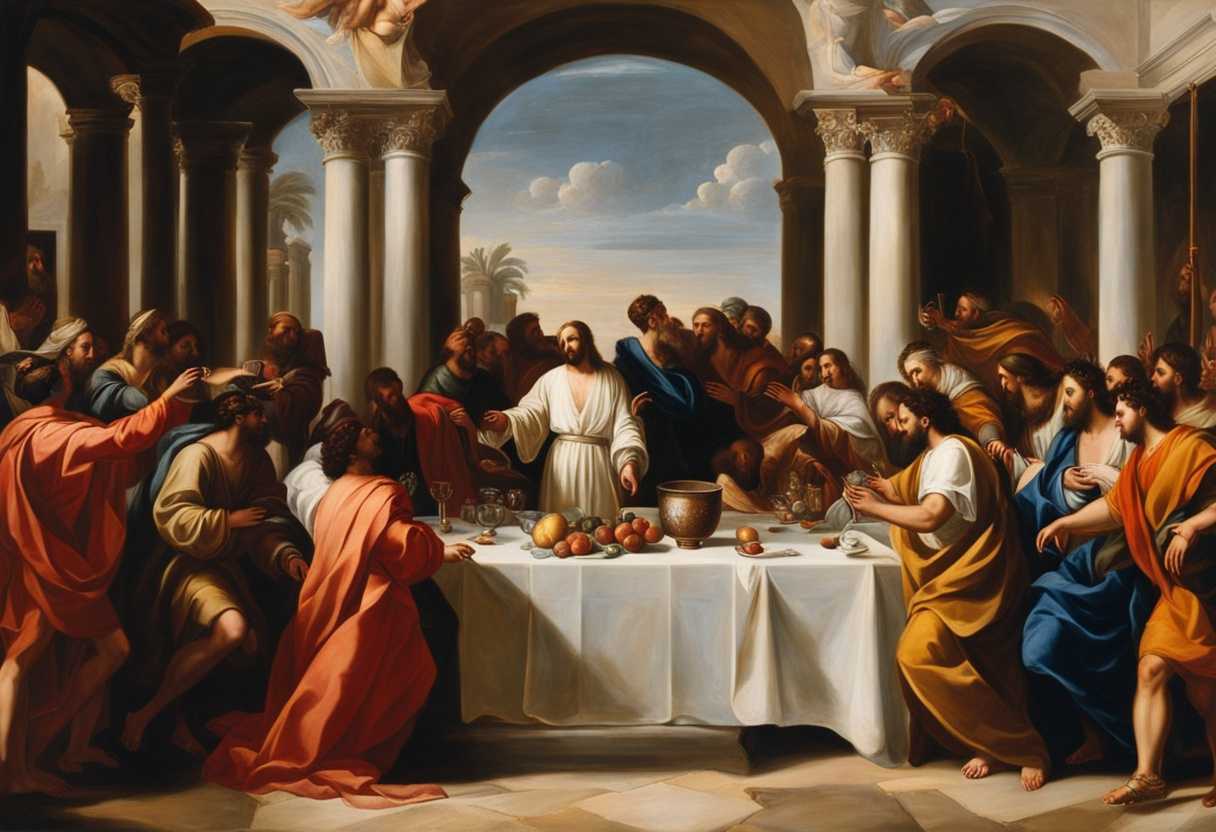
The scene in John chapter 2 takes place at a wedding in the town of Cana in Galilee. The guests are joyously celebrating the union of the bride and groom when Mary, the mother of Jesus, notices that the wine has run out. She approaches her son, Jesus, who is also present at the wedding along with his disciples. Mary informs Jesus of the situation, prompting him to perform his first public miracle.
Surrounded by friends, family, and other wedding guests, Jesus instructs the servants to fill six stone jars with water. Following his directions, the servants fill the jars to the brim, and miraculously, the water is turned into the finest wine. The headwaiter, unaware of the source of the wine, commends the bridegroom for saving the best wine for last, not realizing that it was Jesus who performed the miracle.
The atmosphere is filled with wonder and awe as the guests witness this extraordinary display of Jesus’ power. This event marks the beginning of Jesus’ public ministry and serves as a demonstration of his divine authority. The wedding at Cana becomes a memorable occasion, not only for the newlyweds but also for all those who were present to witness this miraculous sign.
What is John 2:2-11 about?
Wow, what an incredible moment in the Bible! This verse illustrates Jesus’s divine power and his ability to perform miracles that go beyond human understanding. Jesus demonstrates his miraculous power and shows his deep care and concern for others by turning water into wine at a wedding in Cana.
This miracle signifies the beginning of Jesus’s public ministry and serves as a symbol of the abundance and joy that he brings into people’s lives. It also highlights his desire to bring joy and celebration to special occasions and to demonstrate his love and compassion for humanity. Jesus’s extraordinary power and the transformative impact he can have on our lives are reminded to us as we reflect on this verse. It challenges us to trust in his ability to work miracles in our own situations and to have faith in his promise of abundance and joy. How amazing is it to witness Jesus’s miraculous power and his unending love for all of us in such a beautiful and symbolic way!
Understanding what John 2:2-11 really means
In the Gospel of John, we encounter a significant event that marks the beginning of Jesus’ public ministry: the miracle at the wedding in Cana. This miraculous occasion not only showcases Jesus’ divine power but also highlights His compassion and willingness to meet human needs in a tangible way. The context of a wedding in Jewish society holds immense cultural and social importance, emphasizing the joyous celebration and communal gathering that took place. It is within this setting that Jesus, His mother Mary, and His disciples were present, underscoring the significance of this event as a pivotal moment in revealing Jesus’ identity and mission.
“They have no more wine,” a seemingly simple statement, carries profound implications of potential embarrassment and social disaster for the hosts of the wedding feast. In response, Jesus cryptically remarks, “My hour has not yet come,” indicating His awareness of His divine timeline and the unfolding of His mission on earth. Mary’s directive to the servants, “Do whatever he tells you,” exemplifies her unwavering faith and trust in Jesus’ ability to resolve the situation, setting the stage for the miraculous intervention that follows. As the servants obediently fill the stone jars used for ceremonial washing with water, Jesus performs a miraculous transformation, turning the water into wine, symbolizing new life, joy, and the abundance of God’s blessings.
The quality of the wine produced, described as “the best wine,” reflects not only the excellence of Jesus’ miracles but also the lavish generosity of God in providing beyond expectations. This miraculous event echoes themes of transformation and renewal, resonating with the idea of personal growth and spiritual rebirth that are relevant to individuals today. Just as Jesus brought joy and abundance to the wedding in Cana, He offers the same transformative power to those who have faith and obedience in Him.
Drawing connections to related Bible passages, such as John 1:14, Isaiah 25:6, and Revelation 19:9, further illuminates the significance of Jesus’ ministry and the ultimate feast that awaits believers in the future. The relevance of Jesus’ first miracle extends beyond the historical event, serving as a timeless reminder of God’s miraculous power and His desire to bless His people abundantly. By reflecting on the lessons of trust, obedience, and the abundance of God’s blessings exemplified in this passage, readers are encouraged to place their faith in Jesus and experience His transformative work in their own lives.
In conclusion, the miracle at the wedding in Cana serves as a powerful testament to Jesus’ ability to bring about positive change, emphasizing the importance of faith, obedience, and the abundance of God’s blessings. As we navigate our own journeys, may we trust in Jesus’ transformative power and be open to experiencing His miracles in our lives, knowing that He is able to turn the ordinary into the extraordinary and bring forth joy and abundance beyond measure.
What does the abundance of wine signify spiritually?
The abundance of wine in this passage signifies spiritual blessing, abundance, and the generosity of God. It can be interpreted as a symbol of joy, celebration, and the abundance of blessings that God provides for His people. Through this miracle of turning water into wine, Jesus reveals His power to transform the ordinary into the extraordinary and to provide abundantly for our needs.
Furthermore, the presence of so much wine can also symbolize the new covenant that Jesus brings, which is marked by grace, abundance, and spiritual fulfillment. The grace and blessings of God flow abundantly for those who believe in Him, just as the wine flowed freely at the wedding feast. This miracle highlights Jesus’ role as the source of spiritual nourishment and joy, bringing forth blessings beyond what we can imagine. The abundance of wine in this passage ultimately serves as a powerful reminder of God’s provision, generosity, and grace in our lives. It encourages us to trust in His ability to meet our needs, to bring joy and celebration into our lives, and to transform the ordinary into something extraordinary through His power and grace.
Application
Think of your life as a bustling workplace. When a directive comes from a trusted leader, you act without hesitation. Just like the servants at the wedding in Cana followed Mary’s advice, you should listen and act on the guidance you receive from Christ. Trust that He can turn the mundane aspects of your life into something remarkable. Are you ready to commit to this path of faith and transformation?

Reverend Michael Johnson is an experienced Church Minister with a profound expertise in spirituality and guidance. With a serene presence and a compassionate heart, he has faithfully served his congregation for over 20 years, leading them on a spiritual journey towards inner peace and enlightenment. Reverend Johnson’s extensive knowledge of religious philosophies and profound understanding of human nature have made him a trusted confidant and mentor to many, as he seamlessly weaves his profound wisdom into life teachings. Reverend Johnson’s calming demeanor and empathetic nature continue to uplift and heal souls, nurturing a sense of unity and tranquility within his community.