
John 3:1-11 is about the symbolism of being born again through faith in Jesus Christ as a transformative spiritual rebirth leading to eternal life, emphasizing the importance of belief and salvation through God’s grace.
1 Now there was a man of the Pharisees named Nicodemus, a ruler of the Jews.
2 This man came to Jesus by night and said to him, “Rabbi, we know that you are a teacher come from God, for no one can do these signs that you do unless God is with him.”
3 Jesus answered him, “Truly, truly, I say to you, unless one is born again he cannot see the kingdom of God.”
4 Nicodemus said to him, “How can a man be born when he is old? Can he enter a second time into his mother’s womb and be born?”
5 Jesus answered, “Truly, truly, I say to you, unless one is born of water and the Spirit, he cannot enter the kingdom of God.
6 That which is born of the flesh is flesh, and that which is born of the Spirit is spirit.
7 Do not marvel that I said to you, ‘You must be born again.’
8 The wind blows where it wishes, and you hear its sound, but you do not know where it comes from or where it goes. So it is with everyone who is born of the Spirit.
9 Nicodemus said to him, “How can these things be?”
10 Jesus answered him, “Are you the teacher of Israel and yet you do not understand these things?
11 Truly, truly, I say to you, we speak of what we know, and bear witness to what we have seen, but you do not receive our testimony.
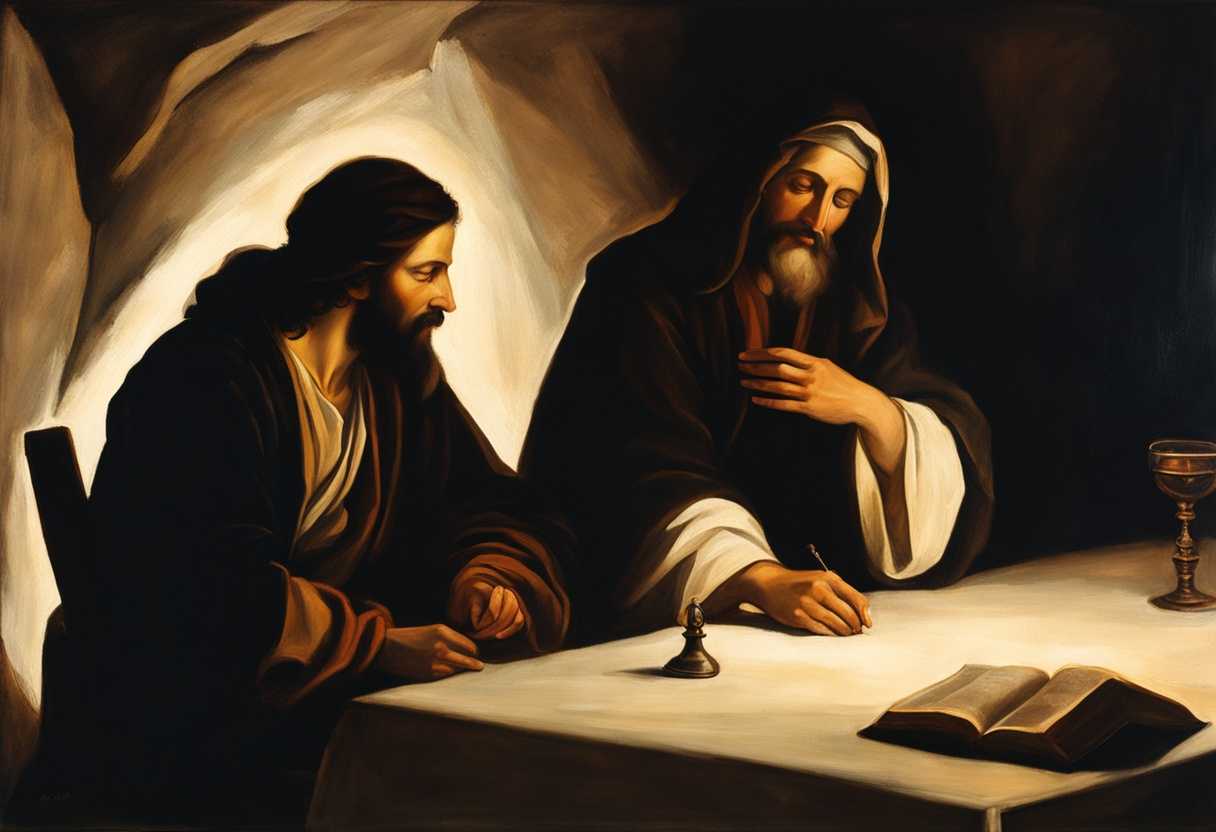
Setting the Scene for John 3:1-11
In John chapter 3, we find Nicodemus, a Pharisee and a member of the Jewish ruling council, coming to visit Jesus under the cover of night. The scene is set in Jerusalem, likely in a quiet corner or secluded area where Nicodemus can speak with Jesus privately without attracting attention. The night sky hangs overhead, casting a soft glow on the two figures engaged in deep conversation.
Nicodemus, a respected religious leader, approaches Jesus with curiosity and a desire to understand more about his teachings and the kingdom of God. Jesus, the Son of God, meets Nicodemus with patience and wisdom, engaging in a profound dialogue about being born again and the nature of salvation. The atmosphere is charged with a sense of mystery and revelation as these two men from different backgrounds come together to discuss matters of faith and eternal life.
As the conversation unfolds, Nicodemus grapples with the concept of spiritual rebirth, struggling to comprehend Jesus’ words. Jesus, in his gentle yet authoritative manner, explains the necessity of being born of water and the Spirit to enter the kingdom of God. The scene is a poignant moment of encounter between a seeker of truth and the embodiment of truth itself, as Jesus offers Nicodemus profound insights into the nature of God’s kingdom and the transformative power of faith.
What is John 3:1-11 about?
Jesus is speaking to Nicodemus, a Pharisee who comes to Him seeking spiritual guidance in this verse. Jesus explains to Nicodemus the concept of being “born again,” which refers to a spiritual rebirth or a new beginning in one’s relationship with God. Jesus emphasizes the importance of this spiritual renewal by stating that without being born again, one cannot see the kingdom of God. This highlights the transformative power of God’s Spirit in a person’s life, leading to a renewed understanding of God’s kingdom and a deeper relationship with Him.
Reflecting on this verse, it prompts us to consider the significance of spiritual renewal and the work of the Holy Spirit in our lives. It challenges us to examine whether we have experienced this spiritual rebirth and are actively growing in our faith. Jesus’ teaching to Nicodemus serves as a reminder that salvation is not merely a one-time event but an ongoing process of transformation and renewal by the power of God’s Spirit. It invites us to ponder our own spiritual journey and to seek a deeper understanding of God’s work in our lives.
Understanding what John 3:1-11 really means
In the Gospel of John, we encounter Nicodemus, a Pharisee and member of the Jewish ruling council, who approaches Jesus under the cover of night seeking understanding. This encounter sets the stage for a profound conversation on the necessity of being “born again” to see the Kingdom of God. Nicodemus, despite his high status, humbly acknowledges Jesus as a teacher from God, recognizing the miracles He performs. This reflects Nicodemus’ humility and curiosity, urging us to seek truth and understanding regardless of our position or knowledge, as echoed in Matthew 7:7.
Jesus responds to Nicodemus by introducing the concept of being “born again” to see the Kingdom of God, leading to confusion as Nicodemus takes His words literally. This notion of spiritual rebirth is further elaborated in 2 Corinthians 5:17, emphasizing the transformative power of becoming a new creation in Christ. Jesus explains the necessity of being born of water and the Spirit to enter the Kingdom of God, symbolizing baptism and the indwelling of the Holy Spirit, as seen in Titus 3:5, highlighting the importance of both physical and spiritual renewal.
Comparing the Spirit to the wind, Jesus illustrates its unseen yet powerful effects, encouraging trust in the mysterious work of the Holy Spirit in our lives, as depicted in Acts 2:2. Despite Jesus’ teachings, Nicodemus continues to struggle with understanding, prompting Jesus to gently rebuke him for his lack of spiritual insight, challenging us to grow in our understanding of God’s truths, as emphasized in Hebrews 5:12-14. The phrases “born again,” “born of water and the Spirit,” and “the wind blows where it wishes” all hold significant meaning in illustrating the transformative nature of faith and the mysterious workings of the Holy Spirit.
Today, the concept of being “born again” remains crucial for understanding the Christian faith and experiencing the transformative power of accepting Jesus. In a world searching for meaning and purpose, this passage offers hope for a new beginning and a deeper connection with God. Anecdotes of individuals experiencing profound life changes after encountering Christ, such as overcoming addiction and finding new purpose, serve as powerful illustrations of the reality of spiritual rebirth.
In conclusion, the dialogue between Jesus and Nicodemus underscores the importance of spiritual rebirth, the role of the Holy Spirit in transformation, and the call to seek deeper understanding of God’s truths. Readers are encouraged to reflect on their spiritual journey, embrace the call to be “born again,” and pursue a closer relationship with God in their daily lives.
How can we be born again spiritually?
To be born again spiritually, one must experience a transformation or renewal of the inner self. This process involves a personal decision and acceptance of a new way of living according to the teachings of Christ. It signifies a spiritual rebirth or awakening that leads to a new life and a deeper relationship with God. This rebirth is not physical but rather a transformation of the heart and mind, resulting in a new perspective and way of living guided by faith and love.
Being born again spiritually involves a conscious choice to turn away from sin and embrace a life of faith and obedience to God. It requires acknowledging our need for a Savior and accepting the saving grace offered through Jesus Christ. This spiritual renewal brings about a change in priorities, values, and behavior as one seeks to live in alignment with God’s will. It is a continual process of growth and transformation through the power of the Holy Spirit, leading to a life marked by love, joy, peace, and a deep sense of connection with God.
Application
Think of John’s words as a reboot for your soul, like updating your software to the latest version. Embrace God’s love as your ultimate lifehack. Let His grace be the fuel that powers your daily grind—both at work and at home. Feel the spark of faith reignite your spirit, pushing you toward a life of purpose. Are you ready to upgrade your life according to Jesus’ teachings?

Reverend Michael Johnson is an experienced Church Minister with a profound expertise in spirituality and guidance. With a serene presence and a compassionate heart, he has faithfully served his congregation for over 20 years, leading them on a spiritual journey towards inner peace and enlightenment. Reverend Johnson’s extensive knowledge of religious philosophies and profound understanding of human nature have made him a trusted confidant and mentor to many, as he seamlessly weaves his profound wisdom into life teachings. Reverend Johnson’s calming demeanor and empathetic nature continue to uplift and heal souls, nurturing a sense of unity and tranquility within his community.