
John 4:1-5 is about Jesus breaking societal norms by speaking to a Samaritan woman at the well, emphasizing the transformative power of faith and the inclusivity of God’s love.
4 Now when Jesus learned that the Pharisees had heard that Jesus was making and baptizing more disciples than John
2 (though Jesus himself did not baptize, but only his disciples),
3 he left Judea and departed again for Galilee.
4 And he had to pass through Samaria.
5 So he came to a town of Samaria called Sychar, near the field that Jacob had given to his son Joseph.
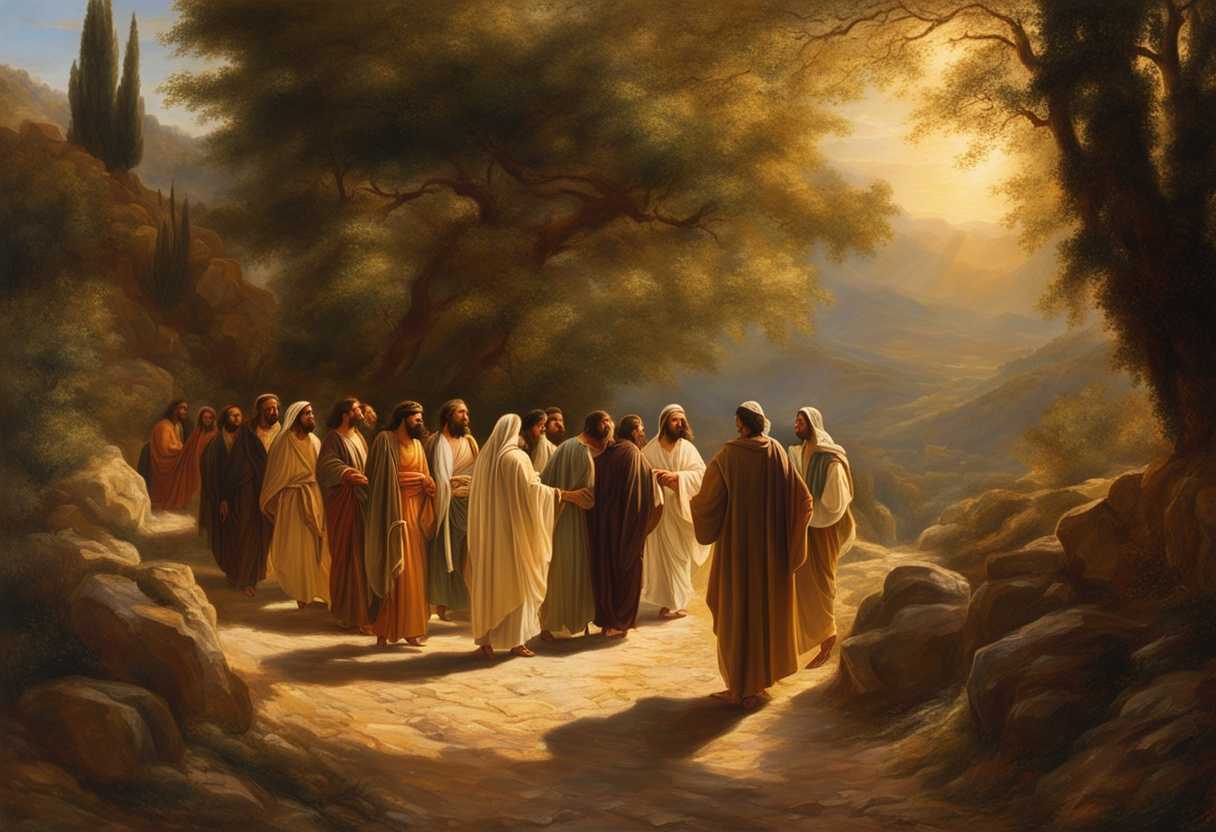
Setting the Scene for John 4:1-5
In John chapter 4, we find Jesus traveling from Judea to Galilee. Along the way, he passes through Samaria, a region where Jews and Samaritans had a long history of animosity and division. Tired from his journey, Jesus sits down by a well known as Jacob’s well, located near the Samaritan town of Sychar.
As Jesus rests by the well, a Samaritan woman approaches to draw water. This woman, unnamed in the text, is surprised when Jesus asks her for a drink. Their interaction is significant because Jews typically did not associate with Samaritans, let alone speak to Samaritan women in public. Despite the cultural barriers, Jesus engages the woman in conversation, revealing his knowledge of her personal life and offering her the gift of living water.
The scene at Jacob’s well is one of unexpected connection and revelation, where Jesus transcends societal norms to reach out to an individual in need of spiritual nourishment. The encounter between Jesus and the Samaritan woman serves as a powerful example of Jesus’ inclusive love and his willingness to engage with people from all walks of life.
What is John 4:1-5 about?
Jesus’s encounter with the Samaritan woman at the well in this verse exemplifies his inclusive and transformative love. Jesus is not merely talking about physical water but rather spiritual nourishment and eternal life by offering her living water. This interaction challenges societal norms and prejudices of the time, as Jesus, a Jewish man, engages in conversation with a Samaritan woman, breaking down barriers and demonstrating the universal reach of his message. Jesus’s willingness to meet people where they are, regardless of their background or circumstances, reminds us as we reflect on this story. He offers hope and grace to all who are willing to receive it, inviting the Samaritan woman, and by extension all of us, into a deeper relationship with him. Jesus offers living water to the Samaritan woman and also offers it to us today – a source of sustenance that quenches our thirst for meaning, belonging, and purpose.
So, as we meditate on this verse, let us consider the ways in which Jesus is offering us living water in our own lives. Are we open to receiving it, allowing it to flow through us and bring new life to our spirits? May we be inspired by the Samaritan woman’s encounter with Jesus, embracing the transformation and abundance that comes from accepting his gift of living water.
Understanding what John 4:1-5 really means
In John 4:1-5, we find Jesus embarking on a journey from Judea to Galilee, a route that led Him through the region of Samaria. This seemingly ordinary travel route holds profound significance when we consider the historical and cultural context of the Samaritans and Jews. The Samaritans and Jews had a long-standing animosity rooted in religious and cultural differences, making Jesus’ decision to pass through Samaria rather unconventional and noteworthy.
The mention that “He had to pass through Samaria” in verse 4 is not merely a geographical necessity but a deliberate choice by Jesus. This statement underscores a divine appointment, indicating that Jesus had a specific purpose in mind for His journey through Samaria. By intentionally breaking the social norms of His time and engaging with the Samaritans, Jesus sets an example for us to reach out to those who may be different from us, challenging us to break down barriers and prejudices that separate us from others.
Furthermore, the reference to “Jacob’s well” in the passage adds a layer of historical and spiritual significance to the encounter. This well, tied to the patriarch Jacob, serves as a reminder of God’s continuous work throughout generations. It symbolizes the interconnectedness of God’s plan and the continuity of His redemptive work, transcending cultural and ethnic boundaries.
The encounter at Jacob’s well in Samaria is not an isolated incident in Jesus’ ministry. It echoes themes of inclusivity and love for all people that are prevalent throughout the Gospels. The Parable of the Good Samaritan in Luke 10:25-37 and Jesus’ instruction in Acts 1:8 to be witnesses in Samaria highlight the overarching message of the Gospel: to love our neighbors, regardless of cultural or ethnic differences.
As we reflect on this passage, we are challenged to emulate Jesus’ example of breaking barriers and embracing divine appointments in our own lives. Just as Jesus intentionally journeyed through Samaria, we are called to step out of our comfort zones and engage with those who may be different from us. This may involve reaching out to marginalized communities, fostering understanding across social divides, and extending God’s love to all people.
Consider a modern-day parallel to Jesus’ encounter at Jacob’s well. Picture someone from a privileged background volunteering in a disadvantaged community, bridging social and economic gaps through acts of service and compassion. Such interactions have the potential to bring about mutual understanding and transformation, mirroring the impact of Jesus’ interaction with the Samaritan woman.
In conclusion, let us heed the call to action embedded in this passage. Reflect on opportunities in your life to break down barriers, build bridges, and extend God’s love to those around you. Trust that just as Jesus’ journey through Samaria was intentional and purposeful, God has a plan for your interactions and relationships, even in the most unlikely or challenging circumstances. Embrace divine appointments, step out in faith, and let love be the guiding force in all your interactions.
How can we break down societal barriers to show love?
We can break down societal barriers to show love by following the example of Jesus in this passage. Jesus approached the Samaritan woman at the well, despite the cultural norms and prejudices that existed between Jews and Samaritans. He engaged her in conversation, showing genuine care and compassion for her as an individual. Jesus demonstrated that love knows no boundaries and can transcend social barriers.
We can emulate Jesus by being willing to engage with people who may be different from us, whether it be in terms of race, culture, religion, or any other dividing factor. We can show love in a way that breaks down societal barriers by taking the time to listen and understand others. This kind of love builds bridges of understanding and compassion, fostering unity and connection in a world often divided by prejudice and discrimination. Breaking down societal barriers to show love ultimately requires a willingness to set aside our preconceived notions and biases, and to see each person as a valuable individual created by God. We too can demonstrate love by reaching out to those who may be marginalized or ostracized by society, just as Jesus saw beyond the labels and stereotypes of his time. Through acts of kindness, empathy, and respect, we can help to create a more inclusive and loving community where all are valued and accepted.
Application
Imagine juggling work deadlines and family commitments—yet finding the time to help a colleague who’s struggling. Jesus did just that with the Samaritan woman, shattering norms to touch a soul. Can you break out of your routine to spread Christ’s love? Will you reach across boundaries to share His grace and salvation? What step will you take today to walk in His path?

Reverend Michael Johnson is an experienced Church Minister with a profound expertise in spirituality and guidance. With a serene presence and a compassionate heart, he has faithfully served his congregation for over 20 years, leading them on a spiritual journey towards inner peace and enlightenment. Reverend Johnson’s extensive knowledge of religious philosophies and profound understanding of human nature have made him a trusted confidant and mentor to many, as he seamlessly weaves his profound wisdom into life teachings. Reverend Johnson’s calming demeanor and empathetic nature continue to uplift and heal souls, nurturing a sense of unity and tranquility within his community.