
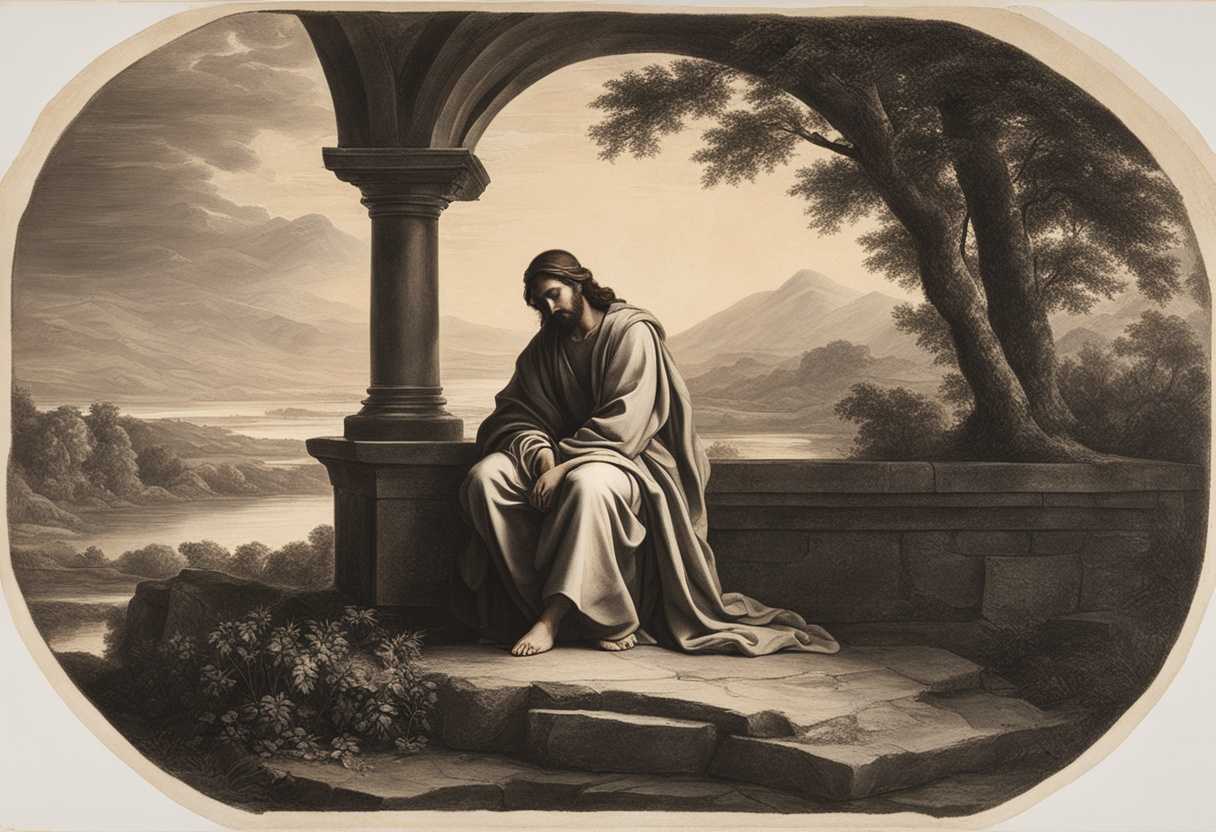
6 Jacob’s well was there; so Jesus, wearied as he was from his journey, was sitting beside the well. It was about the sixth hour.
Setting the Scene for John 4:6
In John chapter 4, we find Jesus traveling through Samaria on his way to Galilee. Tired from his journey, he stops at a well in the Samaritan town of Sychar while his disciples go into the town to buy food. It is midday, and the sun beats down on the dusty ground as Jesus sits alone by the well, seeking respite from the heat.
As Jesus rests, a Samaritan woman approaches the well to draw water. Her name is not mentioned in the passage, but we learn that she has had five husbands and is currently living with a man who is not her husband. This woman’s encounter with Jesus at the well is a significant moment in the Gospel of John, as Jesus engages her in conversation and reveals his identity as the Messiah.
The scene is set against the backdrop of the well, with the sound of water being drawn and the heat of the day palpable in the air. The Samaritan woman is surprised that Jesus, a Jewish man, would speak to her, a Samaritan woman with a questionable reputation. Yet, through their conversation, Jesus offers her living water, a metaphor for eternal life and spiritual fulfillment. This encounter at the well serves as a powerful example of Jesus’ love and acceptance for all people, regardless of their background or past mistakes.
What is John 4:6 about?
Imagine a moment of rest after a long journey. Picture Jesus, the embodiment of love and compassion, taking a break by the well. Even amidst his own weariness, he sits down, not just for physical rest, but also to be present in that moment. It’s a reminder that even when we are tired or feeling drained, it’s important to pause, reflect, and gather our strength.
This verse beautifully captures the humanity of Jesus, showing that even the Son of God experienced fatigue and needed moments of rest. It teaches us the importance of self-care, acknowledging our own limitations, and taking the time to rejuvenate our minds, bodies, and souls. Just like Jesus, we too need to find our own “well” of renewal, where we can find peace, solace, and a chance to recharge before continuing our own journeys.
Understanding what John 4:6 really means
Structure:
- Introduction and Context
- Key Phrases and Their Meanings
- Connection to Other Biblical Passages
- Relevance and Application Today
- Anecdote and Personal Reflection
- We encounter a moment that is rich in both humanity and divinity in John 4:6. Jesus, weary from His journey, sits by Jacob’s well. This scene, though seemingly simple, is profound. It highlights Jesus’ humanity—He experienced physical tiredness just like us. This verse sets the stage for His encounter with the Samaritan woman, which unfolds in subsequent verses.
The phrase “weary from His journey” is particularly meaningful. It shows that Jesus, though divine, embraced human limitations. This is echoed in Hebrews 4:15, which tells us that Jesus is able to empathize with our weaknesses because He was tempted in every way, just as we are, yet did not sin. His weariness underscores His solidarity with us in our daily struggles and fatigue.
The phrase “sat down by the well” also carries significant weight. Wells in biblical times were central gathering places, symbolic of life and sustenance. Jesus sitting by the well foreshadows the life-giving conversation He is about to have with the Samaritan woman. This ties back to Isaiah 55:1, where the invitation is extended to “come, all you who are thirsty, come to the waters.” Jesus positions Himself as the source of living water.
This passage connects deeply with other parts of Scripture. For instance, in John 7:37-38, Jesus proclaims that whoever believes in Him will have rivers of living water flowing from within them. This reinforces the idea that Jesus is the wellspring of spiritual life. Furthermore, His interaction with the Samaritan woman points to the breaking of social barriers, aligning with Galatians 3:28, which declares that in Christ, there is neither Jew nor Gentile, slave nor free, male nor female. This verse remains highly relevant in our modern lives. We often find ourselves weary from our own journeys—be it work, personal struggles, or spiritual battles. Jesus’ example shows us that it’s okay to rest and seek sustenance. Jesus reminds us that he meets us in our everyday places, turning ordinary moments into opportunities for profound encounters.
Let me share a story from my own life. Once, after a particularly exhausting week, I found myself sitting in a park, feeling utterly drained. It was in that quiet moment, much like Jesus at the well, that I felt a deep sense of God’s presence. Jesus meets us in our mundane moments, offering us rest and renewal, just as He met the woman at the well in her daily routine. John 4:6 invites us to see Jesus as both fully human and fully divine. It encourages us to embrace our own weariness and seek Jesus in our daily lives. Jesus understands our struggles and offers us the living water that quenches our deepest thirst as we reflect on this verse. Take a moment today to sit quietly, whether by a well, a park, or a quiet corner of your home, and invite Jesus into your weariness. He is there, ready to offer you rest and refreshment.
What barriers hinder us from receiving God’s blessings?
One barrier that can hinder us from receiving God’s blessings is a lack of faith. When we doubt God’s power and ability to provide for our needs, we limit the flow of blessings into our lives. Trusting in God’s promises and believing in His faithfulness opens the door for His blessings to manifest in our lives.
Another barrier is a lack of obedience to God’s commands. When we choose to live in disobedience and go against God’s will, we distance ourselves from His blessings. Obedience is key to walking in alignment with God’s plan for our lives and positioning ourselves to receive His abundant blessings.
A third barrier can be a mindset of unworthiness or guilt. Believing that we are not deserving of God’s blessings or carrying the weight of past sins can block us from fully receiving the blessings that God wants to pour out on us. It is important to remember that God’s blessings are given out of His grace and love, not based on our own merit or worthiness.
Application
Picture your busy life as a bustling office full of deadlines and meetings. Now, think of Jesus taking a moment by the watercooler to talk to someone society overlooked. Could you spare just a bit of your time to offer a kind word or a helping hand to someone who needs it? Break away from the usual grind and show the same compassion Jesus did. How can you make a difference for someone today?

Reverend Michael Johnson is an experienced Church Minister with a profound expertise in spirituality and guidance. With a serene presence and a compassionate heart, he has faithfully served his congregation for over 20 years, leading them on a spiritual journey towards inner peace and enlightenment. Reverend Johnson’s extensive knowledge of religious philosophies and profound understanding of human nature have made him a trusted confidant and mentor to many, as he seamlessly weaves his profound wisdom into life teachings. Reverend Johnson’s calming demeanor and empathetic nature continue to uplift and heal souls, nurturing a sense of unity and tranquility within his community.