
John 5:1-17 is about Jesus healing a man on the Sabbath, highlighting his authority as the Son of God to bring physical and spiritual healing to humanity despite opposition and legalistic restrictions.
1 After this there was a feast of the Jews, and Jesus went up to Jerusalem.
2 Now there is in Jerusalem by the Sheep Gate a pool, in Aramaic called Bethesda, which has five roofed colonnades.
3 In these lay a multitude of invalids—blind, lame, and paralyzed.
4 for an angel of the Lord went down at certain seasons into the pool and stirred up the water; whoever stepped in first after the stirring of the water was healed of whatever disease he had.
5 One man was there who had been an invalid for thirty-eight years.
6 When Jesus saw him lying there and knew that he had already been there a long time, he said to him, “Do you want to be healed?”
7 The sick man answered him, “Sir, I have no one to put me into the pool when the water is stirred up, and while I am going another steps down before me.”
8 Jesus said to him, “Get up, take up your bed, and walk.”
9 And at once the man was healed, and he took up his bed and walked.
10 So the Jews said to the man who had been healed, “It is the Sabbath, and it is not lawful for you to take up your bed.”
11 But he answered them, “The man who healed me, that man said to me, ‘Take up your bed, and walk.’”
12 They asked him, “Who is the man who said to you, ‘Take up your bed and walk’?”
13 Now the man who had been healed did not know who it was, for Jesus had withdrawn, as there was a crowd in the place.
14 Afterward Jesus found him in the temple and said to him, “See, you are well! Sin no more, that nothing worse may happen to you.”
15 The man went away and told the Jews that it was Jesus who had healed him.
16 And this was why the Jews were persecuting Jesus, because he was doing these things on the Sabbath.
17 But Jesus answered them, “My Father is working until now, and I am working.”
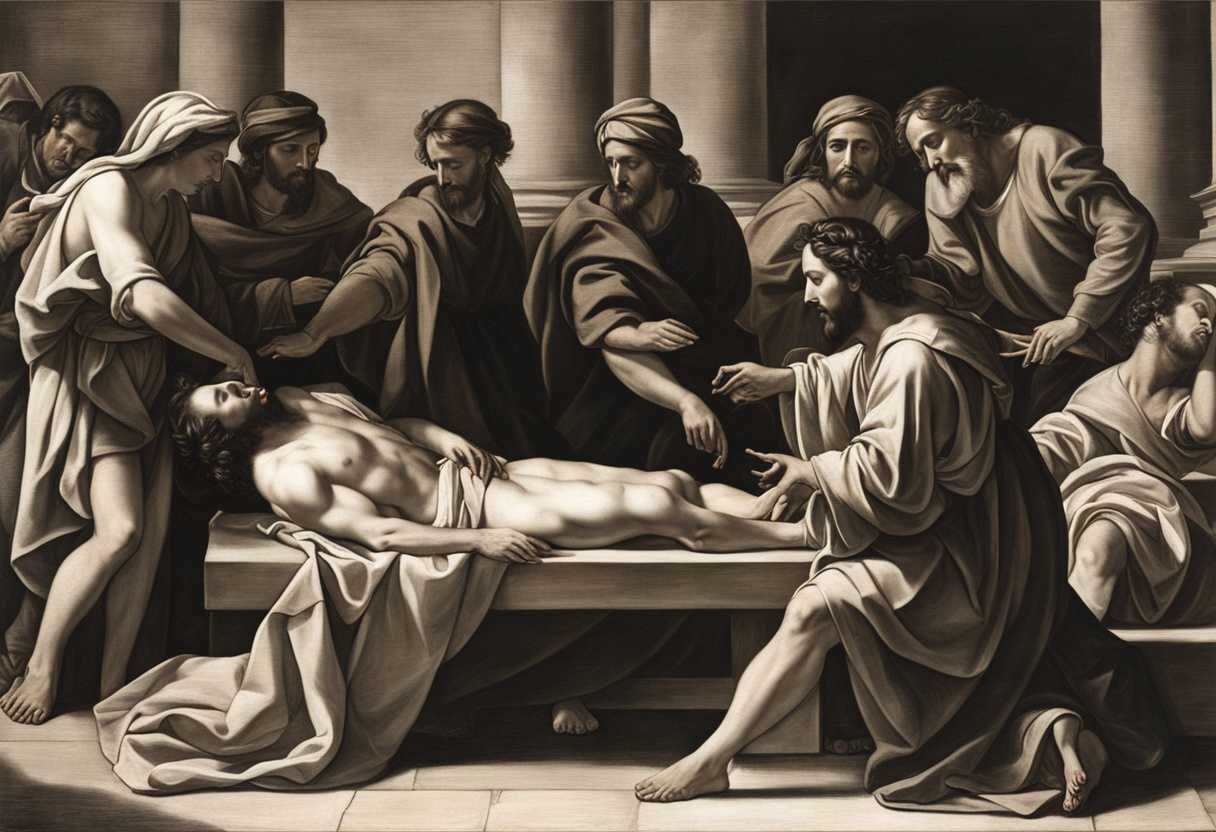
Setting the Scene for John 5:1-17
In John chapter 5, we find Jesus in Jerusalem during one of the Jewish festivals. The scene is set at the Pool of Bethesda, a place known for its healing properties. Surrounding the pool are five covered colonnades where a great number of disabled people, blind, lame, and paralyzed, gather in hopes of being healed. The atmosphere is filled with anticipation and desperation as these individuals wait for the stirring of the water, believed to be an angel’s touch that brings healing.
Among the crowd is a man who has been paralyzed for 38 years. His name is not mentioned, but his presence is significant as Jesus approaches him and asks, “Do you want to get well?” The man explains his situation, expressing his inability to reach the water in time for healing. Jesus, moved by compassion, tells him to pick up his mat and walk. Miraculously, the man is healed instantly and walks away, carrying his mat, a living testimony to the power and compassion of Jesus. This encounter sparks controversy among the Jewish leaders who question the man for carrying his mat on the Sabbath, leading to a deeper discussion about Jesus’ authority and his relationship with God.
What is John 5:1-17 about?
This verse is a powerful example of Jesus’ compassion and willingness to heal, even when it goes against the religious customs of the time. Jesus not only demonstrates his divine power but also challenges the legalistic and rigid interpretations of the Sabbath laws that placed restrictions on acts of mercy and kindness by healing a man on the Sabbath at the pool of Bethesda. This incident highlights Jesus’ message of love, forgiveness, and grace, showing that his priority was always to alleviate suffering and bring restoration to those in need. This verse reminds us of the importance of compassion, empathy, and putting the needs of others above rigid traditions in a world often governed by rules and regulations. It prompts us to reflect on how we can embody Jesus’ example of kindness and healing in our own lives, even if it means going against the status quo or facing criticism from those who uphold strict legalistic interpretations. This verse ultimately challenges us to prioritize love and mercy in all our actions, just as Jesus did during his time on earth.
Understanding what John 5:1-17 really means
In the bustling city of Jerusalem, near the Sheep Gate, lies the pool of Bethesda, a place renowned for its healing powers. Here, the scene unfolds with Jesus, the central figure, encountering a man who had been an invalid for 38 long years, lying by the pool, hoping for a miraculous change in his condition. Jesus poses a seemingly straightforward yet profound question to the man, “Do you want to get well?” This inquiry cuts to the core of the man’s desire for healing, prompting him to acknowledge his own longing for change and take ownership of his well-being.
With a commanding voice, Jesus instructs the invalid man, “Get up! Pick up your mat and walk.” In these words, we witness the transformative power of Jesus’ command, immediately manifesting in the man’s ability to rise and walk. This moment encapsulates the authority and efficacy of Jesus’ words in bringing about tangible change in the man’s life. Furthermore, Jesus elucidates His divine mission by stating, “My Father is always at his work to this very day, and I too am working,” aligning His actions with the continuous work of God, underscoring the divine nature of His mission on earth.
Drawing parallels from related Bible passages, such as Isaiah 35:6, Mark 2:9-11, and Psalm 121:3-4, we see a consistent theme of miraculous healing, divine authority, and God’s unwavering care for His people. These passages serve as a backdrop to the miraculous event at the pool of Bethesda, reinforcing the significance of Jesus’ actions and teachings in the broader biblical narrative. Today, the message of this passage resonates with individuals grappling with various forms of affliction, urging them to examine their desire for healing, take proactive steps towards well-being, and trust in God’s continuous work in their lives.
Consider a scenario where a person struggling with addiction encounters a pivotal question, “Do you really want to get well?” This moment of introspection prompts a deep reflection on their readiness for change and sets them on a path of action towards recovery. Just as the invalid man picked up his mat and walked, this individual, supported by a community and newfound determination, embarks on a journey of transformation and healing. In conclusion, the narrative at the pool of Bethesda serves as a poignant reminder of the interplay between desire, faith, and action in the process of healing, emphasizing God’s active presence in our lives and calling us to take responsibility for our well-being.
How can we be instruments of healing and restoration?
We can be instruments of healing and restoration by following the example set by Jesus in the passage. We can show empathy and care towards those who are suffering, just as Jesus saw the sick man lying by the pool and approached him with compassion. We can be agents of healing in their lives by reaching out to those in need and offering support, encouragement, and practical help. We can also bring about restoration by speaking words of life and truth, like Jesus. Our words have the power to uplift, inspire, and bring hope to those who are in despair. We can help restore their faith, confidence, and sense of worth by sharing the love and grace of God with others. Through our actions and words, we can be a source of healing and restoration to those around us, bringing light into their darkness and pointing them towards the ultimate healer, Jesus Christ.
Application
Imagine juggling work, family, and life’s chaos, yet still finding moments to bring light to someone’s day. Jesus healed a man by the pool of Bethesda, embodying pure compassion. Can you carve out time to show that same love to those around you? Can you be the beacon of kindness in someone’s storm? If Jesus could make a difference, why can’t you?

Reverend Michael Johnson is an experienced Church Minister with a profound expertise in spirituality and guidance. With a serene presence and a compassionate heart, he has faithfully served his congregation for over 20 years, leading them on a spiritual journey towards inner peace and enlightenment. Reverend Johnson’s extensive knowledge of religious philosophies and profound understanding of human nature have made him a trusted confidant and mentor to many, as he seamlessly weaves his profound wisdom into life teachings. Reverend Johnson’s calming demeanor and empathetic nature continue to uplift and heal souls, nurturing a sense of unity and tranquility within his community.