
John 5:19-21 is about Jesus explaining to the Jewish leaders that just as God the Father has the power to give life and judge, so does the Son have the authority to give life and pronounce judgment.
19 So Jesus said to them, “Truly, truly, I say to you, the Son can do nothing of his own accord, but only what he sees the Father doing. For whatever the Father does, that the Son does likewise.
20 For the Father loves the Son and shows him all that he himself is doing. And greater works than these will he show him, so that you may marvel.
21 For as the Father raises the dead and gives them life, so also the Son gives life to whom he will.
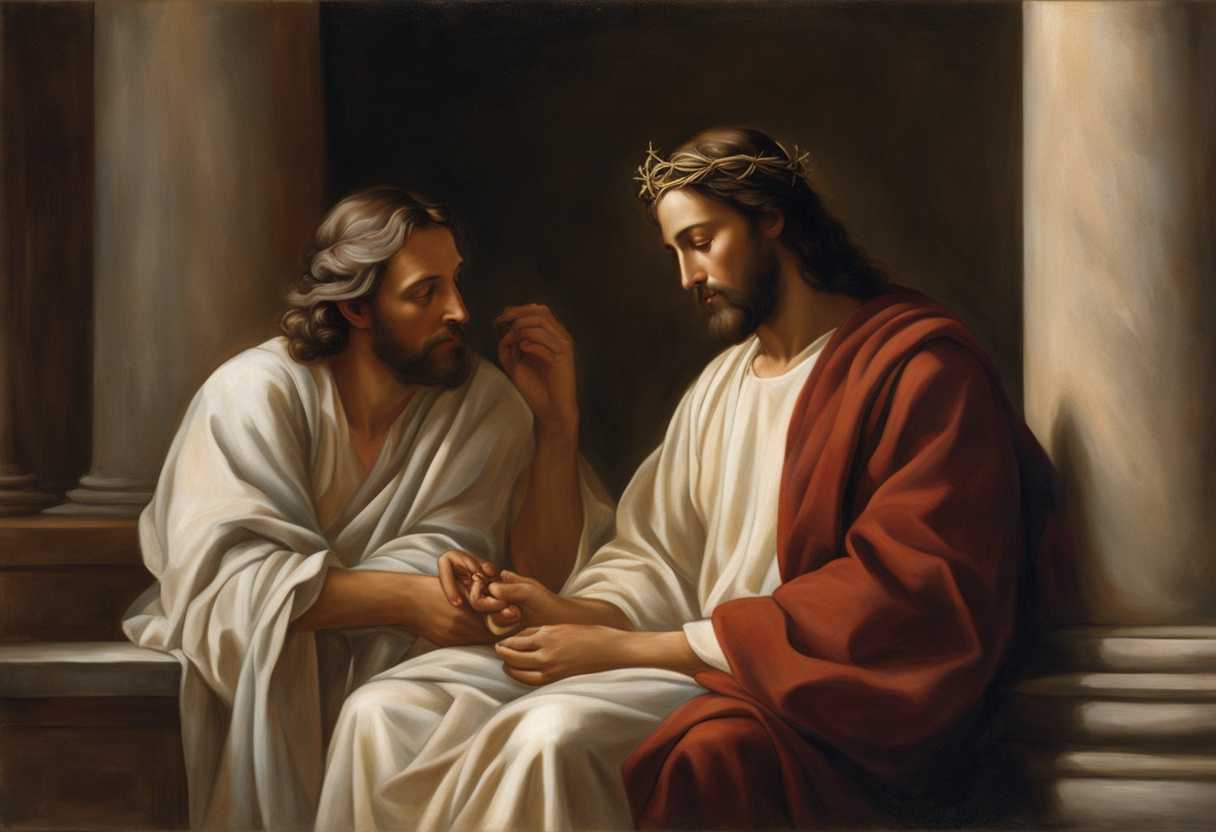
Setting the Scene for John 5:19-21
In John chapter 5, we find Jesus in Jerusalem during one of the Jewish festivals. The scene is set near the Pool of Bethesda, a place known for its healing properties. Surrounding the pool are many sick and disabled people, all hoping for a miraculous cure by being the first to enter the water when it is stirred.
Among the crowd is a man who has been paralyzed for 38 years. He catches Jesus’ attention, and Jesus approaches him with compassion. The man explains his situation, and Jesus, with great power and authority, tells him to pick up his mat and walk. In an instant, the man is healed and walks away, rejoicing in his newfound strength.
The Pharisees, who witness this miracle, are filled with anger and disbelief at Jesus’ actions. They question him about healing on the Sabbath, to which Jesus responds with wisdom and clarity, asserting his divinity and his authority to do the work of his Father. This powerful encounter showcases Jesus’ compassion, power, and divine nature, setting the stage for further teachings and miracles to come.
What is John 5:19-21 about?
Jesus emphasizes the intimate relationship He has with God the Father in this verse. Jesus highlights that His actions are in perfect alignment with the will of God by stating that He does what He sees the Father doing. This speaks to the unity and harmony within the Trinity, where Jesus, as the Son, fully embodies the nature and will of the Father. It also points to Jesus’ obedience and submission to God’s plan and purpose.
Furthermore, Jesus mentions that He has the power to give life and judgment. This highlights the authority and sovereignty that Jesus possesses. Jesus is referring to His ability to offer eternal life and salvation to those who believe in Him by giving life. On the other hand, by mentioning judgment, Jesus is alluding to the fact that He will judge all humankind based on their response to Him and their deeds. This verse underscores Jesus’ role as both the source of life and as the ultimate Judge.
So, as we reflect on this verse, we are called to see Jesus as the perfect representation of the Father, the source of life, and the righteous Judge. It challenges us to align our actions and will with God’s, to trust in Jesus as the giver of eternal life, and to live in a way that honors His authority and judgment. How does this understanding of Jesus’ relationship with the Father impact your own understanding of obedience, salvation, and accountability before God?
Understanding what John 5:19-21 really means
In John 5:19-21, we find Jesus responding to the Jewish leaders who are questioning His authority and actions, particularly His healing on the Sabbath. It’s crucial to grasp the significance of understanding Jesus’ relationship with the Father and His divine authority in this context. Jesus makes a profound statement, “The Son can do nothing by himself; he can do only what he sees his Father doing.” This highlights the unity and harmony between Jesus and God the Father, showcasing Jesus’ complete dependence on and obedience to the Father.
Moreover, Jesus further emphasizes this unity by stating, “Whatever the Father does the Son also does.” This indicates that Jesus’ actions are a direct reflection of God’s will and work, affirming His divine nature and role in God’s plan. The passage also reveals the intimate and loving relationship between the Father and the Son, as Jesus mentions, “For the Father loves the Son and shows him all he does.” This intimate bond suggests that Jesus’ knowledge and actions are rooted in this divine love.
Looking ahead, Jesus speaks of even greater works that He will show, including His resurrection, to evoke amazement and faith in His power and authority. He asserts His authority to give life, both physically and spiritually, stating, “For just as the Father raises the dead and gives them life, even so the Son gives life to whom he is pleased to give it.” This connection to the ultimate hope of resurrection and eternal life underscores Jesus’ divine power and sovereignty.
In related passages like John 14:10, Philippians 2:6-8, and Colossians 1:19-20, we see further reinforcement of Jesus’ unity with the Father, His humility, obedience, and His role in reconciliation and redemption. Understanding Jesus’ divine authority and relationship with the Father today helps believers trust in His power and guidance, encouraging them to seek a deeper relationship with God modeled after Jesus’ obedience and unity with the Father. This understanding also offers hope in the promise of resurrection and eternal life through Jesus.
Consider the analogy of a child learning from a parent, mimicking their actions and words. Just as the child trusts and follows the parent’s guidance, we are called to trust and follow Jesus, who perfectly reflects the Father’s will. Reflect on personal stories of miraculous healings or transformations through faith in Jesus, illustrating His ongoing power to give life and perform “greater works.”
In conclusion, the passage in John 5:19-21 illuminates Jesus’ unity with the Father, His divine authority, and the promise of life. Let us deepen our faith and trust in Jesus, knowing that He acts in perfect harmony with God’s will and love.
How can we align our will with God’s?
We can align our will with God’s by following the example of Jesus described in John 5:19-21. Our focus should be on seeking God’s will in all aspects of our lives, just as Jesus stated that He only does what He sees the Father doing and that the Father loves the Son and shows Him all He does. We can better understand His desires and purposes for us by closely observing and learning from God.
Furthermore, by acknowledging that God is the source of all life and that through Him all things are possible, we can align our will with His by fully trusting in His power and sovereignty. This involves surrendering our own desires and plans to God, allowing Him to guide us in the path He has laid out for us. We can more effectively live in accordance with His will and experience the abundance of life He promises to those who seek Him by leaning on God’s strength and wisdom. Aligning our will with God’s requires a deep sense of humility, obedience, and faith. It involves submitting our own desires and ambitions to God, trusting in His guidance, and seeking to imitate the example set by Jesus in following God’s will wholeheartedly. We can walk in harmony with God’s perfect will for our lives by prioritizing our relationship with Him and allowing His love and wisdom to shape our decisions and actions.
Application
Imagine navigating your career or family life with clear guidance from a trusted mentor. In John 5:19-21, Jesus shows us the importance of aligning our actions with a higher purpose. As you ponder this, are you ready to let His transformative grace fuel your decisions? Surrender to His will and witness the growth and fulfillment in your life. Why not seize this opportunity to experience the abundant life He promises?

Reverend Michael Johnson is an experienced Church Minister with a profound expertise in spirituality and guidance. With a serene presence and a compassionate heart, he has faithfully served his congregation for over 20 years, leading them on a spiritual journey towards inner peace and enlightenment. Reverend Johnson’s extensive knowledge of religious philosophies and profound understanding of human nature have made him a trusted confidant and mentor to many, as he seamlessly weaves his profound wisdom into life teachings. Reverend Johnson’s calming demeanor and empathetic nature continue to uplift and heal souls, nurturing a sense of unity and tranquility within his community.