
John 5:7 is about the man at the pool of Bethesda who believed that his healing was dependent on being the first to step into the troubled waters, highlighting a belief in the power of superstition and human efforts instead of relying on the grace and sovereignty of God for healing and restoration.
7 The sick man answered him, “Sir, I have no one to put me into the pool when the water is stirred up, and while I am going another steps down before me.”
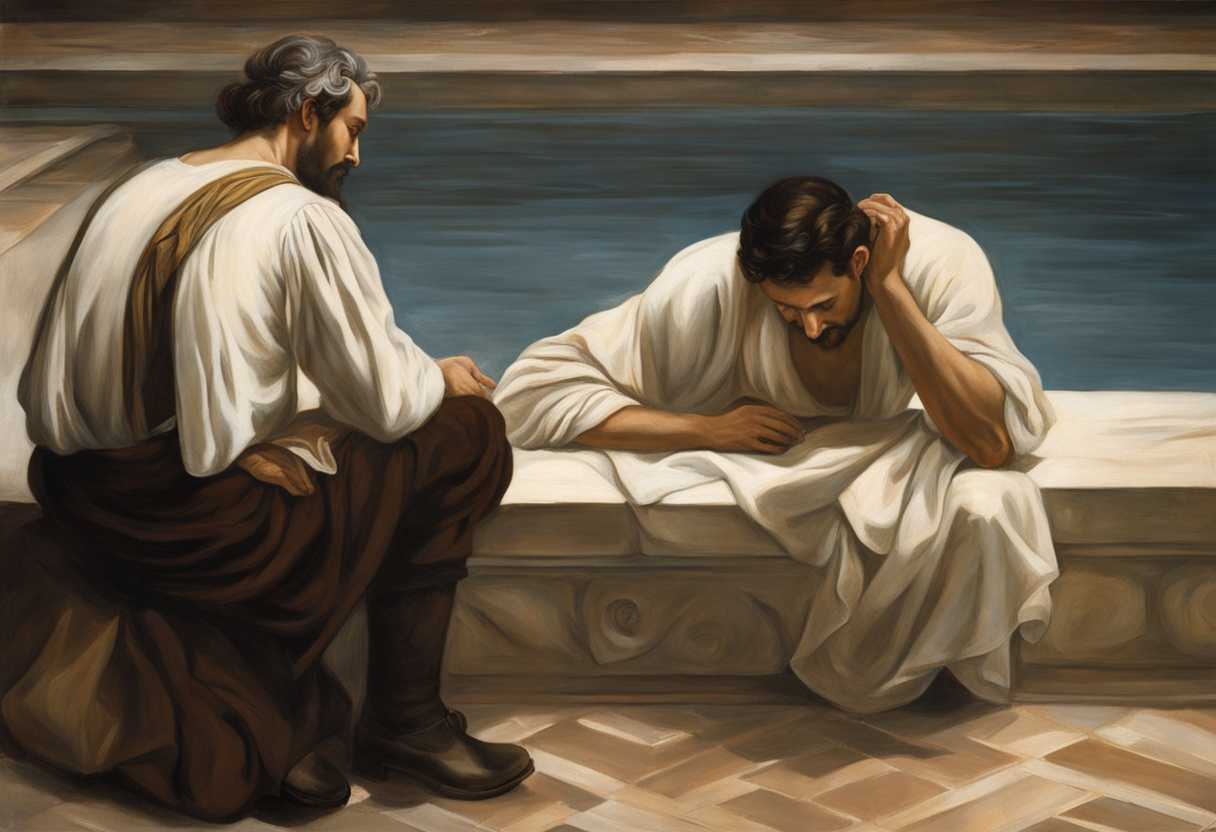
Setting the Scene for John 5:7
In John chapter 5, we find Jesus at the Pool of Bethesda in Jerusalem. The scene is bustling with activity as a multitude of people gather around the pool. Among them is a man who has been paralyzed for 38 years, lying on a mat, hoping for a miracle. The man’s name is not mentioned in the passage, but we can imagine the desperation and longing in his eyes as he watches the waters for any sign of movement.
The belief was that an angel would come down and stir the waters, and the first person to enter the pool after this would be healed. This superstition had led to a crowd of sick and disabled people waiting by the pool, hoping for their chance at healing. In the midst of this crowd, Jesus approaches the paralyzed man and asks him a simple yet profound question, “Do you want to get well?” This question sets the stage for a miraculous healing that would not only change the man’s life but also reveal Jesus’ divine power and compassion to those present.
What is John 5:7 about?
The author in this verse from the book of John in the Bible highlights the concept of testimony or evidence, indicating that three entities bear witness to something significant. This verse is often interpreted in the context of the Christian belief in the Trinity – the Father, the Son (Jesus Christ), and the Holy Spirit. These three divine persons are often seen as testifying to the truth of God’s presence and work in the world. The author may be emphasizing the importance of multiple sources of evidence or validation by mentioning the idea of three entities testifying. Having multiple testimonies in matters of faith and spirituality can reinforce the truth and significance of a belief or message, just as multiple witnesses can strengthen a case in legal proceedings. This verse can encourage believers to seek out various forms of confirmation and validation in their spiritual journey, recognizing the diverse ways in which God’s presence and truth can be revealed.
Reflecting on this verse can lead us to ponder the depth and richness of our faith, as well as the different ways in which we can experience and witness the presence of the divine in our lives. It challenges us to consider the various sources of testimony in our spiritual journey and to be open to the ways in which God may reveal Himself to us through different means. The multiplicity of witnesses in our faith can strengthen our conviction and understanding of the divine mysteries around us, just as three testimonies can provide a stronger case in a court of law.
Understanding what John 5:7 really means
In the narrative of the healing at the Pool of Bethesda, John 5:7 captures a poignant moment where a man, plagued by illness for nearly four decades, expresses his profound helplessness to Jesus. The man’s words, “Sir, I have no one to help me into the pool,” resonate with a deep sense of isolation and desperation, highlighting the fundamental human longing for community and support in times of struggle. This phrase unveils the raw vulnerability of the man, underscoring his reliance on others for a chance at healing, a sentiment that many can empathize with in their own moments of need.
Furthermore, the mention of the stirring of the water in the pool symbolizes the man’s unwavering hope for a miraculous cure, even in a situation where the odds seem insurmountable. This belief in the possibility of healing through divine intervention reflects a universal yearning for restoration and wholeness, despite the seemingly impossible circumstances one may face. The juxtaposition of human frailty and resilient hope in this verse invites contemplation on the complexities of faith and the unwavering pursuit of healing in the face of adversity.
Drawing parallels to other biblical passages, such as Mark 2:1-12, where the faith of the paralytic man’s friends leads to his healing, underscores the transformative power of community and collective faith in overcoming obstacles. In a world where many grapple with feelings of abandonment and helplessness, Psalm 46:1 and Isaiah 41:10 offer solace by affirming God’s constant presence as a refuge and source of strength in times of trouble. These verses serve as beacons of hope, reminding individuals of the enduring support and comfort found in God’s unwavering love.
The relevance of John 5:7 extends to contemporary society, where individuals often navigate challenges that leave them feeling isolated and overlooked. Like the man at the pool, many yearn for companionship and assistance in their moments of distress, emphasizing the vital role of community in providing solace and support. This verse serves as a poignant reminder of the interconnectedness of humanity and the profound impact of extending a helping hand to those in need, mirroring Christ’s compassion and selfless love for all.
In a modern-day scenario, envision a person grappling with chronic illness and emotional turmoil, akin to the man awaiting healing at the pool. Amidst their struggles, a compassionate neighbor steps in, offering practical aid and emotional comfort, embodying the spirit of Christ’s love in tangible ways. This narrative illustrates the transformative power of empathy and kindness, showcasing how individuals can embody Christ’s love by extending grace and support to those facing adversity.
In conclusion, John 5:7 encapsulates the essence of human vulnerability and the innate desire for connection and healing. It beckons individuals to cultivate awareness of those around them who may be silently battling their own trials, urging them to embody God’s love through acts of compassion and solidarity. Ultimately, this verse directs hearts towards Jesus, the ultimate source of healing and restoration, who stands ever-ready to offer solace, hope, and renewal to all who seek His comforting embrace.
How can we deepen our faith in Christ?
We can deepen our faith in Christ by recognizing His authority and power. Our faith in Him can grow stronger as we reflect on His miraculous works, teachings, and the fulfillment of prophecies in the Bible. We can also draw closer to Christ through prayer, worship, and studying His Word, allowing His truth to penetrate our hearts and minds, increasing our trust and belief in Him.
Furthermore, we can deepen our faith by surrendering our doubts, fears, and worries to Him. Our faith is strengthened as we acknowledge our need for His guidance, strength, and comfort in all aspects of our lives. We can experience a deeper connection with Christ and a more profound faith that sustains us in all circumstances by fully relying on Him and allowing Him to work in and through us.
Application
Friends, think of your daily grind at work or the hustle to care for your family. Are you ready to leave behind doubts, fears, and insecurities, much like shedding an old, worn-out coat? Just as Jesus asked the man at Bethesda, “Do you want to get well?” you must decide if you’re prepared to embrace true healing and transformation. It’s time to step into the abundant life and freedom available to you. Take a moment right now, look into your heart, and ask yourself: Do you want to get well?

Reverend Michael Johnson is an experienced Church Minister with a profound expertise in spirituality and guidance. With a serene presence and a compassionate heart, he has faithfully served his congregation for over 20 years, leading them on a spiritual journey towards inner peace and enlightenment. Reverend Johnson’s extensive knowledge of religious philosophies and profound understanding of human nature have made him a trusted confidant and mentor to many, as he seamlessly weaves his profound wisdom into life teachings. Reverend Johnson’s calming demeanor and empathetic nature continue to uplift and heal souls, nurturing a sense of unity and tranquility within his community.