
John 5:8 is about Jesus telling a disabled man to take up his mat and walk as a symbol of his physical and spiritual healing, emphasizing faith and the transformative power of belief in God.
8 Jesus said to him, “Get up, take up your bed, and walk.”
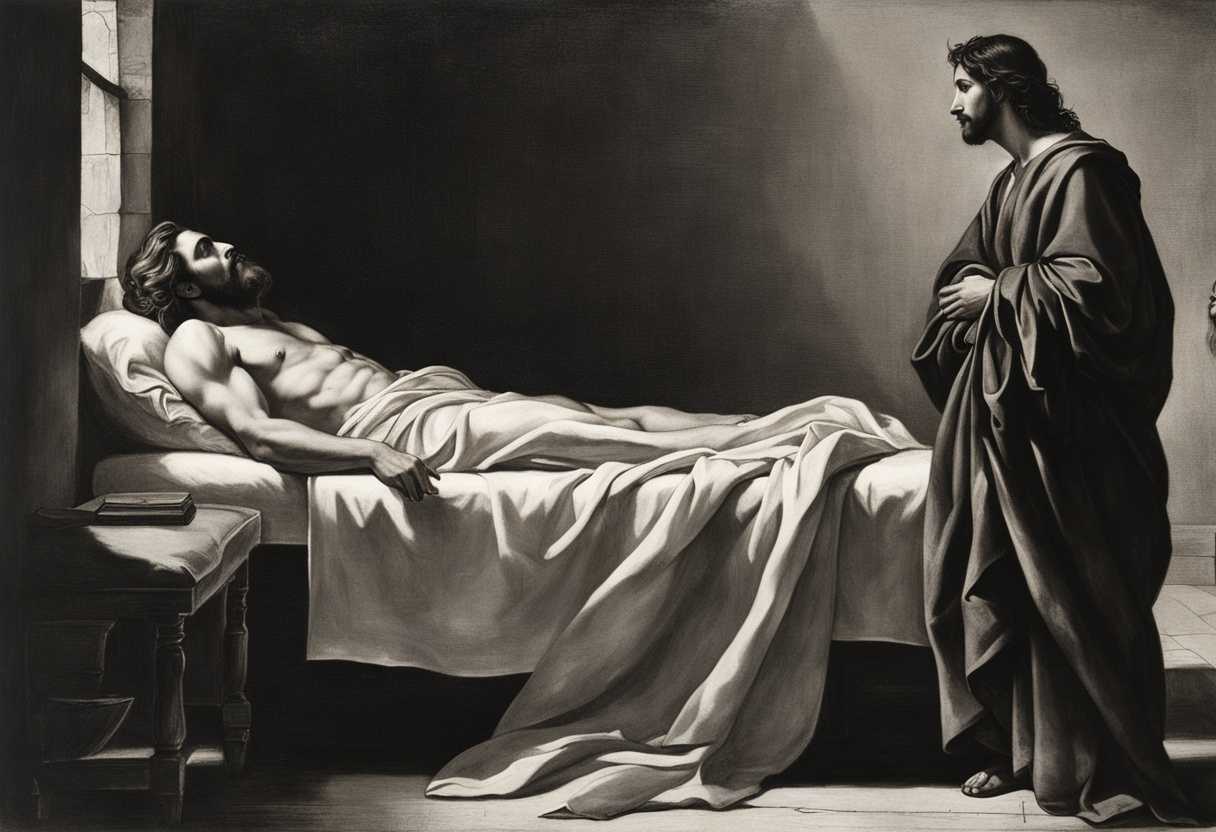
Setting the Scene for John 5:8
In John chapter 5, we find Jesus at the Pool of Bethesda in Jerusalem. The scene is bustling with activity as a multitude of people, including the sick, blind, lame, and paralyzed, gather around the pool. The atmosphere is filled with a sense of desperation and hope as these individuals believe in the healing powers of the water, which was believed to be stirred by an angel at certain times, granting healing to the first person who entered the pool.
Among the crowd is a man who has been paralyzed for 38 years. He lies on a mat, patiently waiting for someone to help him into the pool when the water is stirred. Jesus approaches him and asks a simple yet profound question, “Do you want to get well?” The man expresses his desire for healing, but explains his inability to enter the pool in time due to his condition. Jesus then performs a miraculous healing, commanding the man to pick up his mat and walk, instantly restoring his health and mobility. This powerful moment of compassion and divine intervention showcases Jesus’ authority and compassion, offering not just physical healing but also spiritual restoration to those in need.
What is John 5:8 about?
Imagine being unable to walk for 38 years, feeling trapped and helpless. Jesus shows us the power of compassion and healing in this verse. Jesus demonstrates his ability to transform lives and offer hope in times of despair by healing the paralytic man. This miracle is a reminder of the incredible love and mercy that Jesus has for each and every one of us.
Have you ever felt paralyzed by a situation in your life? Maybe it’s a challenge that seems insurmountable or a burden that weighs heavily on your heart. Just like the paralyzed man at the pool of Bethesda, Jesus wants to bring healing and restoration to your life. He offers us the opportunity to break free from our limitations and experience the fullness of life that he promises us.
Let this verse inspire you to have faith in the healing power of Jesus. Trust that no matter how dire your circumstances may seem, there is always hope in his compassion and grace. Jesus can bring healing and renewal to your life as well, just as he healed the paralyzed man.
Understanding what John 5:8 really means
In the narrative of John 5:8, we witness a profound moment where Jesus encounters a man who had been an invalid for 38 years at the Pool of Bethesda. The setting itself, a place where the disabled gathered in hope of healing, sets the stage for a miraculous event. Jesus’ command to the man to “Get up” goes beyond mere physical healing; it is a call to action and faith. This simple yet powerful directive invites the man to step out in faith, signaling a transformative journey about to unfold.
“Pick up your mat,” Jesus instructs next, a symbolic gesture laden with meaning. The mat represents the man’s past struggles and limitations, and by picking it up, he is leaving behind his old life of infirmity and dependence. It is a tangible act of moving forward, shedding the weight of the past, and embracing a new beginning. The command to “Walk” that follows is not just about physical movement; it signifies a life transformed by Jesus’ power. It is an invitation to journey in faith and freedom, no longer bound by the chains of illness and despair.
In Mark 2:11, we see a parallel theme as Jesus tells a paralyzed man to “get up, take your mat and go home,” reinforcing the idea of Jesus’ authority to heal and transform lives. The prophecy in Isaiah 35:6 further emphasizes the transformative power of God’s intervention, painting a vivid picture of restoration and joy for the afflicted. Matthew 9:6 underscores Jesus’ authority not only to heal physically but also to forgive sins, highlighting the holistic nature of His transformative work in people’s lives.
The relevance of this passage to contemporary audiences is striking. Many individuals today find themselves trapped in seemingly hopeless situations, be it illness, addiction, or other struggles. Jesus’ command to “get up” serves as a beacon of hope, reminding us that change is possible through faith and action. By picking up our metaphorical mats—our past burdens and limitations—and walking forward, we take ownership of our lives and embrace a new trajectory of freedom and purpose.
Consider the anecdote of a man battling addiction, mirroring the invalid’s sense of entrapment and despair. Through the support of a faith community and his own newfound belief in transformation, he embarked on a journey of recovery. By “picking up his mat,” seeking help, and making positive changes, he began to “walk” in a new life of sobriety and purpose. This narrative echoes the transformative power encapsulated in John 5:8, illustrating the real-life impact of faith and action in overcoming adversity.
In conclusion, John 5:8 stands as a poignant reminder of Jesus’ unparalleled ability to bring about profound change in our lives. It beckons us to step out in faith, leave behind our past struggles, and embrace a future imbued with hope and transformation. As we heed the call to “get up,” may we find the courage to take practical steps towards a new beginning, trusting in the unwavering power and authority of Jesus to lead us into a life of wholeness and purpose.
How can we let go of our past burdens?
One way to let go of our past burdens is by truly believing in the power and grace of God to heal and carry our burdens for us. Trusting in God’s ability to lift our burdens can heal us and grant us the strength to move forward, just as the man in the verse was physically healed and instructed to pick up his mat and walk. This entails surrendering our worries, regrets, and pain to Him, knowing that He is able to provide us with the strength and healing we need. We can let go of our past burdens by choosing to focus on the present moment rather than dwelling on past mistakes or traumas. We can cultivate a sense of peace and contentment by living in the present and practicing mindfulness, helping us release the weight of past burdens. It is important to remember that dwelling on the past only serves to hold us back from experiencing the fullness of life and the blessings that God has in store for us.
Finally, seeking support from a community of faith or a trusted friend can also help us in letting go of our past burdens. Opening up to others about our struggles and allowing them to pray for us and offer encouragement can provide us with the strength and hope needed to release the weight of past burdens. Through the support of others and through our faith in God, we can find the courage to move forward with confidence, knowing that we are not alone in our journey towards healing and freedom.
Application
Just like a project that’s stalled at work or a relationship that feels strained, your life may have areas in need of a touch-up. John 5:8 shows us that Jesus holds the power to renew and restore. Think of those parts of your life that feel broken or painful. Isn’t it time to let go and invite Jesus in for a change? Pause, pray, and take action now. Are you ready to trust Him to transform your life?

Reverend Michael Johnson is an experienced Church Minister with a profound expertise in spirituality and guidance. With a serene presence and a compassionate heart, he has faithfully served his congregation for over 20 years, leading them on a spiritual journey towards inner peace and enlightenment. Reverend Johnson’s extensive knowledge of religious philosophies and profound understanding of human nature have made him a trusted confidant and mentor to many, as he seamlessly weaves his profound wisdom into life teachings. Reverend Johnson’s calming demeanor and empathetic nature continue to uplift and heal souls, nurturing a sense of unity and tranquility within his community.