
Matthew 9:6 is about Jesus healing a paralyzed man and forgiving his sins, demonstrating his authority as the Son of God to both physically and spiritually heal.
6 But that you may know that the Son of Man has authority on earth to forgive sins”—he then said to the paralytic—“Rise, pick up your bed and go home.”
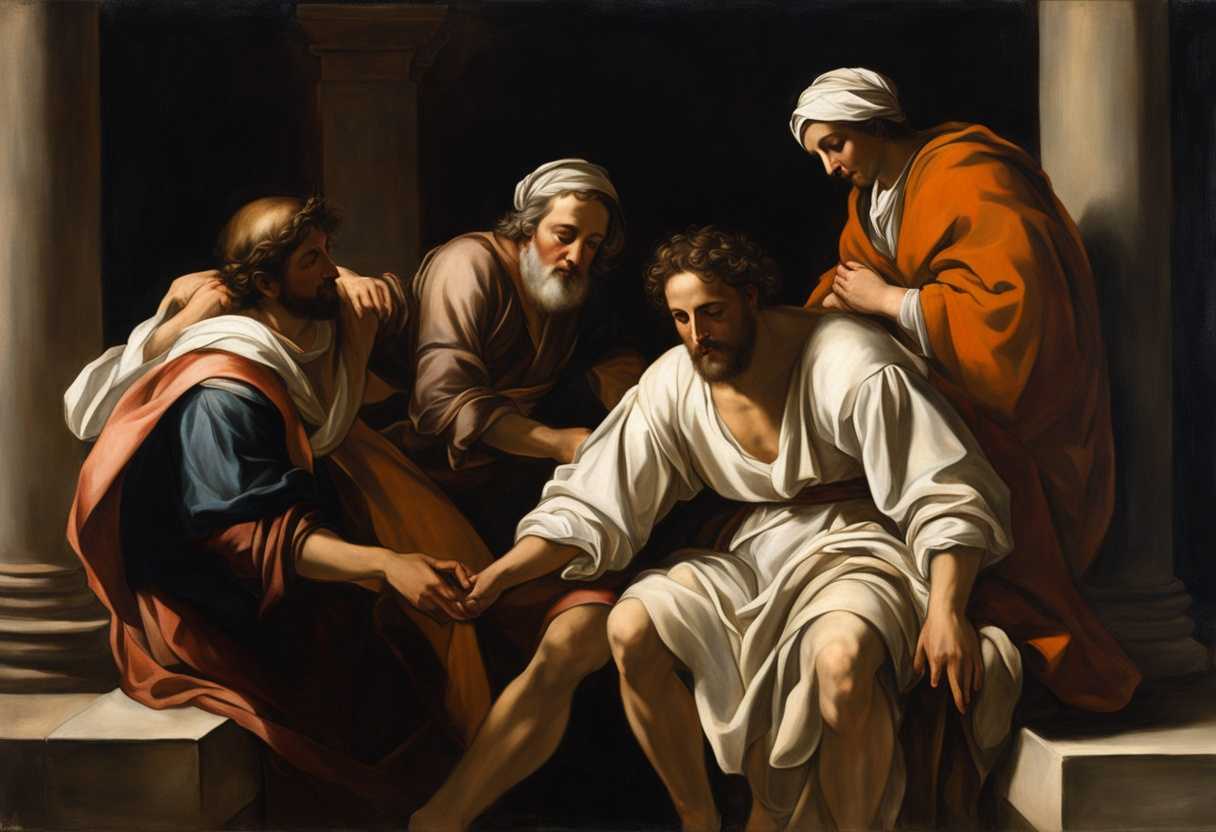
Setting the Scene for Matthew 9:6
In Matthew chapter 9, we find Jesus in the midst of a bustling town in Galilee, surrounded by a crowd of people eager to witness His miracles and hear His teachings. Among the crowd are the Pharisees, religious leaders who often questioned Jesus’ authority and teachings. They are present, watching closely, ready to challenge Him at any moment.
In the center of the crowd lies a paralyzed man, brought in by his friends on a stretcher. The man’s friends had heard of Jesus’ healing powers and were determined to bring their paralyzed companion to Him, hoping for a miracle. The scene is filled with anticipation and hope as the paralyzed man lies before Jesus, his friends looking on with faith and expectation.
As Jesus looks upon the paralyzed man, He sees not only his physical ailment but also his faith. In a powerful display of compassion and authority, Jesus declares to the man, “Get up, take your mat and go home.” In an instant, the man is healed, rising to his feet, picking up his mat, and walking away, to the amazement and awe of all who witnessed this miraculous event.
What is Matthew 9:6 about?
Let’s unpack the profound significance behind this verse. When Jesus forgives sins, He is not just offering mercy and compassion to individuals, but He is also demonstrating His divine authority as the Son of God. Forgiveness of sins was typically reserved for God alone in the Jewish tradition, so when Jesus forgives sins, He is revealing His identity as the one who has the power to grant forgiveness and salvation.
Think about it – by forgiving sins, Jesus is not only offering a pathway to redemption and spiritual healing, but He is also displaying His unique connection to God and showcasing His authority over sin and death. This act of forgiveness ultimately points to the central message of Jesus’ ministry: the Kingdom of God is present, and salvation is available to all through Him.
So, as we reflect on this verse, let us marvel at the profound depth of Jesus’ identity as the Son of God and the significance of His actions in offering forgiveness. It challenges us to consider our own understanding of Jesus’ authority and embrace the transformative power of His forgiveness in our lives.
Understanding what Matthew 9:6 really means
In the Gospel of Matthew, we encounter a profound moment where Jesus showcases His divine authority through the healing of a paralyzed man. The narrative unfolds with religious leaders questioning Jesus’ ability to forgive sins, to which Jesus responds by demonstrating His power to heal both physically and spiritually. This pivotal verse, Matthew 9:6, encapsulates Jesus’ declaration of authority, stating, “But I want you to know that the Son of Man has authority on earth to forgive sins.”
The term “Son of Man” used by Jesus in this context is significant, as it not only emphasizes His humanity but also alludes to His divine mission on earth. By claiming authority to forgive sins, Jesus challenges the conventional beliefs of the time, where only God was seen as having the power to grant forgiveness. The phrase “authority on earth to forgive sins” underscores Jesus’ radical assertion of divine authority, setting Him apart as the ultimate source of forgiveness and healing.
Furthermore, when Jesus commands the paralyzed man to “Get up, take your mat and go home,” He not only showcases His power to heal but also reveals His deep compassion for those who are suffering. This act of healing goes beyond physical restoration; it symbolizes the spiritual liberation that comes from encountering Jesus and experiencing His transformative power.
The relevance of this verse extends to contemporary audiences, offering assurance that Jesus still holds the authority to forgive sins and bring healing to our brokenness, whether physical, emotional, or spiritual. In a world where authority is often questioned and power dynamics fluctuate, the reminder of Jesus’ ultimate authority over all aspects of life brings comfort and stability to those who place their trust in Him.
The story of the paralyzed man and Jesus’ command to “get up” prompts reflection on the relationship between faith and action. Just as the paralyzed man’s faith led to his physical restoration, our faith in Jesus should propel us to act boldly, trusting in His power to bring about transformation in our lives and the lives of those around us.
Imagine someone burdened by guilt and physical affliction, much like the paralyzed man in the story. When they encounter the message of Jesus’ authority to forgive and heal, a glimmer of hope emerges in their heart. Just as the paralyzed man rose and walked, this person begins to experience a newfound sense of freedom and healing, both spiritually and physically, through their encounter with the compassionate and powerful Jesus.
In conclusion, Matthew 9:6 stands as a poignant reminder of Jesus’ dual authority to forgive sins and heal the broken. It beckons us to place our trust in His unmatched power and to step out in faith, knowing that He deeply cares for every aspect of our being.
What authority can forgive sins?
Jesus declares his authority to forgive sins in Matthew 9:6 by stating, “But so that you may know that the Son of Man has authority on earth to forgive sins.”..” Through this statement, Jesus is emphasizing his divine authority as the Son of Man to forgive sins. Jesus is claiming this authority, presenting himself as the one who can forgive sins, demonstrating his divine power and role in offering redemption to humanity.
This declaration showcases Jesus as having a unique and unparalleled authority to forgive sins. It highlights the significance of his role as a divine figure with the ability to grant forgiveness and salvation. Jesus demonstrates his divine nature and his mission to bring forgiveness and reconciliation between humanity and God by asserting his authority to forgive sins. This verse serves as a powerful affirmation of Jesus’ identity as the Son of Man who has the ultimate authority to forgive sins, offering hope and redemption to all who believe in him.
Application
Imagine right now that your life’s inbox is flooded with tasks, emails, and deadlines. But among the chaos, there’s one priority that stands out: your spiritual well-being. Remember, Jesus has the ultimate password to clear your guilt and restore your peace. Isn’t it time you hit ‘refresh’ and let His grace rewrite your story? What are you waiting for to seek His forgiveness and embrace your healing?

Reverend Michael Johnson is an experienced Church Minister with a profound expertise in spirituality and guidance. With a serene presence and a compassionate heart, he has faithfully served his congregation for over 20 years, leading them on a spiritual journey towards inner peace and enlightenment. Reverend Johnson’s extensive knowledge of religious philosophies and profound understanding of human nature have made him a trusted confidant and mentor to many, as he seamlessly weaves his profound wisdom into life teachings. Reverend Johnson’s calming demeanor and empathetic nature continue to uplift and heal souls, nurturing a sense of unity and tranquility within his community.