
John 6:13 is about Jesus feeding the multitude with five loaves and two fish, demonstrating his divine power and provision for all those who follow him.
13 So they gathered them up and filled twelve baskets with fragments from the five barley loaves left by those who had eaten.
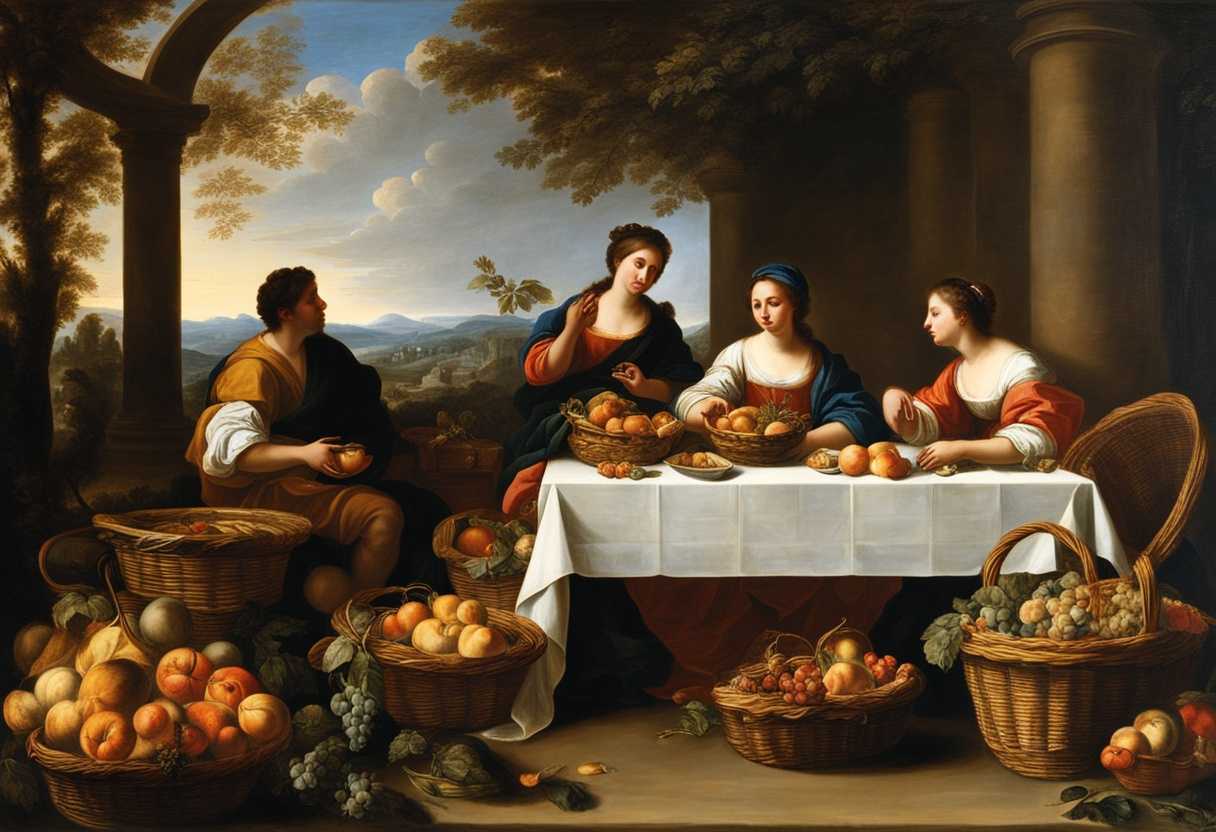
Setting the Scene for John 6:13
In John chapter 6, we find Jesus feeding the 5,000 with five loaves of bread and two fish. The scene is set on a grassy hillside near the Sea of Galilee, with a large crowd gathered around Jesus, eager to hear His teachings and witness His miracles. Among the crowd are the disciples, including Peter, Andrew, James, and John, who have been following Jesus and witnessing His ministry.
As the day progresses, the disciples realize that the crowd is hungry, and they bring this concern to Jesus. In response, Jesus takes the loaves and fish, blesses them, and begins to distribute the food to the people. Miraculously, everyone is fed, and there are even leftovers collected in twelve baskets. This incredible display of Jesus’ power and provision leaves the crowd in awe and solidifies the disciples’ faith in Him as the Son of God.
The atmosphere is one of amazement and gratitude as the people witness this miraculous feeding. The disciples are overwhelmed by Jesus’ ability to provide for the physical needs of so many with so little. This event serves as a powerful demonstration of Jesus’ compassion, generosity, and divine authority, leaving a lasting impact on all who were present that day.
What is John 6:13 about?
Jesus demonstrates his power and compassion by feeding a multitude of people with just a few loaves of bread and fish in this miraculous event. This miracle not only shows Jesus’ ability to provide for the physical needs of those around him but also symbolizes his role as the spiritual nourishment for all believers. He is able to multiply our faith, hope, and love to meet the needs of the world around us, just as Jesus multiplied the loaves and fish to feed the crowd.
Imagine being part of this crowd witnessing Jesus perform this incredible miracle. How would you have felt seeing the meager amount of food transform into an abundance that could feed so many? This event challenges us to trust in the limitless power of God and to rely on him to provide for us in ways that surpass our understanding. We are also called to be good stewards of God’s blessings and share our abundance with others, just as Jesus instructed the disciples to gather the leftovers.
Understanding what John 6:13 really means
In the Gospel of John, chapter 6, verse 13, we witness a profound moment in Jesus’ ministry—the miraculous feeding of the 5,000. This event is not merely a display of Jesus’ power but a profound demonstration of His divine provision and compassion for His people. Following the multiplication of five barley loaves and two fish, the verse states, “So they gathered them up and filled twelve baskets with fragments from the five barley loaves left by those who had eaten.” These words hold layers of significance that invite us to delve deeper into the spiritual truths they convey.
The act of gathering the leftover fragments by the disciples speaks volumes about obedience and stewardship. It teaches us the importance of not wasting the blessings we receive from God but instead being diligent in collecting and preserving them. This simple act of gathering reflects a heart of gratitude and responsible stewardship, qualities that are essential in our walk with God. It challenges us to consider how we handle the resources and blessings entrusted to us by the Lord.
The mention of filling twelve baskets with the leftover fragments is not coincidental. The number twelve often symbolizes completeness and perfection in the Bible, representing the twelve tribes of Israel. This symbolism suggests that God’s provision is not only abundant but perfectly complete. It reassures us that His blessings are not lacking in any way and are fully sufficient for all our needs. This imagery of completeness in the midst of scarcity reminds us of God’s faithfulness and His ability to provide beyond our expectations.
Moreover, the verse highlights the miraculous nature of the event by emphasizing that the abundance came from the meager offering of five barley loaves. This serves as a powerful reminder that no gift or contribution is too small in the hands of Jesus. When we surrender even the little we have to Him, He can multiply it in ways that surpass human comprehension. It challenges our perception of scarcity and prompts us to trust in the Lord’s ability to multiply our efforts and resources for His glory.
As we reflect on this verse in the context of our lives today, we are confronted with the reality of scarcity and the fear of insufficiency that often plague our minds. In a world where resources seem limited and needs abound, the story of the feeding of the 5,000 offers a beacon of hope and assurance. It reminds us that God’s provision knows no bounds and that He is more than able to meet all our needs according to His riches in glory.
Imagine a scenario akin to a community potluck where each person brings a modest dish, unsure if it will be enough to feed everyone. Yet, as people share and contribute, not only is there plenty to go around, but there is an overflow of abundance. This illustration mirrors the miraculous feeding of the multitude, illustrating how collective generosity and faith can lead to unexpected blessings and provision. It challenges us to rethink our attitudes towards scarcity and encourages us to trust in God’s ability to multiply our efforts when we offer them in faith and love.
In practical terms, this verse calls us to trust in God’s provision, to be good stewards of the blessings He has bestowed upon us, and to share generously with others. Just as Jesus provided for the 5,000 with a few loaves and fish, He continues to provide for us today in ways that defy human logic. Let us, therefore, approach our resources and blessings with a spirit of gratitude, stewardship, and generosity, knowing that God’s provision is abundant and complete. May we find comfort and strength in the assurance that our Heavenly Father cares for our needs and will supply all that we require according to His glorious riches in Christ Jesus.
How can we share God’s abundance with others?
We can share God’s abundance with others by recognizing that everything we have comes from Him. We can be generous with the resources, time, and talents that God has blessed us with, just as Jesus multiplied the loaves and fishes to feed the crowds. We can find ways to share our abundance with those in need by being good stewards of what we have been given, whether it be through acts of kindness, giving to charity, or helping those less fortunate.
When we share God’s abundance with others, we demonstrate His love and provision in a tangible way. We reflect God’s own generosity towards us by being willing to give to those around us. We can trust that when we give of ourselves for the benefit of others, God will continue to provide for our own needs and bless us in return, just as Jesus fed the hungry crowd with abundance left over.
Sharing God’s abundance is not just about material possessions, but also about sharing the good news of salvation with others. We can offer those around us the eternal life and hope that come through faith in Christ, just as Jesus offered the crowds more than just physical sustenance. We can truly make a difference in the lives of others and point them towards the abundant life that can be found in Him by sharing the wealth of God’s grace and love with those we encounter.
Application
Think of your life as a software update; improvements don’t happen unless you take action. John 6:13 shows us the power of sharing even the smallest resources. Jesus fed thousands with just five loaves and two fish—your contribution can be just as transformative. Will you step up and share what you have, trusting it will be more than enough in ways you can’t imagine? What if your small act is the patch that fixes the world’s next big problem?

Reverend Michael Johnson is an experienced Church Minister with a profound expertise in spirituality and guidance. With a serene presence and a compassionate heart, he has faithfully served his congregation for over 20 years, leading them on a spiritual journey towards inner peace and enlightenment. Reverend Johnson’s extensive knowledge of religious philosophies and profound understanding of human nature have made him a trusted confidant and mentor to many, as he seamlessly weaves his profound wisdom into life teachings. Reverend Johnson’s calming demeanor and empathetic nature continue to uplift and heal souls, nurturing a sense of unity and tranquility within his community.