
John 6:51-56 is about Jesus declaring himself as the true bread of life, emphasizing the importance of consuming his flesh and blood symbolically through communion to obtain eternal life and remain in close spiritual union with him.
51 I am the living bread that came down from heaven. If anyone eats of this bread, he will live forever. And the bread that I will give for the life of the world is my flesh.
52 The Jews then disputed among themselves, saying, “How can this man give us his flesh to eat?”
53 So Jesus said to them, “Truly, truly, I say to you, unless you eat the flesh of the Son of Man and drink his blood, you have no life in you.
54 Whoever feeds on my flesh and drinks my blood has eternal life, and I will raise him up on the last day.
55 For my flesh is true food, and my blood is true drink.
56 Whoever feeds on my flesh and drinks my blood abides in me, and I in him.
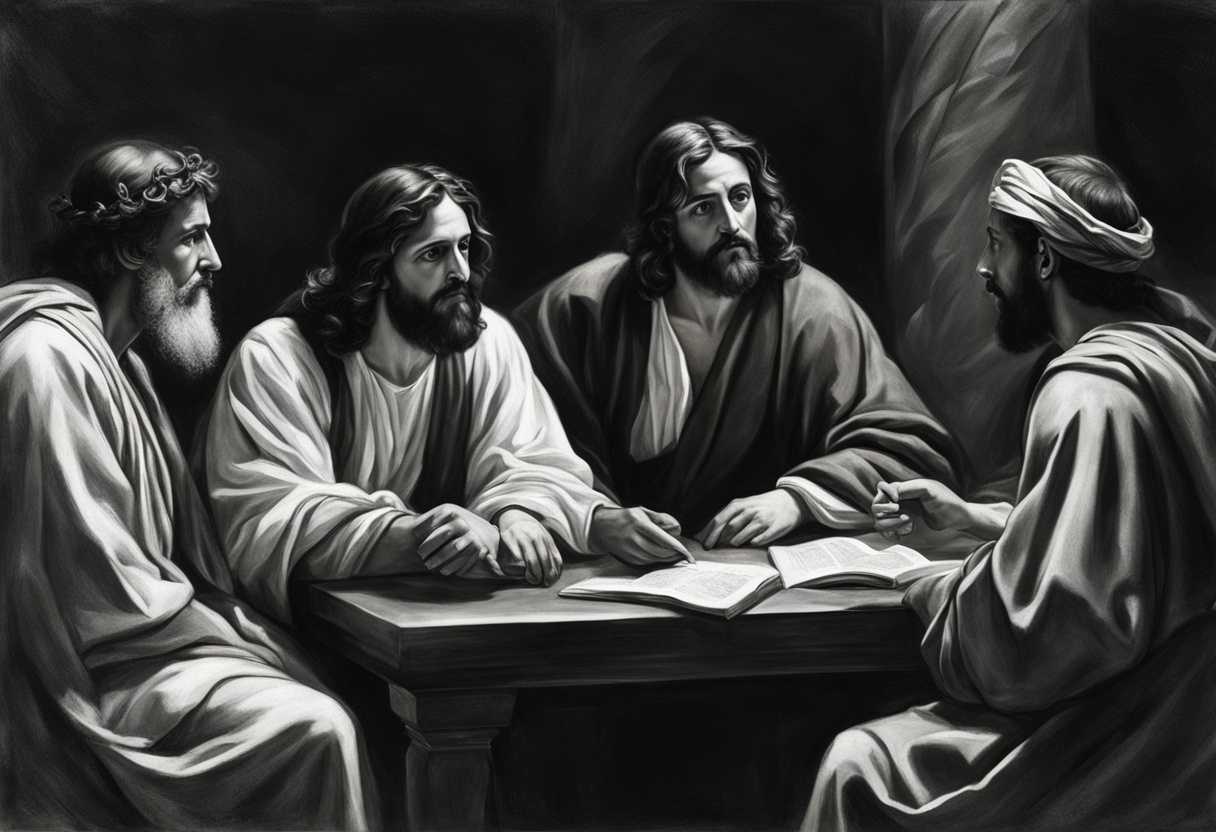
Setting the Scene for John 6:51-56
The scene in John chapter 6 is set by the Sea of Galilee, where Jesus is teaching a large crowd of people who have been following Him because of the miracles He has performed. The crowd includes men, women, and children who have gathered to hear His teachings and witness His works. Among them are the twelve disciples, including Peter, Andrew, James, and John.
As Jesus speaks to the crowd, He begins to talk about Himself as the bread of life that has come down from heaven. He uses the metaphor of eating His flesh and drinking His blood to symbolize the spiritual nourishment and eternal life that He offers to those who believe in Him. This concept is difficult for many in the crowd to understand, and some begin to question and doubt His words.
The setting is serene, with the Sea of Galilee glistening in the background as Jesus imparts these profound teachings to the eager crowd. The disciples are attentive, trying to grasp the deeper meaning behind Jesus’ words, while the people around them murmur and debate amongst themselves. The atmosphere is charged with curiosity, confusion, and a sense of anticipation as Jesus continues to reveal more about His identity and the salvation He brings to all who believe in Him.
What is John 6:51-56 about?
This verse carries a deep and profound meaning that speaks to the core of Christian beliefs. Jesus describing himself as the “bread of life” is a metaphor emphasizing that just as bread sustains physical life, he sustains our spiritual life. Consuming physical bread is necessary for our physical survival, similarly, accepting and following Jesus is essential for our spiritual well-being. Jesus highlights the centrality of his role in providing eternal life to believers by declaring himself as the bread of life. He is offering himself as the ultimate source of sustenance and nourishment for our souls. The act of partaking in Jesus symbolizes forming a personal and intimate relationship with him, allowing his teachings, grace, and love to fill and strengthen our lives.
Reflecting on this verse prompts us to consider the significance of Jesus in our lives. Have we truly allowed him to sustain and nourish our spiritual being? Are we partaking in his teachings, his love, and his grace to experience the fullness of life he offers? It challenges us to deepen our connection with Jesus, understanding that eternal life is found in him alone.
Understanding what John 6:51-56 really means
In John 6:51-56, Jesus proclaims, “I am the living bread that came down from heaven,” highlighting Himself as the ultimate source of spiritual sustenance and life. This passage is part of the Bread of Life discourse, crucial for understanding the Eucharist in Christian theology. Just as manna sustained the Israelites in the wilderness, Jesus offers something greater—eternal life to all who partake in Him. His statement, “Whoever eats this bread will live forever,” underscores the promise of eternal life through Him, emphasizing spiritual nourishment and salvation.
Moreover, Jesus declares, “The bread that I will give for the life of the world is my flesh,” foreshadowing His sacrificial death on the cross. This connects to the Last Supper and the institution of the Eucharist, where Jesus instituted the practice of partaking in His body and blood. By stating, “Whoever eats my flesh and drinks my blood has eternal life,” Jesus emphasizes the necessity of a profound, personal relationship with Him, symbolizing an intimate union through the Eucharist. He further asserts, “For my flesh is true food and my blood is true drink,” affirming Himself as the genuine source of spiritual nourishment.
This discourse finds parallels in other biblical passages. Exodus 16:4 portrays the manna from heaven as a precursor to the true bread from heaven, symbolizing Jesus. In Matthew 26:26-28 and 1 Corinthians 11:23-26, the institution of the Lord’s Supper and Paul’s recounting of the Last Supper underscore the significance of the Eucharist in Christian worship, linking back to Jesus’ words in John 6.
Today, this passage remains relevant in various ways. It reminds us of the importance of spiritual nourishment amidst worldly distractions. The Eucharist fosters community and communion among believers, reinforcing our unity in the body of Christ. Moreover, it offers hope and assurance of eternal life, serving as a source of comfort in times of adversity and uncertainty.
Consider a story of a struggling individual in your congregation who found solace and renewed faith through partaking in the Eucharist. This person discovered strength and a sense of belonging through communion, which reminded them of Jesus’ sacrifice and the promise of eternal life, illustrating the transformative power of the Eucharist in personal lives.
In conclusion, Jesus as the living bread invites us to reflect on His role as the ultimate source of spiritual sustenance and life. As we engage in the Eucharist, may we do so with a deeper understanding of its profound meaning and significance in our spiritual journey, fostering a closer relationship with Christ and a deeper sense of community with fellow believers.
What does it mean to eat Jesus’ flesh?
Jesus is speaking metaphorically about eating His flesh and drinking His blood in this passage. This symbolism refers to partaking in His sacrifice and receiving the benefits of His atonement for our sins. We symbolically join in His death and resurrection and receive spiritual nourishment and eternal life by consuming His flesh and blood.
Eating Jesus’ flesh and drinking His blood symbolizes a deep union with Him and a personal relationship with God. Partaking in the sacrifice of Jesus feeds our spiritual hunger and nourishes our souls just as physical food sustains our bodies. This act of faith signifies a communal participation in the life and purpose of Christ, connecting believers to His redemptive work and the promise of salvation.
Through this metaphor, Jesus emphasizes the importance of faith and spiritual communion with Him. We can grasp the profound nature of our relationship with Him and the transformative power of His sacrifice in our lives by understanding the symbolic significance of eating His flesh and drinking His blood. It is a call to embrace Him fully, trust in His saving grace, and experience the abundant life He offers to all who believe.
Application
Imagine your work-life, where every achievement and deadline matters, and your family time, where every moment counts. Now, apply that urgency to your spiritual life. Partaking in communion is like refueling your soul for the demanding journey ahead. It’s a powerful reminder of Christ’s immense sacrifice, a moment to recharge your faith. Will you seize this opportunity to reconnect deeply with Him, honoring His gift with a grateful heart?

Reverend Michael Johnson is an experienced Church Minister with a profound expertise in spirituality and guidance. With a serene presence and a compassionate heart, he has faithfully served his congregation for over 20 years, leading them on a spiritual journey towards inner peace and enlightenment. Reverend Johnson’s extensive knowledge of religious philosophies and profound understanding of human nature have made him a trusted confidant and mentor to many, as he seamlessly weaves his profound wisdom into life teachings. Reverend Johnson’s calming demeanor and empathetic nature continue to uplift and heal souls, nurturing a sense of unity and tranquility within his community.