
John 6:67-68 is about Peter reaffirming his loyalty and commitment to Jesus despite the challenges and confusion surrounding them.
67 So Jesus said to the twelve, “Do you want to go away as well?”
68 Simon Peter answered him, “Lord, to whom shall we go? You have the words of eternal life,
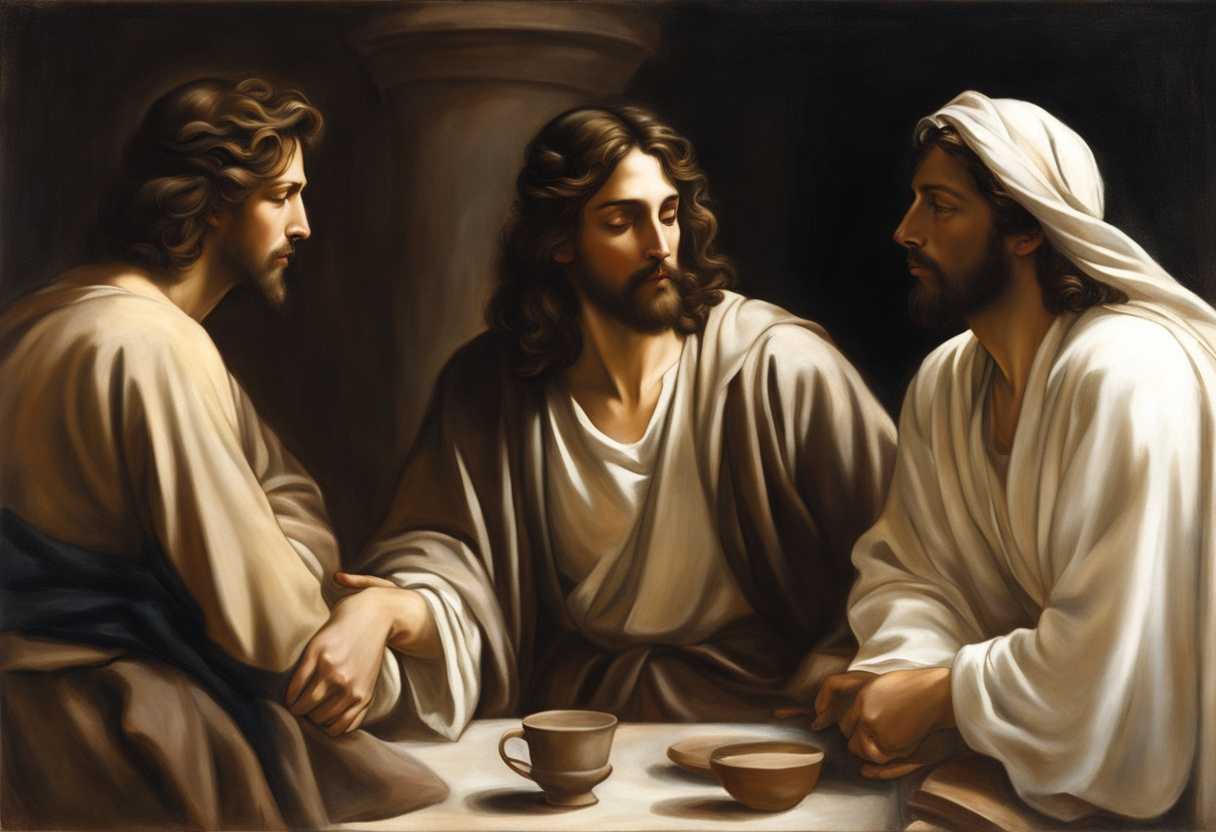
Setting the Scene for John 6:67-68
The scene in John chapter 6 is set in Capernaum, a town located on the northern shore of the Sea of Galilee. Jesus had just finished delivering a challenging teaching about being the bread of life, which caused many of his followers to question and doubt his words. As a result, many disciples turned away and no longer followed him.
In the midst of this moment of uncertainty and wavering faith, Jesus turned to his twelve disciples and asked if they also wanted to leave. It is at this point that Simon Peter, always quick to speak up, declared his unwavering loyalty and belief in Jesus, saying, “Lord, to whom shall we go? You have the words of eternal life.”
The setting is likely outdoors, with the Sea of Galilee shimmering in the background and a crowd of people milling about, some still pondering Jesus’ words, others walking away in disbelief. The disciples, including Peter, are standing close to Jesus, their faces reflecting a mix of confusion, conviction, and loyalty as they grapple with the challenging teachings and the choices before them.
What is John 6:67-68 about?
This verse highlights a pivotal moment in the New Testament where Peter openly professes his belief in Jesus as the Holy One of God. It signifies Peter’s recognition of Jesus’ divine nature and importance in the Christian faith. Peter acknowledges Jesus’ unique and divine identity by referring to him as the Holy One of God, emphasizing his role as the Savior and the Son of God. This declaration by Peter marks a significant turning point in his understanding of Jesus’ true identity and sets the stage for his future role as a prominent disciple and leader in the early Christian church.
Have you ever experienced a moment of deep conviction or clarity in your beliefs, like Peter did when he confessed Jesus as the Holy One of God? It’s a powerful reminder of the importance of recognizing and acknowledging the divinity of Jesus in our faith journey. This verse challenges us to reflect on our own beliefs and the level of our commitment to following Jesus as the Holy One of God. Just like Peter, may we boldly proclaim our faith in Jesus as the Holy One of God and allow our convictions to guide us in our spiritual walk.
Understanding what John 6:67-68 really means
In the Gospel of John, we encounter a pivotal moment where Jesus presents a challenging teaching about being the “bread of life,” causing many of His followers to turn away. Amidst this backdrop, Jesus turns to His Twelve disciples and poses a poignant question: “Do you want to go away as well?” This inquiry serves as a test of the disciples’ commitment, highlighting the profound significance of free will in choosing to follow Christ. In the face of this crucial question, Peter steps forward with a response that resonates with unwavering faith and conviction.
“Lord, to whom shall we go?” Peter’s words echo with a profound truth that reverberates through the ages. In acknowledging that there is no alternative to Jesus, Peter underscores the unparalleled uniqueness and sufficiency of Christ. His declaration encapsulates the essence of faith in recognizing Jesus as the ultimate source of truth, hope, and salvation. “You have the words of eternal life,” Peter affirms, emphasizing the transformative power and eternal significance of Jesus’ teachings.
These verses not only capture a moment of profound faith but also hold timeless relevance for people today. In a world teeming with diverse philosophies and belief systems, the words of Peter serve as a poignant reminder of the incomparable role of Jesus in offering spiritual truth and eternal life. The question posed by Jesus, “Do you want to go away as well?” reverberates through the corridors of our own hearts, prompting us to introspect our faith and commitment, especially in the face of challenging circumstances or teachings.
Drawing parallels from related Bible passages, such as Peter’s confession in Matthew 16:16 and Jesus’ declaration in John 14:6, we see a consistent theme emphasizing the exclusive and indispensable nature of Christ in the journey of faith. Acts 4:12 further reinforces this exclusivity, proclaiming that salvation is found in no other name but Jesus. These passages collectively underscore the foundational truth that Jesus is the only way to eternal life and communion with God.
Consider a poignant anecdote: Picture an individual who, amidst a quest for meaning and fulfillment, explores various avenues from self-help books to diverse religions, yet finds themselves still yearning for true peace and purpose. In a moment of divine encounter with the teachings of Jesus, they experience a profound transformation, realizing that only in Christ do they find the words of eternal life. Like Peter, they make a resolute decision to commit their life to following Jesus, embracing the unparalleled truth and grace He offers.
In conclusion, the exchange between Jesus and Peter in John 6:67-68 beckons us to reflect on the foundation of our faith and the unparalleled significance of Christ in our lives. These verses challenge us to deepen our commitment, trust, and allegiance to Jesus, especially when faced with uncertainties or adversities along our spiritual journey. May we, like Peter, affirm with unwavering conviction that in Jesus alone do we find the words of eternal life, guiding us to a place of profound faith and transformation.
Do I truly believe in Jesus’ teachings?
Yes, I believe in the teachings of Jesus as they provide guidance and wisdom for living a fulfilling and purposeful life. Jesus challenges his disciples in this particular verse to reflect on their faith and commitment to following him, even when faced with difficulties or uncertainties. This emphasizes the importance of staying true to one’s beliefs and trusting in the guidance of Jesus, the source of eternal life.
The disciples’ response exemplifies their profound understanding of Jesus’ teachings, acknowledging him as the Holy One of God. It serves as a reminder to me to have unwavering faith in Jesus and to recognize him as the ultimate source of truth and wisdom. The teachings of Jesus are not merely words to be heard but a way of life to be embraced and lived out daily. I strive to align my actions and decisions with Jesus’ principles of love, compassion, forgiveness, and righteousness by believing and following his teachings. Through prayer, reflection, and study of the Scriptures, I seek to deepen my understanding of Jesus’ teachings and apply them in my interactions with others. My faith in Jesus and his teachings serves as a guiding light in navigating life’s challenges and uncertainties, leading me towards a life filled with purpose, hope, and eternal significance.
Application
Think of it like this: in your busy life, you make crucial decisions every day at work and for your family. When Jesus asks, “You do not want to leave too, do you?” He’s calling you to check your commitment, like deciding to stick with a tough but rewarding project or standing by your loved ones in hard times. Are you ready to strengthen your faith and dedication to His path, even when life gets tough? Can you rise to this spiritual challenge—just as you do with the challenges in your daily life?

Reverend Michael Johnson is an experienced Church Minister with a profound expertise in spirituality and guidance. With a serene presence and a compassionate heart, he has faithfully served his congregation for over 20 years, leading them on a spiritual journey towards inner peace and enlightenment. Reverend Johnson’s extensive knowledge of religious philosophies and profound understanding of human nature have made him a trusted confidant and mentor to many, as he seamlessly weaves his profound wisdom into life teachings. Reverend Johnson’s calming demeanor and empathetic nature continue to uplift and heal souls, nurturing a sense of unity and tranquility within his community.