
John 6:7 is about Jesus responding to Philip’s concern about feeding the multitude by testing his faith and authority, revealing that God will provide for all needs abundantly.
7 Philip answered him, “Two hundred denarii worth of bread would not be enough for each of them to get a little.”
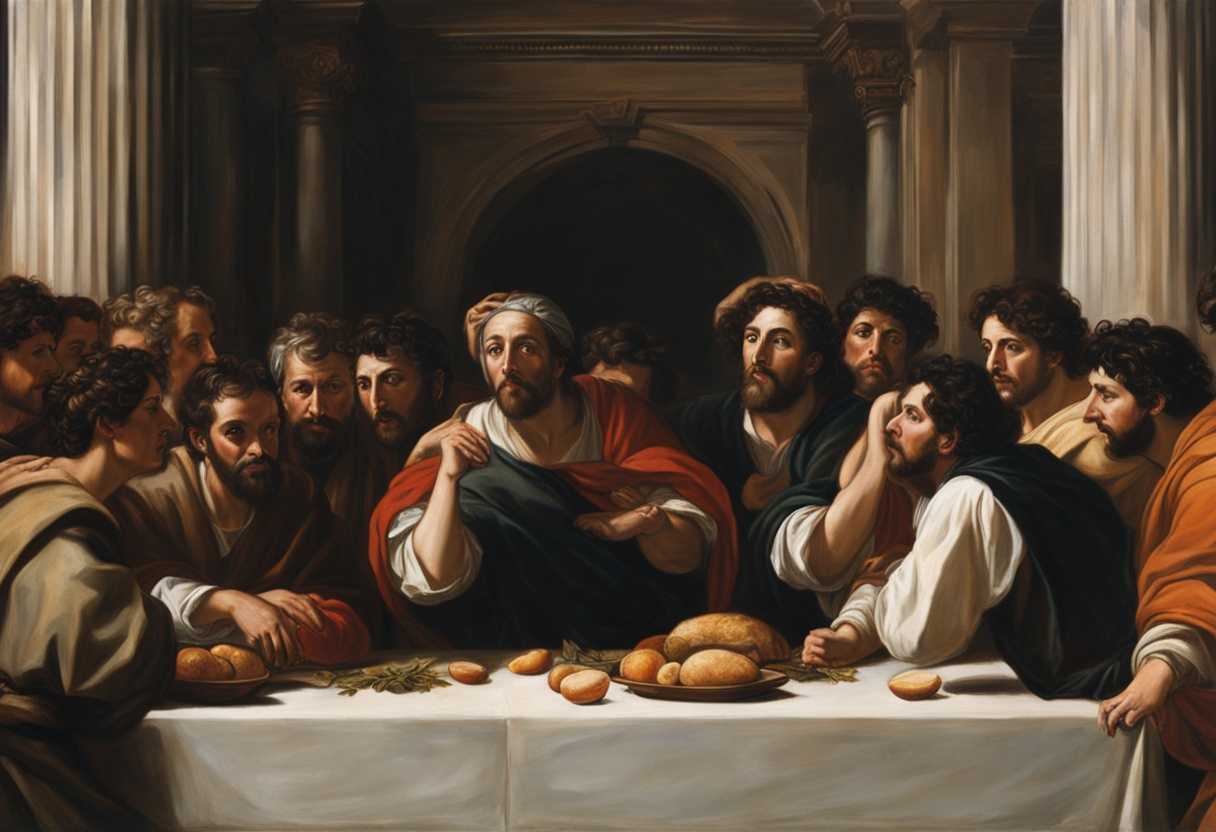
Setting the Scene for John 6:7
In John chapter 6, we find Jesus and his disciples gathered on a mountainside near the Sea of Galilee. The disciples had been following Jesus, witnessing his miracles and teachings, and were now faced with a large crowd of people who had also come to see Jesus. The scene is bustling with activity as people from all walks of life gather around Jesus, eager to hear his words and witness his works.
Among the disciples present are Peter, Andrew, James, and John, who had all left their livelihoods to follow Jesus. They had seen Jesus perform miracles such as healing the sick and feeding the hungry, and now they were faced with the challenge of feeding a crowd of over five thousand people with only five loaves of bread and two fish. As the disciples scrambled to figure out how to feed the multitude, Jesus remained calm and collected, knowing what he was about to do.
The setting is serene and picturesque, with the Sea of Galilee shimmering in the background and the mountains providing a stunning backdrop to the miraculous events unfolding. The disciples’ faith and trust in Jesus are tested as they witness him perform yet another incredible miracle, multiplying the loaves and fish to feed the entire crowd. This scene serves as a powerful reminder of Jesus’ divine power and compassion, as well as the importance of trusting in him even in the face of seemingly impossible situations.
What is John 6:7 about?
The disciples in this verse express concern over how to feed a large crowd with limited resources. They understand the practicality of the situation – even if they were to work for over six months, they still wouldn’t have enough money to provide everyone with even a single bite of bread. This statement highlights the disciples’ human limitations and their focus on the material constraints of the situation.
Have you ever felt overwhelmed by a challenge that seemed insurmountable with your own resources? The disciples’ response in this verse reflects a common tendency to rely solely on what we can see and measure, rather than trusting in a greater power to provide. It serves as a reminder to look beyond our own limitations and trust in the possibility of miracles and divine intervention. This verse encourages us to have faith that there may be a solution beyond our comprehension, waiting to manifest itself in moments of doubt or scarcity.
Understanding what John 6:7 really means
In John 6:7, we witness a moment of doubt and uncertainty among Jesus’ disciples as they face the daunting task of feeding a multitude with limited resources. The disciples, confronted with the sheer magnitude of the need before them, express their concerns about the insufficiency of their provisions. The mention of “two hundred denarii worth of bread” serves to emphasize the enormity of the challenge, as this sum was beyond their means and highlighted the seeming impossibility of the situation. The phrase “Not enough for each of them to get a little” further underscores their sense of inadequacy in the face of such a monumental task.
This narrative of the feeding of the 5,000 is not just a historical event but a timeless lesson that resonates with people today. Just as the disciples grappled with their limitations, many individuals find themselves overwhelmed by circumstances that seem beyond their control. However, this verse serves as a reminder to have faith in God’s provision, even when our resources appear insufficient. It challenges us to trust in God’s ability to multiply our efforts and provide abundantly, surpassing what we can achieve on our own.
The parallel accounts in Matthew, Mark, and Luke offer additional perspectives on this miraculous event, enriching our understanding of the disciples’ initial doubts and Jesus’ miraculous intervention. These passages reinforce the significance of the miracle and the enduring message of God’s provision in times of need. Similarly, the verse in Philippians 4:19 reassures believers that God will supply all their needs according to His riches, highlighting the overarching theme of divine provision throughout Scripture.
In our contemporary context, the story of the disciples’ dilemma prompts reflection on themes of stewardship and generosity. It encourages us to offer what we have, no matter how meager it may seem, trusting that God can multiply our contributions for His purposes. This call to faith-filled action challenges us to step out in obedience, believing that God can use our small offerings to accomplish great things beyond our imagination.
Consider a modern-day scenario where a struggling community church, inspired by the lesson of John 6:7, decides to trust in God’s provision and give sacrificially despite their limited resources. Through a series of unexpected donations and support, the church not only meets its financial needs but also has an overflow to bless others in the community. This anecdote serves as a tangible illustration of the principle embodied in the feeding of the 5,000, demonstrating that God can work miracles through our faith and obedience.
In conclusion, John 6:7 challenges us to reevaluate our perspectives on resources and provision. It urges us to move beyond our doubts and limitations, placing our trust in God’s ability to multiply our efforts and meet our needs abundantly. By embracing a posture of faith and generosity, we align ourselves with the timeless truth that God can use even the smallest of offerings to accomplish His purposes in ways that surpass human understanding.
How can we trust in God’s provision fully?
We can fully trust in God’s provision by recognizing His faithfulness and abundant love for us. Just like how Jesus provided for the multitude with a few loaves and fishes in this verse, we can rest assured that God will provide for our needs as well. When we reflect on past situations where God has provided for us, it strengthens our trust in His continued provision in the present and future.
Furthermore, trusting in God’s provision requires us to surrender control and place our faith entirely in Him. We release our worries and anxieties about lacking or not having enough by acknowledging that God is our ultimate provider and sustainer. We are called to rely on God’s perfect timing and to believe that He knows what is best for us. Through reliance on Him, we cultivate a deeper sense of peace and contentment, knowing that God will supply all our needs according to His riches and glory.
Application
Think about your hectic workday or the never-ending demands of family life. Sometimes it seems impossible to meet every need. Remember, just as Jesus turned a few loaves and fish into a feast, God can multiply what you have. Will you dare to trust in His power and provision today?

Reverend Michael Johnson is an experienced Church Minister with a profound expertise in spirituality and guidance. With a serene presence and a compassionate heart, he has faithfully served his congregation for over 20 years, leading them on a spiritual journey towards inner peace and enlightenment. Reverend Johnson’s extensive knowledge of religious philosophies and profound understanding of human nature have made him a trusted confidant and mentor to many, as he seamlessly weaves his profound wisdom into life teachings. Reverend Johnson’s calming demeanor and empathetic nature continue to uplift and heal souls, nurturing a sense of unity and tranquility within his community.