
John 7:40-53 is about the differing opinions and confusion among the crowd regarding Jesus’ identity as the Messiah, highlighting the division and debate that arises when faced with the truth of Jesus’ teachings.
40 When they heard these words, some of the people said, “This really is the Prophet.”
41 Others said, “This is the Christ.” But some said, “Is the Christ to come from Galilee?
42 Has not the Scripture said that the Christ comes from the offspring of David, and comes from Bethlehem, the village where David was?”
43 So there was a division among the people over him.
44 Some of them wanted to arrest him, but no one laid hands on him.
45 The officers then came to the chief priests and Pharisees, who said to them, “Why did you not bring him?”
46 The officers answered, “No one ever spoke like this man!”
47 The Pharisees answered them, “Have you also been deceived?
48 Have any of the authorities or the Pharisees believed in him?
49 But this crowd that does not know the law is accursed.”
50 Nicodemus, who had gone to him before, and who was one of them, said to them,
51 “Does our law judge a man without first giving him a hearing and learning what he does?”
52 They replied, “Are you from Galilee too? Search and see that no prophet arises from Galilee.”
53 They went each to his own house,
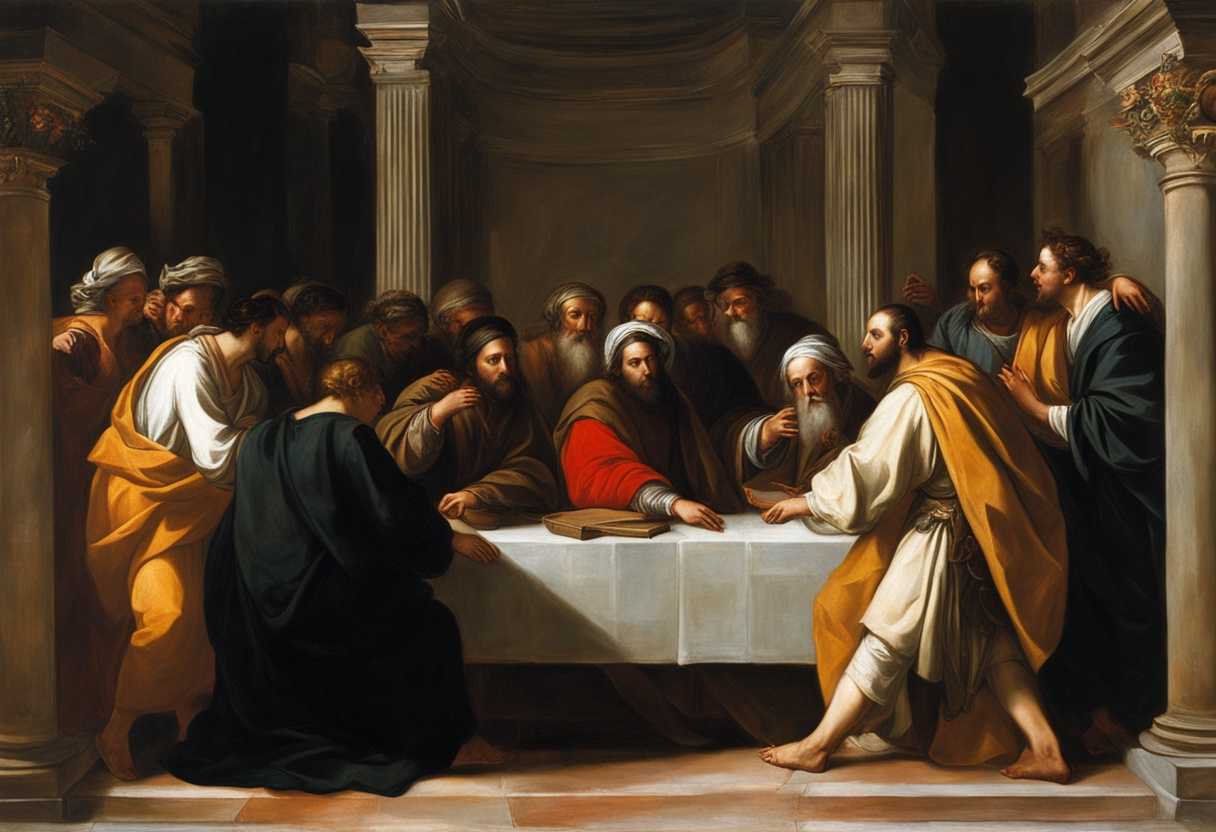
Setting the Scene for John 7:40-53
In John chapter 7, we find a scene set in Jerusalem during the Feast of Tabernacles. The city is bustling with people who have come to celebrate the harvest festival. Among the crowd are Pharisees and chief priests who are skeptical of Jesus and his teachings. They are discussing the rumors and debates surrounding Jesus, trying to figure out who he really is.
In the midst of this lively atmosphere, a division arises among the people regarding Jesus. Some believe he is the Prophet Moses spoke about, while others argue that the Messiah does not come from Galilee. The Pharisees send temple guards to arrest Jesus, but they return empty-handed, captivated by his words like never before. Nicodemus, a Pharisee who previously visited Jesus at night, speaks up in defense of Jesus, causing further tension among the religious leaders.
As the day progresses and the debate intensifies, the scene becomes charged with anticipation and uncertainty. The air is thick with conflicting opinions and emotions as the people grapple with the identity of Jesus and the significance of his teachings.
What is John 7:40-53 about?
Let’s explore the intricate dynamics at play by delving into the depth of this verse. The mention of division among the people speaks volumes about the diverse beliefs and perspectives existing back then. It prompts us to ponder upon the complexity of human nature and the different ways in which individuals interpret and perceive the same truth. How fascinating it is to witness the unfolding of conflicting ideas and opinions, each vying for validation and acceptance.
The core of the division revolves around Jesus’ identity and authority as the Messiah. This crucial aspect sheds light on the profound impact of belief systems and religious convictions on people’s lives. It prompts us to reflect on the significance of faith and spirituality in shaping our perceptions and guiding our actions. How empowering it is to witness the profound influence of one’s belief in defining their understanding of the world and their place within it. As we navigate through this verse, let us not only observe the division among the people but also contemplate on our own beliefs and convictions. How do we perceive authority? What shapes our understanding of identity? By delving into these questions, we unravel not only the complexities of human nature but also embark on a journey of self-discovery and introspection. We should embrace the diversity of perspectives and strive to seek unity amidst differences, for in understanding the division, we may find the path to true enlightenment.
Understanding what John 7:40-53 really means
During the Feast of Tabernacles, a pivotal Jewish festival, Jesus stirred controversy with His teachings in the temple, sparking diverse reactions among the people. Some speculated, “Surely this man is the Prophet,” alluding to the anticipated prophet akin to Moses. Others boldly proclaimed, “He is the Messiah,” recognizing Jesus as the anointed Savior. However, skepticism arose with the question, “How can the Messiah come from Galilee?” This doubt stemmed from a misunderstanding of prophecies like Micah 5:2, which foretold the Messiah’s Bethlehemite origin, not Galilee.
The Pharisees, showcasing their ignorance or dismissal of Jesus’ identity, asserted, “No prophet arises from Galilee.” This statement overlooked historical prophets like Jonah, who hailed from Galilee. The passage intertwines these reactions, revealing the intricate tapestry of beliefs and misconceptions surrounding Jesus’ identity. It prompts us to ponder how our own biases and limited understanding can shape our perceptions of spiritual truths.
In Deuteronomy 18:15, Moses prophesied about a future prophet akin to him, emphasizing the importance of heeding this figure’s teachings. Micah 5:2 foretold the Messiah’s birth in Bethlehem, a detail that eluded many, leading to doubts about Jesus’ origins. Isaiah 53’s depiction of the suffering servant further complicated the prevailing notions of the Messiah, challenging traditional expectations.
Today, as then, people grapple with differing views on Jesus’ identity and message. Just as the crowd was divided, we too face a myriad of beliefs and interpretations. This passage beckons us to seek unity amidst diversity, urging us to delve deeper into the essence of our faith rather than settling for superficial judgments. It compels us to reflect on how we approach spiritual truths and the importance of personal exploration in understanding Jesus’ teachings.
Consider a community divided over a new leader’s credentials. Some embrace his vision, while others question his background. Those who invest time in comprehending his character and message find unity and growth, contrasting with those who hastily judge and miss out on communal prosperity. This anecdote mirrors the timeless lesson embedded in the passage, emphasizing the significance of looking beyond initial impressions to grasp the essence of a person or message.
In conclusion, John 7:40-53 challenges us to transcend surface-level assessments and embrace a deeper comprehension of Jesus’ teachings. It advocates for unity in faith and underscores the value of individual exploration in spiritual matters. By internalizing this narrative, we can cultivate a spirit of inclusivity and understanding in our faith communities, fostering a culture of openness and mutual respect.
Is our understanding of spiritual truth based on assumptions?
Yes, the understanding of spiritual truth can sometimes be based on assumptions. The people in this passage debate about Jesus’ identity based on their assumptions about where He came from. Some believed that the Messiah would come from Bethlehem, while others assumed He would come from Galilee. These assumptions led to confusion and division among the people.
It is essential for us to be conscious of the assumptions we hold and to continually examine them in the light of spiritual truth. Our preconceived notions and beliefs can sometimes cloud our understanding of God’s word. We can deepen our understanding of spiritual truth and grow in our relationship with God by being open and willing to let go of our assumptions. Assumptions or human reasoning alone are not meant to solely understand spiritual truth. It requires a humble and open heart, willing to seek and receive the guidance of the Holy Spirit. We can experience a deeper and more profound understanding of His ways by surrendering our assumptions and allowing God to reveal His truth to us.
Application
Think of your faith journey like navigating the demands of work and family life. Are you taking the time to truly understand the “projects” you’re handling, or are you rushing to conclusions? Like seeking advice in important life decisions, dive into the Scriptures to find clarity and wisdom. Let’s break our habit of snap judgments, and instead, pursue growth with humility. Ready to let the Word be your blueprint for action?

Reverend Michael Johnson is an experienced Church Minister with a profound expertise in spirituality and guidance. With a serene presence and a compassionate heart, he has faithfully served his congregation for over 20 years, leading them on a spiritual journey towards inner peace and enlightenment. Reverend Johnson’s extensive knowledge of religious philosophies and profound understanding of human nature have made him a trusted confidant and mentor to many, as he seamlessly weaves his profound wisdom into life teachings. Reverend Johnson’s calming demeanor and empathetic nature continue to uplift and heal souls, nurturing a sense of unity and tranquility within his community.