
John 7:7 is about Jesus explaining to his brothers that the world hates him because he testifies that its works are evil.
7 The world cannot hate you, but it hates me because I testify about it that its works are evil.
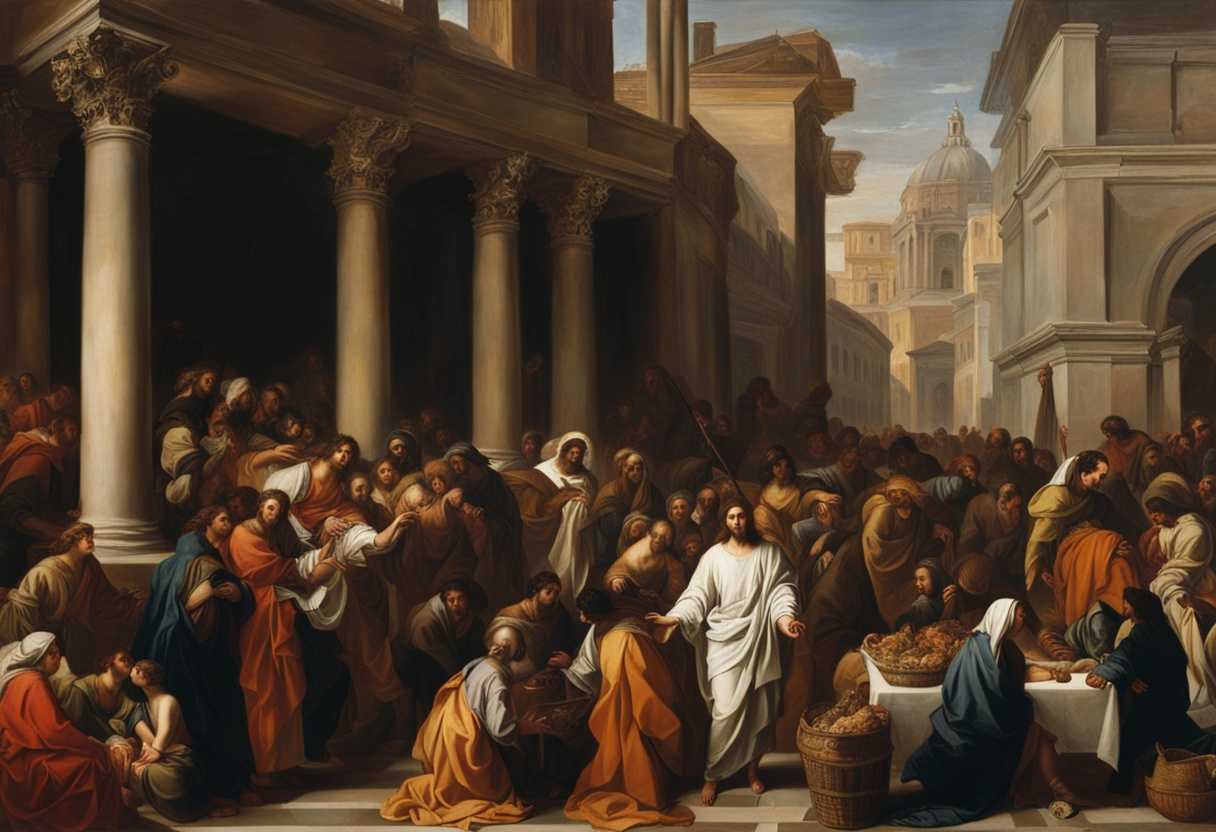
Setting the Scene for John 7:7
In John chapter 7, we find Jesus in the midst of a contentious situation in Jerusalem. The Feast of Tabernacles is at hand, and Jesus’ brothers urge Him to go to Judea to show His works to the world. However, Jesus decides to stay behind, knowing that the world hates Him because He testifies that its works are evil. As the feast progresses, Jesus eventually goes up to the temple to teach.
The scene is set in the bustling temple courts, filled with people from all walks of life who have come to celebrate the feast. Jesus stands amidst the crowd, teaching with authority and wisdom that leaves the listeners amazed. The religious leaders, threatened by His teachings and growing popularity, begin to plot against Him, spreading rumors and questioning His credentials. Despite the mounting opposition, Jesus remains steadfast in His mission, knowing that His time has not yet come. The tension in the air is palpable as the crowd debates among themselves about who Jesus truly is and what His intentions may be.
What is John 7:7 about?
This verse highlights the tension that exists when people are confronted with the truth about their actions and behaviors. Jesus, as the embodiment of love and righteousness, shines a light on sin and calls people to repentance and transformation. This can be uncomfortable and challenging for those who do not want to acknowledge their wrongdoing or change their ways. The world, in its fallen state, often resists this conviction because it forces individuals to confront their own shortcomings and surrender to a higher moral authority. We should consider how we respond to the conviction that Jesus brings into our lives as we reflect on this verse. Do we welcome it as an opportunity for growth and healing, or do we resist it out of pride or fear? While it may be difficult to confront our own sinfulness, the ultimate result of allowing Jesus to expose and convict our hearts is freedom and redemption. We open ourselves up to the grace and mercy that Jesus offers us by acknowledging our need for forgiveness and transformation. We should embrace the challenging but transformative work of Jesus in our lives, allowing Him to reveal the areas where we need to repent and grow. May we not be swayed by the world’s rejection of this truth, but instead hold fast to the hope and healing that comes from a deep and honest relationship with our Savior.
Understanding what John 7:7 really means
In John 7:7, Jesus makes a profound statement to His brothers, highlighting a stark contrast in the way the world perceives Him versus them. He tells them, “The world cannot hate you, but it hates me because I testify that its works are evil.” This declaration unveils a fundamental truth about the nature of Jesus’ mission and the inevitable opposition that comes with standing for righteousness in a fallen world. Jesus’ brothers, being part of the world and its systems, do not evoke the same hostility as Jesus, who boldly exposes the sinful deeds of humanity.
This verse resonates with a broader theme in the Bible where Jesus forewarns His followers about the world’s animosity towards those who choose to walk in His ways. In John 15:18-19, Jesus speaks about the world’s hatred towards His disciples because they are not aligned with its values. Similarly, 1 John 3:13 cautions believers not to be surprised if the world despises them for their commitment to truth. The correlation between righteousness and persecution is further emphasized in Matthew 5:10-12, where Jesus extols the blessedness of those who endure persecution for the sake of righteousness.
Today, the message of John 7:7 remains relevant as it serves as a poignant reminder that adhering to biblical principles may invite opposition in a society that often rejects absolute truths. In a culture where moral relativism prevails, those who uphold God’s standards may encounter criticism or even hostility. This verse encourages believers to stand firm in their convictions, unwavering in the face of societal pressures that contradict their faith.
Consider a scenario where a young professional steadfastly refuses to partake in unethical practices at work, despite facing ostracism and backlash from colleagues. This narrative mirrors the essence of Jesus’ words, illustrating the tension between righteousness and the world’s resistance. Just as Jesus faced animosity for exposing evil, individuals who uphold moral integrity may encounter similar challenges in their respective spheres.
John 7:7 serves as a call to courage and perseverance for Christians navigating a world that often opposes their beliefs. It beckons believers to embrace their role as beacons of light in a darkened world, even if it means enduring persecution or disdain. By reminding followers that Jesus Himself faced vehement opposition, the verse instills a sense of solidarity and fortitude in the midst of adversity. Ultimately, it points believers towards the hope and strength found in following Jesus, who triumphed over the world and its hostility.
How can we respond when the world rejects us?
When we experience rejection from the world, we can take solace in the fact that as followers of Christ, we are not of this world. We should not be surprised if the world rejects us as well, just as Jesus faced rejection and hostility during His time on earth. Our identity and worth come from God, not from the acceptance of the world. Therefore, we can find strength and reassurance in knowing that our ultimate approval and validation come from Him. We can turn to Jesus as our ultimate example in times of rejection. Despite facing rejection, He remained steadfast in His faith and continued to fulfill the will of God. We can find comfort and perseverance by following His example, knowing that He understands our struggles and is always by our side, guiding us through difficult situations. Instead of seeking validation from the world, we can find peace in the unwavering love and acceptance of our Savior.
Application
Think of your faith like a lighthouse amidst a storm. Not everyone will see its light, but it must shine regardless. When we face skepticism or pushback, it’s like dealing with a tough client or a stubborn family member; the challenge is real, but your purpose remains clear. Stand firm, share your truth boldly, and lead by the example of God’s love. Will you let the tides of adversity dim your light, or will you stand tall and shine even brighter?

Reverend Michael Johnson is an experienced Church Minister with a profound expertise in spirituality and guidance. With a serene presence and a compassionate heart, he has faithfully served his congregation for over 20 years, leading them on a spiritual journey towards inner peace and enlightenment. Reverend Johnson’s extensive knowledge of religious philosophies and profound understanding of human nature have made him a trusted confidant and mentor to many, as he seamlessly weaves his profound wisdom into life teachings. Reverend Johnson’s calming demeanor and empathetic nature continue to uplift and heal souls, nurturing a sense of unity and tranquility within his community.