
John 8:39-59 is about Jesus asserting His divine identity as the Son of God to the Jews, revealing the harsh truth that their rejection of Him signifies their spiritual blindness and separation from God.
39 They answered him, “Abraham is our father.” Jesus said to them, “If you were Abraham’s children, you would be doing the works Abraham did,
40 but now you seek to kill me, a man who has told you the truth that I heard from God. This is not what Abraham did.
41 You are doing the works your father did.” They said to him, “We were not born of sexual immorality. We have one Father—even God.”
42 Jesus said to them, “If God were your Father, you would love me, for I came from God and I am here. I came not of my own accord, but he sent me.
43 Why do you not understand what I say? It is because you cannot bear to hear my word.
44 You are of your father the devil, and your will is to do your father’s desires. He was a murderer from the beginning, and does not stand in the truth, because there is no truth in him. When he lies, he speaks out of his own character, for he is a liar and the father of lies.
45 But because I tell the truth, you do not believe me.
46 Which one of you convicts me of sin? If I tell the truth, why do you not believe me?
47 Whoever is of God hears the words of God. The reason why you do not hear them is that you are not of God.
48 The Jews answered him, “Are we not right in saying that you are a Samaritan and have a demon?”
49 Jesus answered, “I do not have a demon, but I honor my Father, and you dishonor me.
50 Yet I do not seek my own glory; there is One who seeks it, and he is the judge.
51 Truly, truly, I say to you, if anyone keeps my word, he will never see death.”
52 The Jews said to him, “Now we know that you have a demon! Abraham died, as did the prophets, yet you say, ‘If anyone keeps my word, he will never taste death.’
53 Are you greater than our father Abraham, who died? And the prophets died! Who do you make yourself out to be?
54 Jesus answered, “If I glorify myself, my glory is nothing. It is my Father who glorifies me, of whom you say, ‘He is our God.’
55 But you have not known him. I know him. If I were to say that I do not know him, I would be a liar like you, but I do know him and I keep his word.
56 Your father Abraham rejoiced that he would see my day. He saw it and was glad.”
57 So the Jews said to him, “You are not yet fifty years old, and have you seen Abraham?”
58 Jesus said to them, “Truly, truly, I say to you, before Abraham was, I am.”
59 So they picked up stones to throw at him, but Jesus hid himself and went out of the temple.
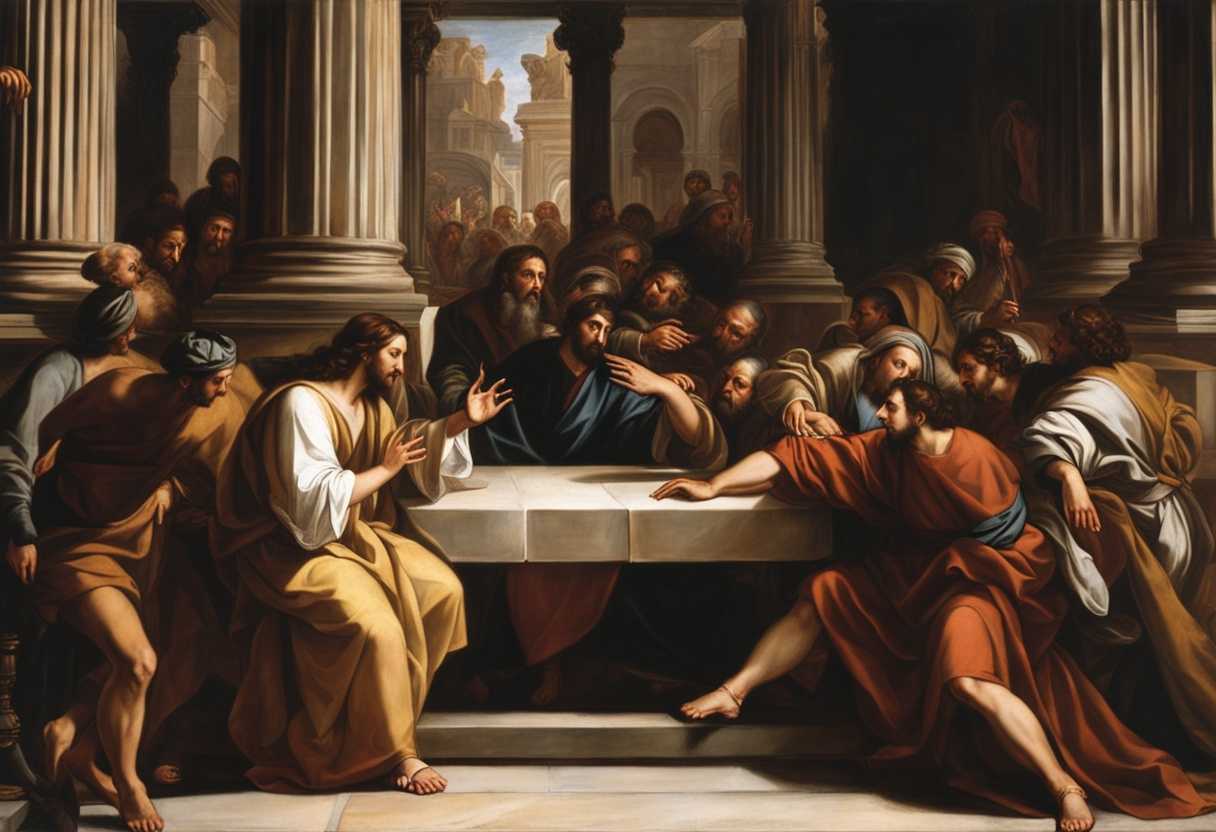
Setting the Scene for John 8:39-59
In John chapter 8, Jesus is engaged in a heated debate with the Jewish leaders in the temple courts in Jerusalem. The scene is tense as the religious leaders are challenging Jesus’ authority and questioning his claims. The Pharisees, scribes, and other Jewish leaders have gathered around Jesus, trying to trap him with their questions and test his knowledge of the scriptures.
The atmosphere is charged with suspicion and hostility as Jesus stands firm in his teachings, proclaiming his divinity and challenging the religious leaders to believe in him. The crowd is divided, with some people starting to believe in Jesus while others remain skeptical and even hostile towards him. The temple courts are bustling with activity, with people coming and going, witnessing this intense confrontation between Jesus and the Jewish leaders.
As the debate escalates, Jesus makes bold statements about his identity, causing outrage among the religious leaders who accuse him of blasphemy. The tension reaches its peak as Jesus declares, “Before Abraham was born, I am,” claiming a divine existence that infuriates his opponents and leads to a dramatic confrontation that reveals the deep-seated disbelief and rejection of Jesus by the religious authorities.
What is John 8:39-59 about?
Jesus asserts his identity as the Son of God in this verse, challenging the beliefs of the unbelieving Jews at that time. Jesus was expressing his divine nature and emphasizing his special relationship with God the Father by boldly stating this truth. This declaration was a pivotal moment in Jesus’ ministry as it revealed his true identity and mission on Earth.
Have you ever had to stand firm in your beliefs, even when faced with skepticism or opposition from others? Just like Jesus courageously proclaimed his identity despite disbelief, we too may encounter situations where we need to confidently express our faith and convictions. This verse reminds us of the importance of staying true to our beliefs and trusting in the truth, even when it may be met with doubt or resistance. Let Jesus’ unwavering faith and boldness in proclaiming his identity as the Son of God inspire us as we reflect on this verse. May we have the courage to confidently share our beliefs with others and stand firm in our faith, just as Jesus did in the face of disbelief.
Understanding what John 8:39-59 really means
In John 8:39-59, we witness a tense exchange between Jesus and the Jewish leaders, delving into the themes of spiritual lineage, truth, freedom, and Jesus’ divine nature. Jesus challenges the leaders, stating that if they were truly Abraham’s children, their actions would reflect that lineage. This highlights the importance of actions aligning with one’s professed faith, echoing James 2:21-24, where faith is shown through deeds. It prompts us to consider whether our actions truly mirror our spiritual heritage.
Furthermore, Jesus boldly proclaims to the leaders that they belong to their father, the devil, emphasizing the stark contrast between following God and following evil. This notion is echoed in 1 John 3:8-10, which distinguishes between the children of God and the children of the devil. It compels us to reflect on whose desires we are truly seeking to fulfill in our lives.
The climax of the discourse comes when Jesus declares, “Before Abraham was born, I am!” Here, Jesus asserts His eternal existence and divine nature, echoing God’s revelation to Moses in Exodus 3:14 as “I AM.” This statement underscores Jesus’ deity and challenges us to grapple with the profound truth of His identity.
In our contemporary context, the lessons from this passage remain relevant. We are called to authentically live out our faith, just as Jesus challenged the Jewish leaders to do. Our actions should reflect our spiritual lineage, serving as a testament to our beliefs. Consider a modern-day narrative of someone whose transformative realization led to a profound change in behavior, aligning their actions with their professed faith.
Moreover, in a world rife with misinformation, Jesus’ words about knowing the truth and finding freedom in it resonate deeply. Seeking and living by the truth, as exemplified in the Gospel, can bring liberation and clarity amidst confusion. Reflect on a personal account of someone finding freedom from addiction through the truth of the Gospel and the support of a faith community.
Lastly, acknowledging and embracing Jesus’ divinity is foundational to the Christian faith. It shapes our worship, our trust in His promises, and our hope for eternal life. Consider a testimony of someone whose life was radically transformed by coming to believe in Jesus’ divine nature and surrendering to Him. As we ponder these truths, may we be spurred to align our actions with our faith, seek the liberating truth, and deepen our relationship with the divine Jesus.
What is the nature of our relationship with God?
Our relationship with God is portrayed as that of father and children. The verse highlights Jesus’ conversation with the Jews, where they claim Abraham as their father but fail to recognize God as their true Father. Jesus emphasizes that their actions do not align with the character of Abraham, who sought God’s will and obeyed His commands. He reveals that their true relationship with God is determined by their faith and obedience rather than heritage or lineage.
This passage indicates that our relationship with God is not solely based on our physical lineage or history but is rooted in our faith and obedience to His Word. It emphasizes the importance of recognizing God as our true Father and following His will in our lives. The conversation with the Jews serves as a reminder that true children of God are those who walk in faith and obedience, reflecting the character of their heavenly Father.
Application
Pause and look at your daily grind—your work deadlines, family obligations, and personal goals. Are you truly living in sync with Jesus’ teachings or just going through the motions? Now is the moment to commit fully, to walk His path and cast aside your self-centered ambitions. Reflect on your heart. Are you ready to make a change and truly live for Him?

Reverend Michael Johnson is an experienced Church Minister with a profound expertise in spirituality and guidance. With a serene presence and a compassionate heart, he has faithfully served his congregation for over 20 years, leading them on a spiritual journey towards inner peace and enlightenment. Reverend Johnson’s extensive knowledge of religious philosophies and profound understanding of human nature have made him a trusted confidant and mentor to many, as he seamlessly weaves his profound wisdom into life teachings. Reverend Johnson’s calming demeanor and empathetic nature continue to uplift and heal souls, nurturing a sense of unity and tranquility within his community.