
1 Now the word of the Lord came to Jonah the son of Amittai, saying,
2 “Arise, go to Nineveh, that great city, and call out against it, for their evil has come up before me.”
3 But Jonah rose to flee to Tarshish from the presence of the Lord. He went down to Joppa and found a ship going to Tarshish. So he paid the fare and went down into it, to go with them to Tarshish, away from the presence of the Lord.
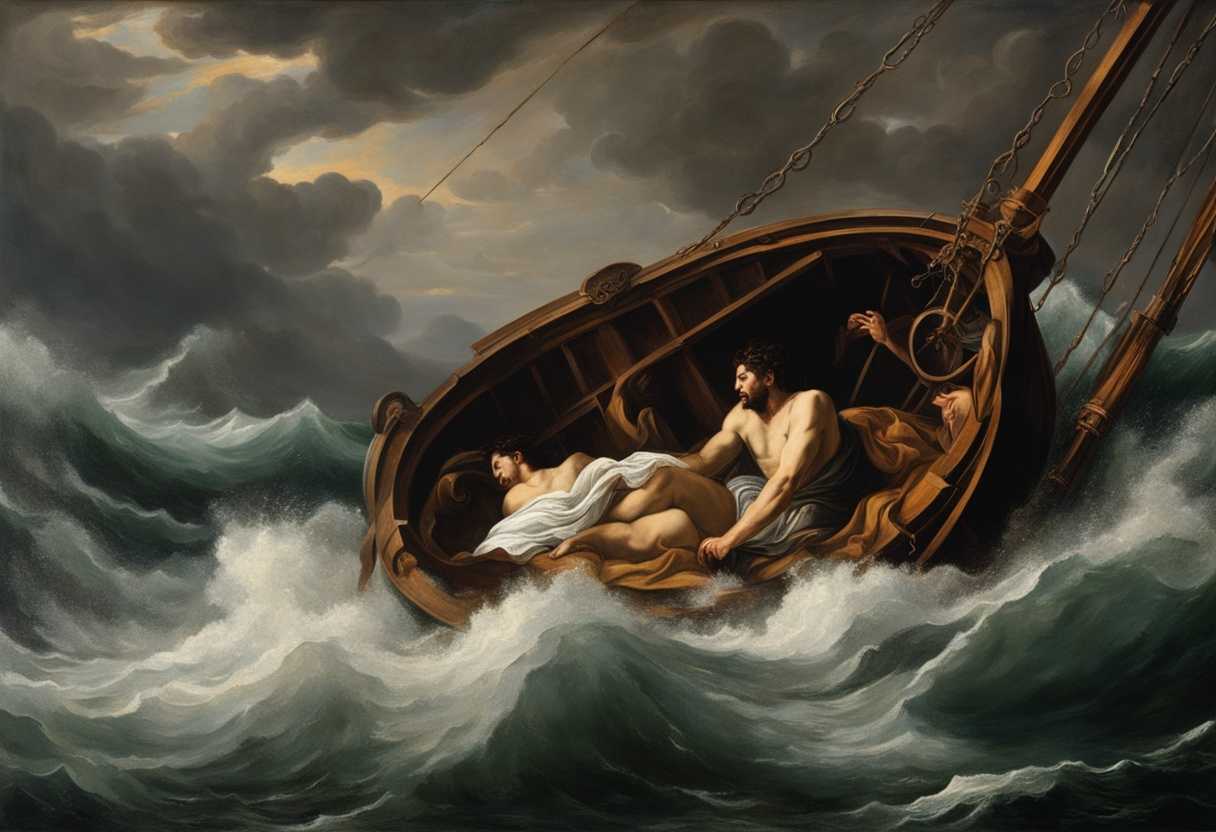
4 But the Lord hurled a great wind upon the sea, and there was a mighty tempest on the sea, so that the ship threatened to break up.
5 Then the mariners were afraid, and each cried out to his god. And they hurled the cargo that was in the ship into the sea to lighten it for them. But Jonah had gone down into the inner part of the ship and had lain down and was fast asleep.
6 So the captain came and said to him, “What do you mean, you sleeper? Arise, call out to your god! Perhaps the god will give a thought to us, that we may not perish.”
7 And they said to one another, “Come, let us cast lots, that we may know on whose account this evil has come upon us.” So they cast lots, and the lot fell on Jonah.
8 Then they said to him, “Tell us on whose account this evil has come upon us. What is your occupation? And where do you come from? What is your country? And of what people are you?”
9 And he said to them, “I am a Hebrew, and I fear the Lord, the God of heaven, who made the sea and the dry land.”
10 Then the men were exceedingly afraid and said to him, “What is this that you have done!” For the men knew that he was fleeing from the presence of the Lord, because he had told them.
11 Then they said to him, “What shall we do to you, that the sea may quiet down for us?” for the sea grew more and more tempestuous.
12 He said to them, “Pick me up and hurl me into the sea; then the sea will quiet down for you, for I know it is because of me that this great tempest has come upon you.”
13 Nevertheless, the men rowed hard to get back to dry land, but they could not, for the sea grew more and more tempestuous against them.
14 Therefore they called out to the Lord, “O Lord, let us not perish for this man’s life, and lay not on us innocent blood, for you, O Lord, have done as it pleased you.”
15 So they picked up Jonah and hurled him into the sea, and the sea ceased from its raging.
16 Then the men feared the Lord exceedingly, and they offered a sacrifice to the Lord and made vows.
17 And the Lord appointed a great fish to swallow up Jonah. And Jonah was in the belly of the fish three days and three nights.
The True Meaning of Jonah 1
The book of Jonah is a short narrative in the Old Testament, attributed to the prophet Jonah. Jonah was a prophet during the reign of Jeroboam II, the king of Israel in the 8th century BCE. This chapter sets the stage for Jonah’s famous encounter with a great fish, as well as his reluctant mission to the city of Nineveh. Jonah’s initial disobedience to God’s command in this opening chapter leads to the consequences that follow. The Lord calls Jonah to go to the great city of Nineveh and proclaim a message of repentance, but Jonah flees in the opposite direction, boarding a ship bound for Tarshish. This decision sets off a series of events that will test Jonah’s faith and obedience to the Almighty. The Psalmist declared, “Where can I go from your Spirit?” as we read this passage, reminding us of his words. Where can I flee from your presence?” (Psalm 139:7). Jonah’s attempt to run away from God’s call will ultimately prove futile, as the Lord’s sovereignty and power are made manifest through the unfolding of this narrative.
Jonah 1:1-3
The following important sections are seen in Jonah 1:1-3. “The word of the Lord came to Jonah, son of Amittai: ‘Go to the great city of Nineveh and preach against it, because its wickedness has come up before me. Jonah, the son of Amittai, receives a direct command from God to go to Nineveh, the capital of the Assyrian Empire, and prophesy against the city due to its wickedness in this opening verse. Nineveh was known for its great cruelty and violence, and it was a powerful enemy of Israel at the time. This command put Jonah in a difficult position as he was being asked to go to the enemies of his people and deliver a troubling message of impending judgment. Jonah’s initial response to this call to preach to the Ninevites is telling of his own attitudes and prejudices towards the Assyrians.
- “But Jonah ran away from the Lord and headed for Tarshish. He went down to Joppa, where he found a ship bound for that port. After paying the fare, he went aboard and sailed for Tarshish to flee from the Lord.”
Here, instead of obeying God’s command, Jonah chooses to flee in the opposite direction to Tarshish, which was a Phoenician city far west of Israel. The act of running away from God’s call demonstrates Jonah’s disobedience and attempts to avoid his responsibility. Tarshish was likely seen as a symbol of a far-off, safe place for Jonah to escape the difficult task set before him. However, as the story unfolds, we see that you cannot outrun God’s plans for you. God’s reach extends to all corners of the earth, as illustrated by His ability to bring storms and trials even to the sea where Jonah sought to hide.
- “Then the Lord sent a great wind on the sea, and such a violent storm arose that the ship threatened to break up. God does not let Jonah go so easily as he tries to escape from the presence of the Lord. The Lord sends a great storm in pursuit of Jonah, putting not only Jonah’s life in danger but also the lives of the sailors on the ship he boards. This storm represents God’s sovereignty over all creation and His power to disrupt human plans. It also illustrates God’s desire for Jonah to fulfill his purpose and not stray from the path set before him. The storm serves as a means for God to get Jonah’s attention and bring him back to his calling. Themes of obedience, repentance, and the futility of running away from God’s will are seen in these verses. Jonah’s story is a powerful reminder that God’s plans will prevail, regardless of our attempts to go against them. It also teaches us about the importance of trusting in God’s guidance and following His commands, even when they lead us into uncomfortable or challenging situations. Jonah’s actions and the consequences he faces serve as a cautionary tale for believers about the dangers of disobedience and the need for submission to God’s will.
Jonah 1:4-6
The Lord sends a great wind on the sea in Jonah 1:4-6, causing a mighty storm that threatens to break apart the ship Jonah is on. Identify the subject: “Let’s”
Rewritten sentence: Let’s break down this into important sections and delve into their meanings and implications. “Then the Lord sent a great wind on the sea, and such a violent storm arose that the ship threatened to break up.” This section emphasizes the power and authority of God over nature. The fact that the storm was directly sent by the Lord highlights His sovereignty and control over all creation. This serves as a reminder that no matter how powerful or destructive a situation may seem, God is ultimately in command. This incident echoes similar displays of God’s power over nature in other parts of the Bible, such as when Jesus calmed the storm in Mark 4:35-41. It illustrates the concept that even the forces of nature obey God’s will.
-
“All the sailors were afraid and each cried out to his own god. And they threw the cargo into the sea to lighten the ship.” Here, we witness the natural response of fear and desperation in the face of imminent danger. The sailors, each calling upon their respective gods, exemplify the human inclination to seek divine intervention when faced with peril. However, this scene also highlights the contrast between the pagan sailors’ frantic prayers to multiple gods and Jonah’s disobedience to the one true God. While the sailors are doing everything in their power to save the ship and themselves, Jonah’s attempt to flee from God’s command not only endangers himself but also puts the lives of innocent sailors at risk. This contrast serves as a poignant reminder of the consequences of disobedience and the importance of faithfulness to God’s will.
-
“But Jonah had gone below deck, where he lay down and fell into a deep sleep.” Jonah’s response to the storm is markedly different from that of the sailors. While they are in a state of panic and actively trying to save the ship, Jonah retreats below deck and falls asleep. This behavior can be interpreted as a metaphor for Jonah’s refusal to confront his responsibilities and the consequences of his actions. Jonah tries to distance himself from the unfolding crisis by escaping into sleep and avoiding the chaos above deck. This can serve as a cautionary tale about the dangers of spiritual indifference and the consequences of evading our duties and ignoring God’s calling. Jonah’s actions in this passage set the stage for the dramatic events that will unfold as the story progresses. Jonah 1:4-6 sets the scene for the pivotal events that will shape the rest of the book. It showcases God’s power over nature, highlights the contrast between obedience and disobedience, and foreshadows the challenges that Jonah will face as he grapples with his own shortcomings. This passage serves as a powerful reminder of the importance of faithfulness, obedience, and facing the consequences of our actions, all of which are enduring themes throughout the Bible.
Jonah 1:7-10
Jonah 1:7-10 shows a crucial moment in the story of Jonah. The sailors, amidst the storm sent by God to thwart Jonah’s escape, are trying to discern the reason for the tempest. They cast lots to determine who is responsible for this calamity, and the lot falls on Jonah. This method of decision-making was common in the ancient world and was believed to reveal the will of the gods. When the lot falls on Jonah, they confront him, asking him to explain why this disaster has come upon them.
This section highlights the theme of divine intervention and consequence for disobedience present throughout the book of Jonah. Jonah’s actions have not only endangered himself but also put the lives of innocent sailors at risk. His attempt to flee from God’s command has brought a storm upon them all. This serves as a powerful reminder that our choices and actions not only affect us but can impact those around us as well. Jonah’s response to the sailors’ inquiry is telling. He confesses that he is a Hebrew who fears the Lord, the God of heaven, who made the sea and the dry land. This confession underscores Jonah’s acknowledgment of God’s sovereignty over all creation. Even though Jonah tried to flee from the presence of the Lord, he cannot escape the reality of God’s power and authority.
This passage also points to the universal nature of God’s sovereignty and the futility of trying to run away from His presence. Throughout the Bible, we see instances where individuals try to defy or escape God’s will, but ultimately, they are brought back to Him. Jonah’s story serves as a poignant illustration of this truth, showing that God’s plans will ultimately prevail, regardless of our attempts to resist them. Jonah’s confession shows a glimmer of repentance and acknowledgment of God’s power. However, as the story unfolds, we will see the depth of Jonah’s struggle with obedience and the need for genuine repentance. The sailors, on the other hand, display a sense of fear and reverence for Jonah’s God, even offering sacrifices and making vows. This reaction underscores how encountering the living God can lead to a transformation of hearts and minds, even in those who were previously unfamiliar with Him. We gain deeper insights into timeless truths about God’s sovereignty, the consequences of disobedience, the call to repentance, and the transformative power of encountering the divine by delving into the nuances of these verses and the interactions between the characters. Jonah’s journey is not just his own; it is a reflection of the human experience of wrestling with God’s will and the invitation to surrender to His plans, knowing that they are ultimately for our good and His glory.
Jonah 1:11-13
The sailors on the ship found themselves in a turbulent situation in Jonah 1:11-13 as they were caught in a storm that they believed was due to divine anger. When the storm grew more intense, the sailors questioned Jonah about his background and the reason for the storm. Jonah revealed that he was a Hebrew and worshipped the God who created both the sea and land. This confession likely startled the sailors, as they were not Hebrews and had their own gods.
This part of the story of Jonah highlights the theme of God’s sovereignty over all creation. The sailors, who initially prayed to their own gods, eventually reached a point of desperation where they realized that Jonah’s God held power over even the raging sea. This demonstrates that no matter where we are or what situation we are in, God is ultimately in control. It also underscores the notion that there is no escape from God’s presence, as seen when Jonah attempted to flee from the Lord’s command by boarding the ship in the first place.
The sailors’ response to Jonah’s revelation is one of fear and concern for their own safety. They inquire of Jonah what they could do to appease his God and calm the storm. Jonah acknowledges that he is the cause of the storm and instructs the sailors to throw him overboard to save the ship and themselves. This act of self-sacrifice by Jonah is profound as he is willing to sacrifice his own life to save the lives of those around him. This parallels Jesus’ sacrificial act on the cross to save humanity from sin and death, highlighting the concept of redemption and salvation.
The sailors, though initially reluctant to comply with Jonah’s request, eventually realize that it is their only option for survival. They acknowledge the supremacy of Jonah’s God and show a willingness to do what is necessary, even if it means harm to an individual, for the greater good by throwing Jonah into the sea. This turn of events also reveals the theme of obedience to God’s will even when it seems difficult or incomprehensible to us. This narrative in Jonah 1 foreshadows the sacrificial death of Jesus Christ in the broader context of the Bible. Jonah’s willingness to be thrown into the sea prefigures Jesus’ crucifixion and resurrection for the salvation of humanity. Similarly, the sailors’ acceptance of Jonah’s sacrifice reflects the acceptance of Jesus’ sacrifice for the salvation of all who believe in Him. This story serves as a powerful reminder of God’s sovereignty, mercy, and the extent of His love for His creation.
Jonah 1:14-16
The sailors on the ship in Jonah 1:14-16 experience a moment of desperation and realization of the power of the one true God. The sailors, who were on the verge of being overtaken by the storm, finally recognize that Jonah’s disobedience to God was the cause of their predicament. They ask Jonah what they should do to him so that the sea may quiet down for them. Instead of being selfish and self-preserving, Jonah selflessly tells them to throw him into the sea, knowing that this act might save the lives of the sailors and the ship.
This portion of the story reveals several important lessons. Firstly, it shows the consequences of disobedience to God. Jonah’s attempt to flee from God’s command not only put his own life in danger but also endangered the lives of innocent people around him. This serves as a reminder that our actions have consequences, not only for ourselves but also for those around us.
Secondly, Jonah’s willingness to sacrifice himself for the sake of the sailors demonstrates a form of repentance and acceptance of his guilt. Jonah accepts responsibility for his actions and shows a willingness to face the consequences by instructing the sailors to throw him into the sea. This can be seen as a form of redemption for Jonah, as he finally acknowledges his mistake and is ready to make amends.
This passage also highlights the power and sovereignty of God. Despite Jonah’s disobedience, God’s will prevails, and His power is displayed through the storm and the subsequent calm that follows Jonah being thrown into the sea. This serves as a reminder that God is in control of all things, and even in the midst of chaos and disobedience, His plans will ultimately be fulfilled. This passage foreshadows the sacrificial act of Jesus Christ in the grander scheme of the Bible. Jesus offered himself as a sacrifice for the sins of all humanity in a similar manner to Jonah offering himself to save the sailors. The parallels between Jonah’s selfless act and Jesus’ ultimate sacrifice serve as a powerful reminder of God’s love and redemption for His people. Jonah’s story, although marked by disobedience and reluctance, ultimately points to the overarching narrative of God’s grace and mercy towards His creation.
Jonah 1:17
The Lord provided a huge fish to swallow Jonah in Jonah 1:17, and Jonah was in the belly of the fish three days and three nights.” This verse occurs after Jonah disobeys God’s command to go to Nineveh and instead boards a ship to Tarshish to flee from the Lord’s presence. The sailors on the ship, facing a ferocious storm sent by God, eventually discover that Jonah is the reason for their plight, and Jonah instructs them to throw him into the sea to calm the storm. It is at this moment that God provides a large fish to swallow Jonah.
This verse holds several significant messages. Firstly, it emphasizes the sovereignty and power of God over all creation. The event of a fish swallowing Jonah and preserving him for three days and nights demonstrates how God can use even the most unlikely means to accomplish His purposes and to teach important lessons. It serves as a reminder that no one can escape the presence of God or thwart His plans, as Jonah learned the hard way.
Secondly, the account of Jonah being in the belly of the fish for three days and three nights foreshadows Jesus Christ’s time in the tomb before His resurrection. Jesus himself references this event in Matthew 12:40, drawing a parallel between Jonah’s experience and His upcoming death and resurrection. This connection points to the significance of Jonah’s story as a prefiguration of Jesus’ redemptive work for humanity.
Furthermore, Jonah’s time in the belly of the fish can be seen as a period of repentance and reflection for Jonah. It is in this dark and desperate place that Jonah cries out to God, repents for his disobedience, and offers thanksgiving and praise (Jonah 2). The fish becomes a place of deliverance and transformation for Jonah, where he acknowledges his need for God’s mercy and experiences God’s gracious salvation. Jonah 1:17 portrays God’s supremacy, His ability to work through extraordinary circumstances, foreshadows Jesus’ resurrection, and emphasizes the themes of repentance and deliverance. It serves as a powerful reminder of God’s sovereignty, His redemptive plan, and the importance of obedience and humility in following His will.
After Jonah 1
The sailors had thrown Jonah overboard, and he had been swallowed by a great fish. Jonah cried out to the Lord as he sat in the belly of the beast. He repented of his disobedience and asked for forgiveness. The Lord heard Jonah’s prayer, and the fish vomited him up onto dry land.
Jonah had been given a second chance. But would he heed the Lord’s call this time? Or would his stubborn heart lead him down a path of continued rebellion? The next chapter would reveal whether Jonah had truly learned his lesson, or if he would once again try to run from the will of the Almighty.

Reverend Michael Johnson is an experienced Church Minister with a profound expertise in spirituality and guidance. With a serene presence and a compassionate heart, he has faithfully served his congregation for over 20 years, leading them on a spiritual journey towards inner peace and enlightenment. Reverend Johnson’s extensive knowledge of religious philosophies and profound understanding of human nature have made him a trusted confidant and mentor to many, as he seamlessly weaves his profound wisdom into life teachings. Reverend Johnson’s calming demeanor and empathetic nature continue to uplift and heal souls, nurturing a sense of unity and tranquility within his community.