
Joshua 13:8-12 is about the division of the land among the tribes of Israel as a divine inheritance, reflecting God’s fulfillment of his promise to Abraham and his descendants.
8 With the other half of the tribe of Manasseh the Reubenites and the Gadites received their inheritance, which Moses gave them, beyond the Jordan eastward, as Moses the servant of the Lord gave them:
9 from Aroer, which is on the edge of the Valley of the Arnon, and the city that is in the middle of the valley, and all the tableland of Medeba;
10 and all the cities of Sihon king of the Amorites, who reigned in Heshbon, as far as the boundary of the Ammonites,
11 and Gilead, and the region of the Geshurites and Maacathites, and all Mount Hermon, and all Bashan to Salecah;
12 all the kingdom of Og in Bashan, who reigned in Ashtaroth and in Edrei (he alone was left of the remnant of the Rephaim); these Moses had struck and driven out.
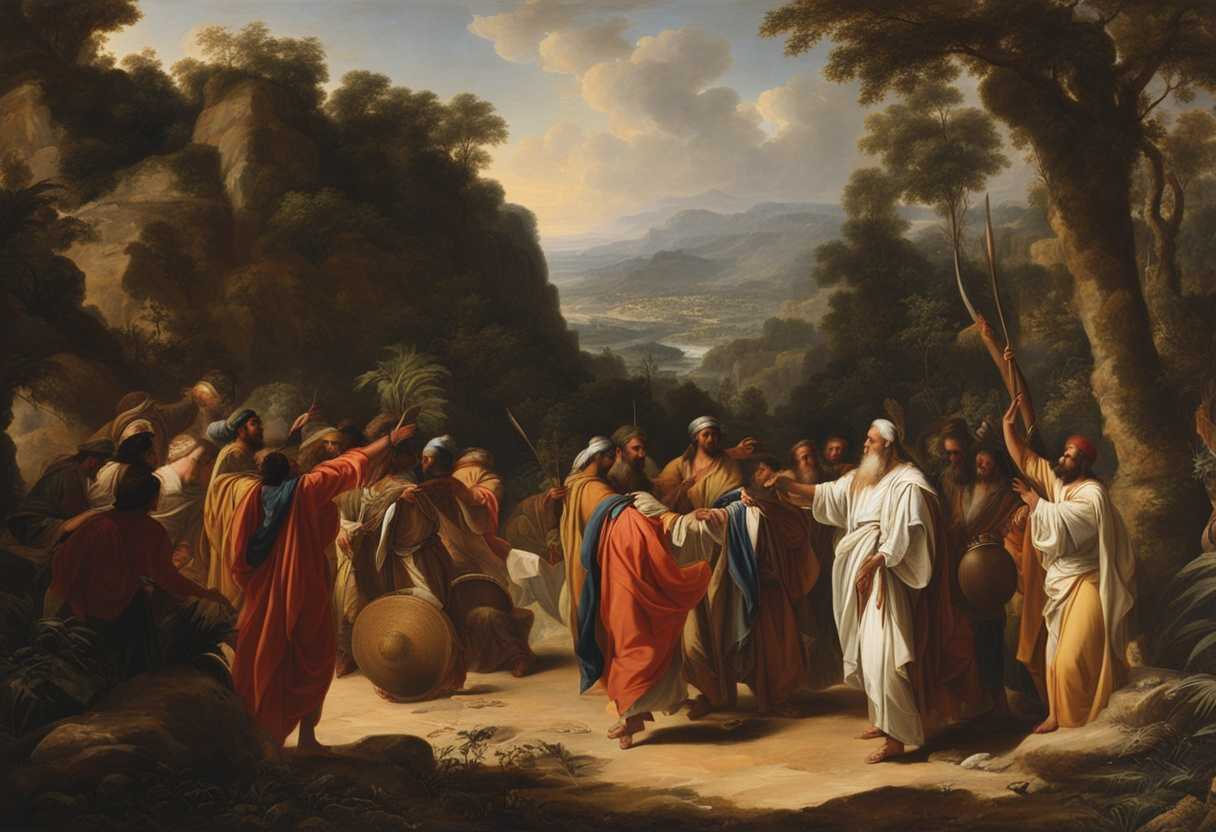
Setting the Scene for Joshua 13:8-12
The scene in Joshua 13:8-12 takes place as Joshua, the leader of the Israelites, is dividing the land among the tribes of Israel. Joshua, who succeeded Moses, is an elderly man at this point, having led the Israelites through the conquest of Canaan. He is surrounded by the leaders of the tribes, including Eleazar the priest and the other elders of Israel. The atmosphere is one of anticipation and solemnity as they gather to hear the distribution of the land that God had promised to their ancestors.
The setting is in the plains of Moab, near the Jordan River, with the majestic mountains of Gilead in the background. The land is lush and fertile, a stark contrast to the wilderness they had traversed for forty years. The tribes of Reuben, Gad, and the half-tribe of Manasseh are present, as they had already received their inheritance on the east side of the Jordan. Joshua meticulously goes through each tribe, delineating the boundaries of their allotted territories, ensuring that each receives their portion according to God’s command.
As Joshua speaks, the leaders listen intently, knowing that this division of the land signifies the fulfillment of God’s promise to Abraham, Isaac, and Jacob. The weight of responsibility and the sense of destiny hang in the air as each tribe prepares to take possession of the land allotted to them. The scene is a poignant reminder of God’s faithfulness and the importance of obedience in fulfilling His plans for His people.
What is Joshua 13:8-12 about?
Joshua is leading the distribution of land among the tribes of Israel in this verse. This act symbolizes a significant moment in the history of the Israelites as they settle in the Promised Land. Imagine the anticipation and excitement among the tribes as they await their portion of land. How would they have felt receiving the land that was promised to their ancestors? How did this act unify the tribes and strengthen their sense of identity and belonging? Through this division of land, Joshua is not just distributing territory but also establishing a sense of order, ownership, and responsibility among the tribes. Reflect on this verse as you consider the importance of land in the biblical narrative. Land represents stability, security, and sustenance. It is not just about physical space but also spiritual heritage and divine promise. How does this act of dividing the land reflect God’s faithfulness to the Israelites and His fulfillment of His covenant with them? How does the distribution of land highlight the role of leadership in ensuring justice, equity, and unity among the people? Let this verse remind you of the significance of inheritance, community, and stewardship in biblical teachings.
Understanding what Joshua 13:8-12 really means
The Book of Joshua takes us on a journey through the conquest of Canaan by the Israelites under the leadership of Joshua. As we delve into Joshua 13, we witness a pivotal moment as the narrative shifts from conquest to the division of the land among the tribes. Specifically, verses 8-12 shed light on the allocation of land to the tribes of Reuben, Gad, and the half-tribe of Manasseh.
In verse 8, the mention of “the other half of the tribe of Manasseh, the Reubenites and the Gadites” receiving their inheritance highlights a sense of unity and shared blessings among the tribes. This unity emphasizes not only communal ownership of the land but also shared responsibilities and mutual support within the community. The detailed description of the territory, from Aroer to Dibon, underscores the specificity of God’s promises and blessings. It serves as a tangible reminder of God’s faithfulness in fulfilling His word with precision and abundance.
Furthermore, the reference to “all the cities of Sihon king of the Amorites” in verse 11 serves as a powerful testament to God’s deliverance and victory over formidable enemies. This victory not only secures the land for the Israelites but also reinforces the sovereignty and power of God in overcoming challenges. The historical context provided in related passages such as Numbers 32:33 and Deuteronomy 3:12-17 further solidifies the continuity of God’s promises and the fulfillment of His plans for His people.
As we reflect on Joshua 13:8-12 and its implications for us today, we are reminded of the unwavering faithfulness of God. Just as He fulfilled His promises to the Israelites, we can trust in His promises for our lives with confidence. The emphasis on community and shared blessings in the allocation of land underscores the importance of unity and support within our own communities. Additionally, the mention of conquered territories serves as a poignant reminder that God is capable of leading us to victory over the challenges we face in our personal lives.
Consider a family inheriting a piece of land rich with history and meaning. This inheritance represents not just physical property but a legacy of love, hard work, and faith passed down through generations. Similarly, the inheritance described in Joshua 13:8-12 symbolizes more than just land; it embodies God’s enduring promises and faithfulness to His people. Just as the family cherishes their inheritance, we are called to cherish and trust in the spiritual inheritance and promises God has bestowed upon us.
In conclusion, Joshua 13:8-12 serves as a poignant reminder of God’s faithfulness, the significance of community, and the assurance of victory through Him. By meditating on these verses and related passages, we can find encouragement and strength in our spiritual journey, knowing that the same God who led the Israelites to their inheritance is guiding us in our walk of faith today.
How do we handle unclaimed blessings in our lives?
When we encounter unclaimed blessings in our lives, it is essential to reflect on the message conveyed in Joshua 13:8-12. The Israelites in this passage are reminded that there are still blessings and territories to be possessed. It serves as a powerful reminder for us to remain diligent in claiming the blessings that are rightfully ours.
To handle unclaimed blessings, we must first acknowledge their existence and understand that they are God-given opportunities for us to prosper and grow. We can claim these blessings and territories by recognizing their potential and taking specific actions through faith and perseverance. We must also be proactive in seizing the blessings and opportunities that come our way, just as the Israelites needed to take possession of the land allotted to them.
Furthermore, when faced with unclaimed blessings, it is crucial to seek God’s guidance and trust in His timing. Through prayer, faith, and obedience to His Word, we can overcome any obstacles that may be hindering us from fully receiving the blessings He has in store for us. We can be confident that by aligning our actions with God’s will and remaining patient and steadfast in our faith, we will eventually claim all the blessings that He has prepared for us.
Application
Dear believer, let’s not settle for the ordinary but strive for the extraordinary blessings that await us. Let Joshua’s faith and determination inspire us to push through challenges and achieve our goals. Will we choose to step boldly into the path that God has laid out for us, even when the road ahead seems daunting?

Reverend Michael Johnson is an experienced Church Minister with a profound expertise in spirituality and guidance. With a serene presence and a compassionate heart, he has faithfully served his congregation for over 20 years, leading them on a spiritual journey towards inner peace and enlightenment. Reverend Johnson’s extensive knowledge of religious philosophies and profound understanding of human nature have made him a trusted confidant and mentor to many, as he seamlessly weaves his profound wisdom into life teachings. Reverend Johnson’s calming demeanor and empathetic nature continue to uplift and heal souls, nurturing a sense of unity and tranquility within his community.