
Joshua 20:2-3 is about God establishing cities of refuge as safe havens for those who unintentionally committed acts of violence, highlighting the importance of mercy and justice in the Old Testament legal system.
2 “Say to the people of Israel, ‘Appoint the cities of refuge, of which I spoke to you through Moses,
3 that the manslayer who strikes any person without intent or unknowingly may flee there. They shall be for you a refuge from the avenger of blood.
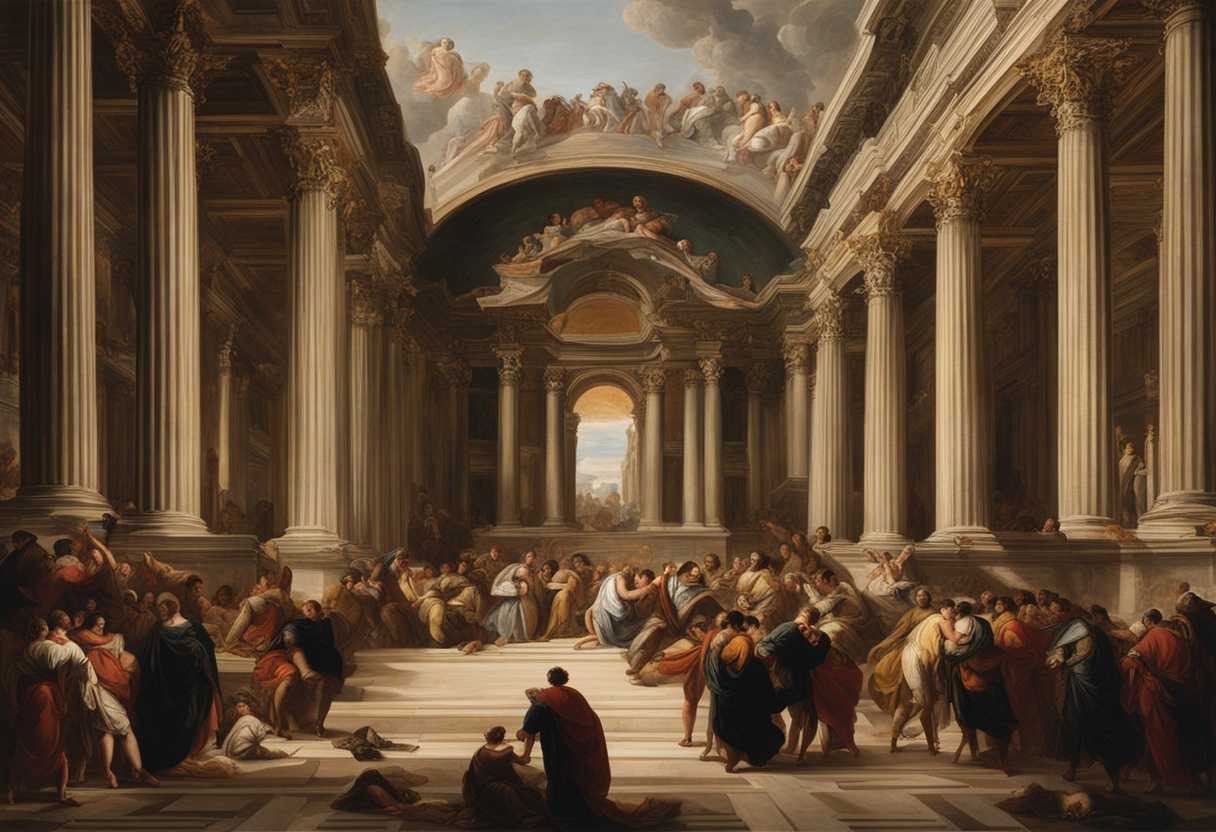
Setting the Scene for Joshua 20:2-3
In the scene described in Joshua 20:2-3, we find the Israelites on the verge of entering the Promised Land. Joshua, the appointed leader after Moses, is addressing the assembly of the Israelites. The setting is the plains of Moab, just before they are to cross the Jordan River and begin the conquest of Canaan. The Israelites have been wandering in the wilderness for forty years, and now they stand at the threshold of their long-awaited inheritance.
Joshua, a strong and faithful leader, stands before the people, his face resolute and determined. The twelve tribes of Israel are gathered around him, their tents pitched in the vast expanse of the plains. The sun is setting, casting a warm golden glow over the scene, as Joshua speaks to the assembly. He reminds them of the commandment given by God to Moses regarding the establishment of cities of refuge, where those who unintentionally commit manslaughter can find safety from avengers of blood.
The Israelites listen attentively, their hearts filled with anticipation and a sense of purpose. They are ready to follow Joshua into the land promised to their ancestors, to conquer and settle in the land flowing with milk and honey. The scene is charged with a mix of excitement, apprehension, and faith as the Israelites prepare to take the next step in their journey towards fulfilling God’s covenant with them.
What is Joshua 20:2-3 about?
Hello there! This verse refers to the concept of cities of refuge found in the Bible. Ancient Israel designated these cities as safe havens for individuals who unintentionally caused the death of another person. It was to protect them from retribution by the victim’s family or friends, who might seek vengeance in the heat of the moment. The cities of refuge offered the individual a fair trial and protection until the matter could be resolved justly.
Imagine a scenario where someone accidentally causes harm to another person. Emotions run high, and the family of the victim may seek immediate justice. The cities of refuge provide a calming space for all parties involved to take a step back, assess the situation rationally, and ensure that the outcome is based on fairness and justice rather than vengeance. It serves as a reminder of the importance of seeking justice while also showing mercy and compassion towards those who may have made a mistake unknowingly.
Understanding what Joshua 20:2-3 really means
The Book of Joshua chronicles the Israelites’ journey into the Promised Land, where they established a society governed by God’s laws. In Joshua 20:2-3, we encounter the directive to appoint cities of refuge, a concept previously introduced in Numbers 35:9-15 and Deuteronomy 19:1-13. These cities served as sanctuaries for individuals who had unintentionally caused harm, emphasizing the importance of justice and mercy within the community. The phrase “The manslayer who kills any person unintentionally” underscores the significance of intent in God’s justice system, distinguishing between deliberate and accidental actions. This provision for fleeing to a city of refuge highlights God’s compassion and the opportunity for redemption and protection from vengeance.
In Numbers 35:9-15 and Deuteronomy 19:1-13, we find further instructions and details regarding the cities of refuge, emphasizing their role in preventing bloodshed and ensuring fair trials. Psalm 46:1 metaphorically extends the concept of refuge to God Himself, portraying Him as our ultimate source of strength and protection in times of trouble. The relevance of cities of refuge extends to modern society, where we can apply the principles of justice, mercy, and protection to our legal systems, advocating for fair trials and safeguarding the innocent.
Consider a scenario where a young man named David accidentally causes a fatal car accident. Overwhelmed with guilt and fear, he finds solace in a community support group that becomes his “city of refuge,” offering him a safe space for healing and justice. Just as the ancient cities of refuge provided protection and fair hearings, modern support systems and legal safeguards can offer similar refuge and justice to those in need. The establishment of cities of refuge in Joshua 20:2-3 reflects God’s desire for a just and compassionate society, urging us to embody these values in our communities.
By embracing the principles of justice, mercy, and protection exemplified in the concept of cities of refuge, we can strive to create societies that value fairness and compassion for all individuals. This passage encourages us to seek and provide refuge in times of trouble, embodying God’s love and justice in our interactions with others. Let us reflect on the significance of offering sanctuary and support to those in need, fostering a culture of empathy and righteousness in our communities.
How can we find refuge in God’s mercy?
We can find refuge in God’s mercy by seeking His protection and guidance. The passage in Joshua 20:2-3 describes how God commanded the Israelites to provide cities of refuge for those who unintentionally caused harm to others. These cities were places of safety where individuals could flee and find mercy instead of facing immediate punishment. Similarly, when we approach God with a sincere heart and seek His forgiveness and mercy, He offers us refuge from the consequences of our mistakes and sins. God’s mercy offers us a place of shelter and forgiveness in times of trouble, just as the cities of refuge in the Old Testament provided a safe haven for those in need. We can experience God’s loving kindness and compassion by turning to Him with humility and repentance. We can find comfort and solace as we trust in His mercy, knowing that He is always ready to extend His grace and forgiveness to those who seek Him. Therefore, by seeking refuge in God’s mercy, we can find peace and security in His unchanging love.
Application
God has shown us the way – to be a shelter in the storm for those in need. Just like a pillar of strength in our own families and workplaces, we must create safe havens for those facing hardships. Let us be beacons of hope, offering compassion and protection to those struggling in our midst. Will you rise up and be a city of refuge for the vulnerable today?

Reverend Michael Johnson is an experienced Church Minister with a profound expertise in spirituality and guidance. With a serene presence and a compassionate heart, he has faithfully served his congregation for over 20 years, leading them on a spiritual journey towards inner peace and enlightenment. Reverend Johnson’s extensive knowledge of religious philosophies and profound understanding of human nature have made him a trusted confidant and mentor to many, as he seamlessly weaves his profound wisdom into life teachings. Reverend Johnson’s calming demeanor and empathetic nature continue to uplift and heal souls, nurturing a sense of unity and tranquility within his community.