
Joshua 20:4-6 is about God’s provision of cities of refuge as a place of safety for those who unintentionally commit manslaughter, highlighting His mercy and justice in providing a way for repentance and protection.
4 He shall flee to one of these cities and shall stand at the entrance of the gate of the city and explain his case to the elders of that city. Then they shall take him into the city and give him a place, and he shall remain with them.
5 And if the avenger of blood pursues him, they shall not give up the manslayer into his hand, because he struck his neighbor unknowingly, and did not hate him in the past.
6 And he shall remain in that city until he has stood before the congregation for judgment, until the death of him who is high priest at the time. Then the manslayer may return to his own town and his own home, to the town from which he fled.
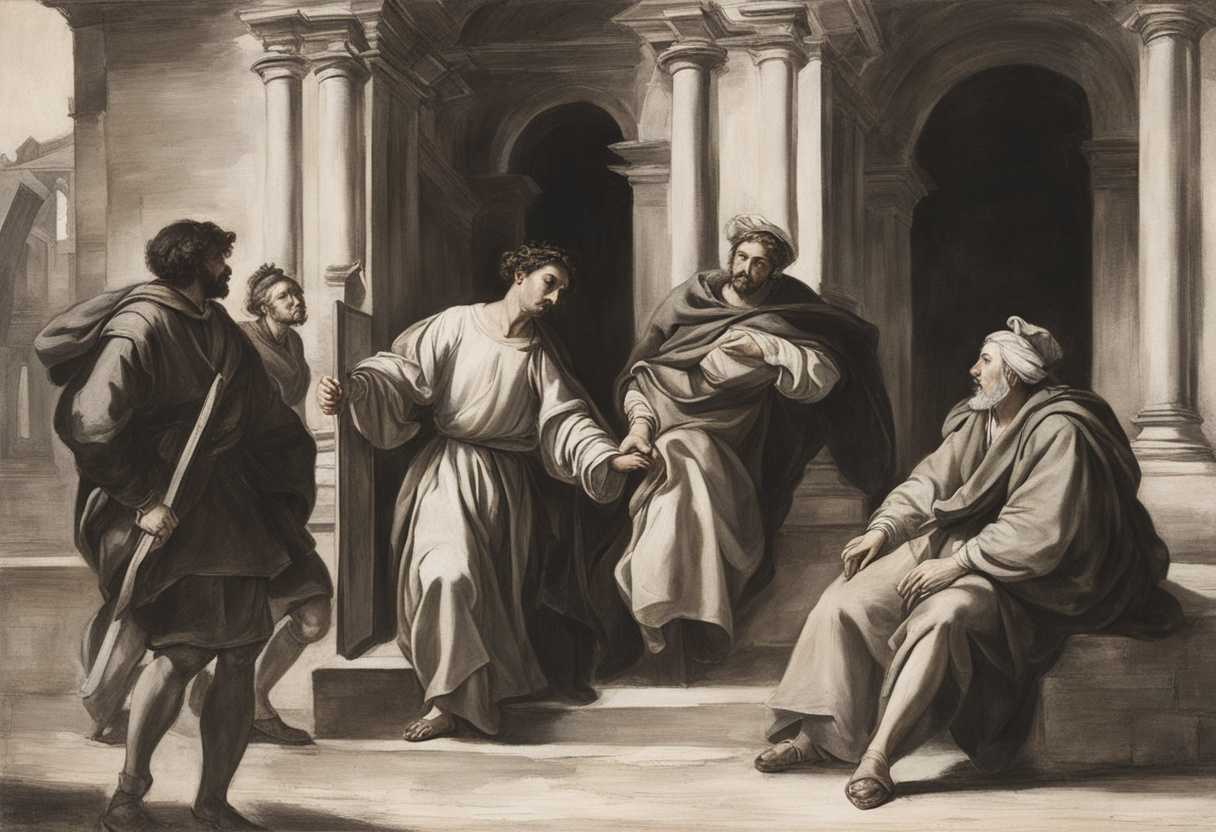
Setting the Scene for Joshua 20:4-6
In Joshua chapter 20, we find the scene where the Lord instructs Joshua to set aside cities of refuge for the Israelites. The context of this passage is after the Israelites have conquered much of the Promised Land, and the Lord is establishing laws and provisions for the people as they settle in their new territory.
Joshua, the leader of the Israelites, gathers the elders of the tribes and designates six cities of refuge: Kedesh in Galilee, Shechem in the hill country of Ephraim, Kiriath Arba (that is, Hebron) in the hill country of Judah, Bezer in the wilderness on the plateau, Ramoth in Gilead, and Golan in Bashan. These cities were to provide a safe haven for those who unintentionally caused the death of another person, protecting them from avengers seeking retribution.
The scene is set in a solemn and serious atmosphere as Joshua, the elders, and the people listen attentively to the instructions given by the Lord. The cities of refuge symbolize God’s mercy and justice, offering a place of sanctuary and redemption for those in need. The surroundings are likely simple and austere, reflecting the practical nature of the provision and the importance of upholding the law in the land that God had given them.
What is Joshua 20:4-6 about?
Imagine a scenario where someone accidentally causes the death of another person. The family of the deceased might seek revenge against the one responsible as emotions are running high in such a situation. Now, think about the concept of cities of refuge, where individuals who have unintentionally caused harm can seek asylum and protection from those seeking retribution. These cities provide a space for the individual to reflect, seek counsel, and receive a fair trial without fear of harm from vengeful parties.
This verse is a powerful reminder of the importance of seeking justice with mercy. The community acknowledges that accidents can happen and offers a path towards reconciliation rather than perpetuating a cycle of violence by providing cities of refuge. It prompts us to consider how we respond to those who make mistakes and emphasizes the value of offering second chances and opportunities for healing. It ultimately encourages us to create a society built on compassion, understanding, and forgiveness, where even in moments of tragedy, there is room for redemption and growth.
Understanding what Joshua 20:4-6 really means
The Book of Joshua recounts the Israelites’ conquest of Canaan, led by Joshua. In Joshua 20:4-6, we delve into the establishment of cities of refuge, havens for individuals involved in unintentional manslaughter incidents. The urgency conveyed in the phrase “Flee to one of these cities” underscores the immediate need for seeking asylum post-incident. It’s a call to swift action in times of crisis, highlighting the importance of finding refuge promptly.
Upon reaching the city gate, the accused is to “Stand at the entrance… and state his case,” emphasizing the significance of due process. This step ensures that the accused has the opportunity to present their side of the story, a fundamental aspect of justice. The community’s role is pivotal as they are instructed to “admit him into their city and give him a place to live with them,” showcasing the responsibility to provide protection and support to those in need.
The directive to wait “Until he has stood trial before the assembly” emphasizes the commitment to fair trials and justice. This process safeguards against hasty judgments, mob justice, or personal vendettas. These principles resonate with modern legal systems that prioritize due process and the protection of the accused. The biblical concept of cities of refuge underscores the importance of mercy, justice, and community solidarity in addressing human errors.
Drawing parallels to contemporary society, the need for fair legal representation and the avoidance of premature judgments are evident. The biblical narrative encourages us to approach legal matters with compassion, fairness, and a sense of community support. Consider a scenario like John’s, a young man involved in a fatal accident. Instead of immediate condemnation, he is given a chance to explain his situation and receive support until a fair trial. This mirrors the ancient practice of cities of refuge, emphasizing the necessity of compassion and justice in handling delicate situations.
In conclusion, Joshua 20:4-6 teaches us about the delicate balance between justice and mercy, the significance of due process, and the communal responsibility in supporting those who have erred. It serves as a reminder that everyone deserves a voice, a chance to seek refuge physically and spiritually. Just as the ancient cities of refuge provided sanctuary, we are called to embody compassion, fairness, and community solidarity in our modern contexts.
How can we find refuge in God?
We can take comfort in the promise of God’s protection and presence by seeking refuge in Him, as exemplified in Joshua 20:4-6. This passage highlights the appointed cities of refuge where those who have unintentionally caused harm can flee for safety and be safeguarded from vengeance. Similarly, when we face challenges, uncertainties, or dangers in life, we can find solace in knowing that God is our ultimate refuge and stronghold. We can find peace and security in His unfailing love by turning to Him in prayer, seeking His guidance and protection.
Furthermore, finding refuge in God involves entrusting our fears, worries, and burdens into His hands. God invites us to come to Him when we are in need of shelter and support, just as the cities of refuge were places of sanctuary and deliverance. Through faith and reliance on His promises, we can find refuge in His eternal care and find strength to face life’s trials with courage and hope. It is in times of trouble and distress that we can draw near to God and experience the peace that surpasses all understanding, knowing that He is our safe haven and source of comfort.
Application
Let’s be the sanctuary others seek in times of chaos, offering our support and protection like a sturdy shelter during a storm. Just as we strive for success in our careers and care for our families, let’s also make it a priority to provide solace and safety for those facing hardships. We must be the safe haven in a world that can sometimes be unforgiving and harsh. Will you be the beacon of hope that someone desperately needs today?

Reverend Michael Johnson is an experienced Church Minister with a profound expertise in spirituality and guidance. With a serene presence and a compassionate heart, he has faithfully served his congregation for over 20 years, leading them on a spiritual journey towards inner peace and enlightenment. Reverend Johnson’s extensive knowledge of religious philosophies and profound understanding of human nature have made him a trusted confidant and mentor to many, as he seamlessly weaves his profound wisdom into life teachings. Reverend Johnson’s calming demeanor and empathetic nature continue to uplift and heal souls, nurturing a sense of unity and tranquility within his community.