
Joshua 20:7-9 is about the appointment of cities of refuge as a place of sanctuary for those who unintentionally caused harm to others, emphasizing the importance of mercy and justice in dealing with accidental wrongdoing.
7 So they set apart Kedesh in Galilee in the hill country of Naphtali, and Shechem in the hill country of Ephraim, and Kiriath-arba (that is, Hebron) in the hill country of Judah.
8 And beyond the Jordan east of Jericho, they appointed Bezer in the wilderness on the tableland, from the tribe of Reuben, and Ramoth in Gilead, from the tribe of Gad, and Golan in Bashan, from the tribe of Manasseh.
9 These were the cities designated for all the people of Israel and for the stranger sojourning among them, that anyone who killed a person without intent could flee there, so that he might not die by the hand of the avenger of blood, till he stood before the congregation.
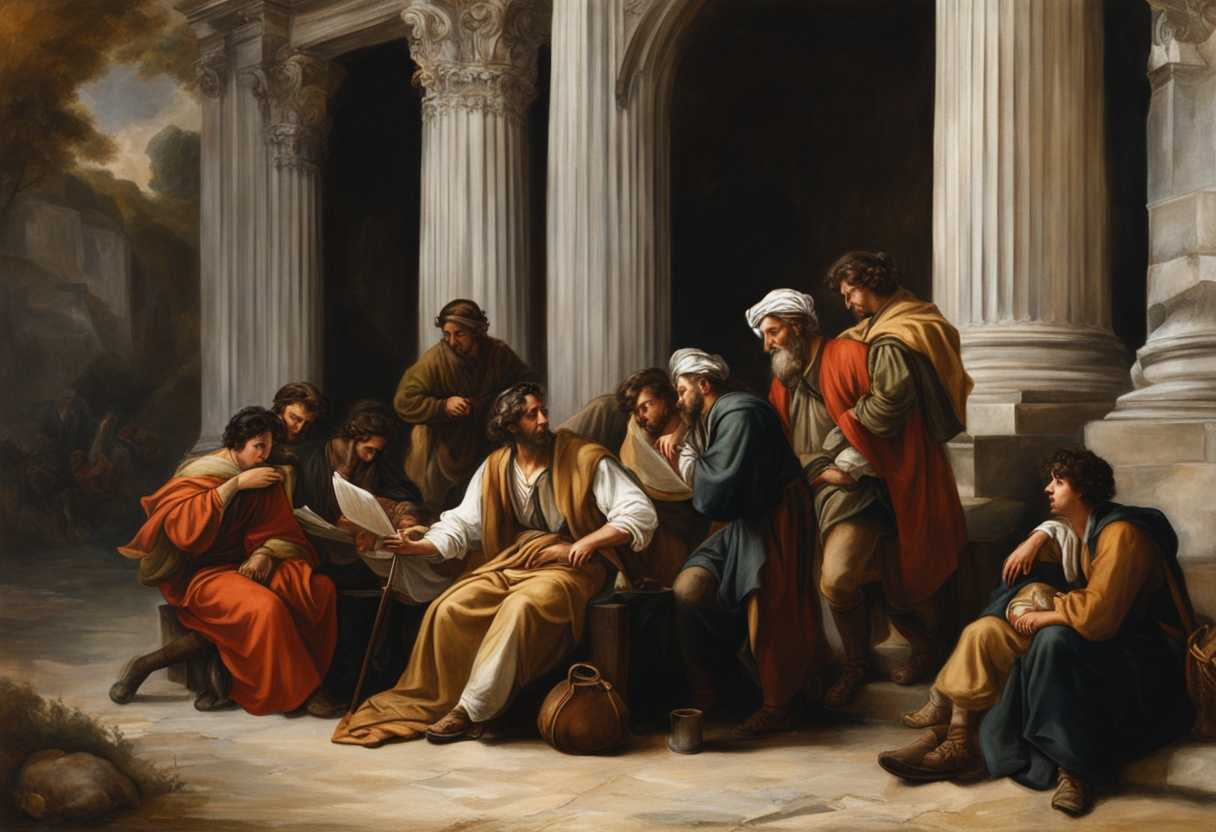
Setting the Scene for Joshua 20:7-9
In Joshua chapter 20, we find the scene where the Lord instructs Joshua to set aside cities of refuge for the Israelites. These cities were designated as safe havens for individuals who unintentionally caused the death of another person. The purpose of these cities was to provide a place of refuge and protection from avengers seeking retribution.
In this particular scene, Joshua, the leader of the Israelites, gathers the elders of the cities of refuge – Bezer, Ramoth, and Golan. These elders were responsible for overseeing the administration of justice within the cities of refuge. They were chosen for their wisdom, integrity, and knowledge of the law.
The meeting takes place in the presence of the entire congregation of Israel, who had witnessed the establishment of these cities of refuge. The surroundings are likely solemn and reverent, as the importance of providing a fair and just system of refuge for those in need is emphasized. Joshua’s leadership and obedience to the Lord’s commands are evident as he ensures that the cities of refuge are established according to God’s instructions.
What is Joshua 20:7-9 about?
We learn about the concept of “cities of refuge” in ancient Israel in this verse. These cities were designated as safe havens for individuals who had accidentally caused the death of another person. The purpose of these cities was to protect the unintentional offender from being harmed by the avengers seeking retribution for the death. This system allowed for a fair and just process to determine the guilt or innocence of the individual responsible for the accidental death.
Imagine the relief and reassurance that these cities of refuge provided to those who found themselves in a situation where they had unintentionally caused harm to another. These cities symbolize the importance of mercy, compassion, and the value of human life. They remind us of the need for balance between justice and forgiveness in dealing with tragic circumstances. Just like these cities of refuge offered protection and a chance for redemption, we too must strive to provide a space of grace and understanding for those who have made mistakes, allowing them the opportunity to seek repentance and healing.
Understanding what Joshua 20:7-9 really means
In Joshua 20:7-9, we delve into the establishment of cities of refuge by the Israelites, a divine directive aimed at safeguarding individuals who had unintentionally caused harm. These cities, including Kedesh, Shechem, Hebron, Bezer, Ramoth, and Golan, served as sanctuaries where those involved in accidental manslaughter could seek asylum from the avenger of blood until a fair trial could be conducted. The concept of “cities of refuge” underscores the intersection of justice and mercy in God’s design, offering a tangible way to protect the innocent while upholding the principles of due process.
The phrase “Until he stood before the congregation for judgment” encapsulates the significance of a transparent and equitable legal process within the community. It emphasizes the communal responsibility in ensuring that justice is served impartially and thoroughly, reflecting the biblical mandate for fair and thorough adjudication. These verses resonate with broader biblical themes of justice and protection, echoing the sentiment that God is the ultimate refuge and strength in times of trouble, as expressed in Psalm 46:1.
Drawing parallels to contemporary legal systems, the concept of cities of refuge serves as a precursor to modern frameworks that prioritize individual rights and equitable trials. It underscores the enduring relevance of principles such as justice, mercy, and communal accountability in navigating complex ethical dilemmas. In a world grappling with ongoing issues of justice and protection, these verses prompt us to consider how we can cultivate systems that harmonize mercy with justice, mirroring the divine balance exemplified in the establishment of cities of refuge.
To illustrate the enduring relevance of these biblical principles, envision a modern-day scenario where a tragic accident leads to unintended loss of life. While initial reactions may incline towards anger and retribution, our legal systems echo the ethos of cities of refuge by providing a structured process that ensures fairness and prevents further harm. This measured approach aligns with the ethos of Joshua 20:7-9, advocating for a balanced response that upholds the rights of all parties involved.
In conclusion, the narrative in Joshua 20:7-9 beckons us to contemplate the significance of creating spaces of safety and equity within our communities. It challenges us to embody the principles of justice and mercy in our interactions, advocating for the protection of the innocent and the equitable treatment of all individuals. As we reflect on these ancient directives, may we strive to emulate God’s unwavering commitment to justice and compassion in our contemporary contexts, fostering environments where fairness and mercy coexist harmoniously.
How can we ensure justice and protection for all?
Ensuring justice and protection for all is essential in any society. One way to achieve this is by establishing and implementing laws that uphold rights, provide fair treatment, and ensure the safety of all individuals. This includes creating systems where those who have been wronged can seek justice and receive protection. The designation of cities of refuge served as a mechanism through which justice and protection were guaranteed to those who unintentionally caused harm in the context of the verse. This system allowed for a fair trial and served as a means to prevent vigilantism or unjust retribution. The community could ensure that individuals had a recourse to seek safety and a fair hearing by having such structures in place. Advocating for laws and policies that prioritize justice, protection, and the rights of all individuals can help us learn from this example in modern society. We can work towards a more just and equitable society for all by upholding these principles and ensuring that mechanisms are in place to address injustices and provide safety.
Application
Embrace the role of a beacon of light in our fast-paced world. Be a pillar of strength for those who seek solace and protection. Extend your hand and offer refuge to those in need, just like a shelter in a storm. Will you be the refuge that someone desperately needs today?

Reverend Michael Johnson is an experienced Church Minister with a profound expertise in spirituality and guidance. With a serene presence and a compassionate heart, he has faithfully served his congregation for over 20 years, leading them on a spiritual journey towards inner peace and enlightenment. Reverend Johnson’s extensive knowledge of religious philosophies and profound understanding of human nature have made him a trusted confidant and mentor to many, as he seamlessly weaves his profound wisdom into life teachings. Reverend Johnson’s calming demeanor and empathetic nature continue to uplift and heal souls, nurturing a sense of unity and tranquility within his community.