
Joshua 22:21-29 is about the reconciliation and clarification of misunderstandings between the tribes of Israel, highlighting the importance of communication, unity, and trust among believers.
21 Then the people of Reuben, the people of Gad, and the half-tribe of Manasseh said in answer to the heads of the families of Israel,
22 “The Mighty One, God, the Lord! The Mighty One, God, the Lord! He knows; and let Israel itself know! If it was in rebellion or in breach of faith against the Lord, do not spare us today”
23 that we have built this altar to turn away from following the Lord. Or if we did so to offer burnt offerings or grain offerings or peace offerings on it, may the Lord himself take vengeance.
24 No, but we did it from fear that in time to come your children might say to our children, ‘What have you to do with the Lord, the God of Israel?
25 For the Lord has made the Jordan a boundary between us and you, you people of Reuben and people of Gad. You have no portion in the Lord.” So your children might make our children cease to worship the Lord.
26 “Therefore we said, ‘Let us now build an altar, not for burnt offering, nor for sacrifice,
27 but to be a witness between us and you, and between our generations after us, that we do perform the service of the Lord in his presence with our burnt offerings and sacrifices and peace offerings, so your children will not say to our children in time to come, “You have no portion in the Lord.”
28 “Therefore we said, ‘Let us now build an altar, not for burnt offering, nor for sacrifice,
29 “Far be it from us that we should rebel against the Lord and turn away this day from following the Lord by building an altar for burnt offering, grain offering, or sacrifice, other than the altar of the Lord our God that stands before his tabernacle!”
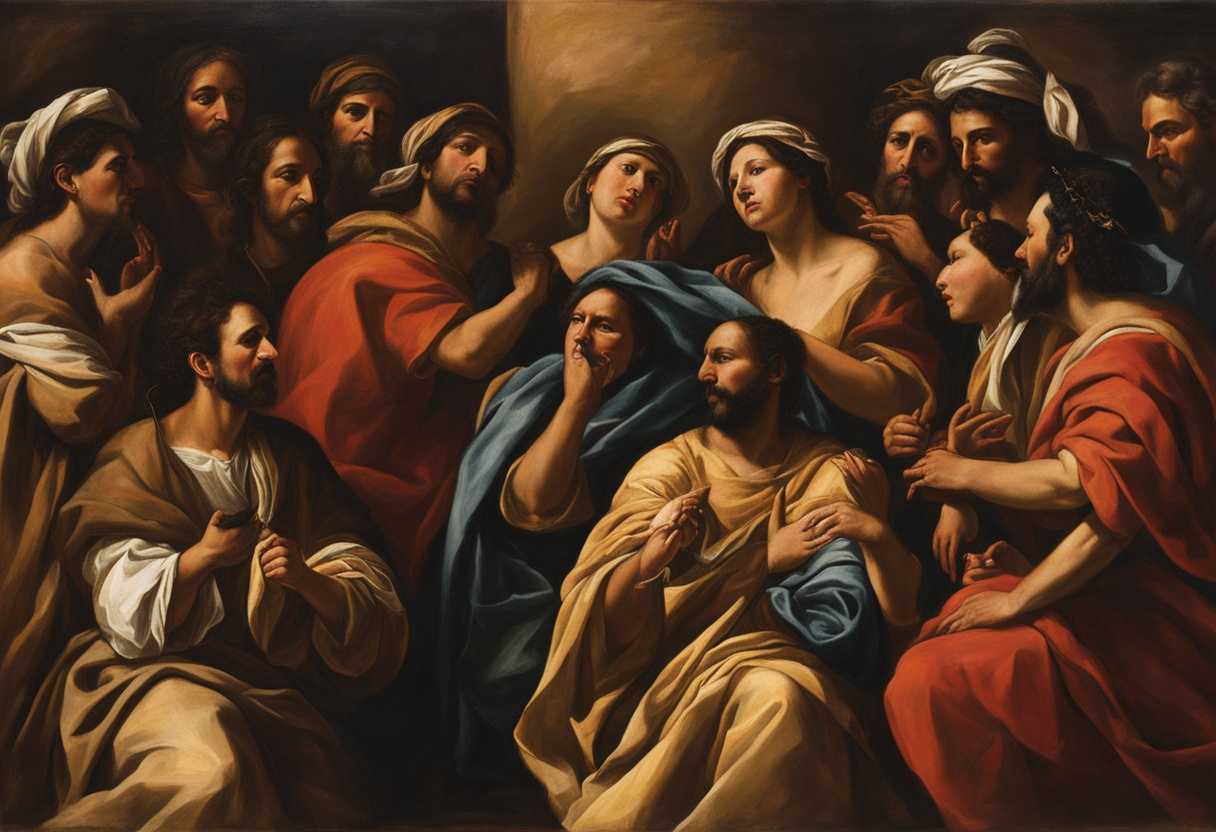
Setting the Scene for Joshua 22:21-29
In Joshua chapter 22, we find the scene set in the land of Canaan, after the Israelites had conquered and divided the land among the tribes. The tribes of Reuben, Gad, and the half-tribe of Manasseh had been given land on the east side of the Jordan River. As the Israelites were preparing to part ways, the tribes on the east side of the Jordan built a large altar near the Jordan River.
The other tribes of Israel, upon hearing about this altar, gathered together to confront the tribes of Reuben, Gad, and Manasseh. They were concerned that the altar was a sign of rebellion against the Lord and feared it would lead to idol worship. The leaders of the tribes on the west side of the Jordan, including Joshua and the priests, went to speak with the tribes on the east side to address their concerns.
The scene is tense as the leaders question the tribes on the east side about the purpose of the altar. The tribes explain that the altar was not for sacrifices but rather as a symbol of their unity with the rest of Israel and a reminder of their shared faith in the Lord. After hearing their explanation, the leaders are satisfied and return to the other tribes with the news that there was no cause for alarm. The unity of the Israelite tribes is reaffirmed, and a potential conflict is averted.
What is Joshua 22:21-29 about?
The tribes east of the Jordan River built an altar in Joshua 22:21-29, sparking concern among the other Israelite tribes that they were turning away from the true worship of God. The altar was a physical symbol that caused misunderstanding and potential conflict among the tribes. It serves as a reminder of the importance of communication and unity among believers, even when faced with differences in practices or beliefs.
Have you ever experienced a situation where misunderstandings arose due to differences in practices or beliefs? How did you handle it, and what lessons did you learn from that experience? This passage encourages us to approach such situations with understanding, open communication, and a willingness to seek common ground. It also reminds us of the significance of remaining united as a community of believers, despite any differences that may arise.
Understanding what Joshua 22:21-29 really means
In Joshua 22:21-29, we witness a crucial moment where the tribes of Reuben, Gad, and the half-tribe of Manasseh face accusations of rebellion due to the construction of an altar by the Jordan River. The other Israelite tribes fear divine wrath, suspecting this act as a sign of defiance against God. However, the response of the accused tribes sheds light on their true intentions and loyalty to God. Through their words, “The Mighty One, God, the Lord! The Mighty One, God, the Lord!” they emphasize their reverence and submission to God’s supreme authority, seeking to dispel any doubts about their faithfulness.
Moreover, the tribes assert their innocence by appealing to God’s omniscience, declaring, “He knows! And let Israel know!” This statement not only proclaims their honesty but also invites divine judgment if they are found to be lying. Their strong denial, “Far be it from us to rebel against the Lord,” underscores their unwavering commitment to God and refutes any accusations of rebellion. Additionally, they provide a compelling explanation for their actions, expressing their concern that future generations might question their connection to the God of Israel, emphasizing the importance of preserving their shared faith and heritage.
This passage resonates with contemporary audiences by highlighting the dangers of misunderstandings and assumptions. Just as the Israelites misinterpreted the altar’s purpose, people today often rush to judgment without seeking the full story. It underscores the significance of effective communication and reconciliation in resolving conflicts, urging us to listen, understand, and empathize with others to foster unity and peace within our communities. Furthermore, it serves as a reminder of the vital role faith plays in maintaining cohesion and ensuring that future generations remain rooted in their spiritual heritage.
Consider a scenario where a new place of worship is built within a community, causing apprehension among existing members. Through open dialogue and understanding, the true intentions behind the construction are revealed, strengthening unity and dispelling fears of division. This anecdote mirrors the importance of transparent communication and seeking common ground to overcome misunderstandings and promote harmony within religious communities.
In conclusion, Joshua 22:21-29 teaches us valuable lessons about seeking understanding, preserving unity, and aligning our actions with our faith and intentions. It encourages us to communicate openly, trust in God’s omniscience and justice, and strive for peace and reconciliation in the face of misunderstandings and conflicts. Let us heed these timeless principles as we navigate our relationships and communities, guided by the wisdom found in this biblical passage.
How can we seek reconciliation and understanding in conflict?
Seeking reconciliation and understanding in times of conflict involves open communication, humility, and a genuine desire to listen to the other party’s perspective. It requires putting aside personal biases and preconceived notions to truly understand where the other person is coming from. We can work towards finding common ground and resolving conflicts peacefully by engaging in constructive dialogue and actively listening to each other. The tribes of Reuben, Gad, and the half-tribe of Manasseh sought to understand the intentions behind the altar built by the other tribes in the context of Joshua 22:21-29. Instead of jumping to conclusions or resorting to violence, they chose to communicate with each other, expressing their concerns and listening to the rationale behind the altar’s construction. This willingness to engage in dialogue and seek understanding ultimately led to a peaceful resolution and strengthened their unity as a community. We should emulate the example set in this passage by prioritizing reconciliation and understanding when faced with conflict in our own lives. We can cultivate deeper relationships and work towards peaceful resolutions in the midst of disagreements by approaching disputes with a spirit of openness, empathy, and a genuine effort to comprehend the other person’s point of view.
Application
Just like in our modern world of deadlines and teams, don’t let misunderstandings linger like outdated documents. Take charge and communicate directly to untangle any web of confusion, just as you would in a crucial project meeting. Embrace the bravery of the tribes of Israel and be the catalyst for harmony within your circles. Will you have the courage to confront any discord head-on and pave the way for reconciliation, just like they did so long ago?

Reverend Michael Johnson is an experienced Church Minister with a profound expertise in spirituality and guidance. With a serene presence and a compassionate heart, he has faithfully served his congregation for over 20 years, leading them on a spiritual journey towards inner peace and enlightenment. Reverend Johnson’s extensive knowledge of religious philosophies and profound understanding of human nature have made him a trusted confidant and mentor to many, as he seamlessly weaves his profound wisdom into life teachings. Reverend Johnson’s calming demeanor and empathetic nature continue to uplift and heal souls, nurturing a sense of unity and tranquility within his community.