
Joshua 22:7-9 is about the completion of a mission given by Moses to the tribes of Reuben, Gad, and the half-tribe of Manasseh to return to their own land after helping the other Israelite tribes conquer and settle in the Promised Land.
7 Now to the one half of the tribe of Manasseh Moses had given a possession in Bashan, but to the other half Joshua had given a possession beside their brothers in the land west of the Jordan. And when Joshua sent them away to their homes and blessed them,
8 saying, “Return to your tents with much wealth and with very much livestock, with silver, gold, bronze, and iron, and with much clothing. Divide the spoil of your enemies with your brothers.”
9 So the people of Reuben and the people of Gad and the half-tribe of Manasseh returned home, parting from the people of Israel at Shiloh, which is in the land of Canaan, to go to the land of Gilead, their own land of which they had possessed themselves by command of the Lord through Moses.
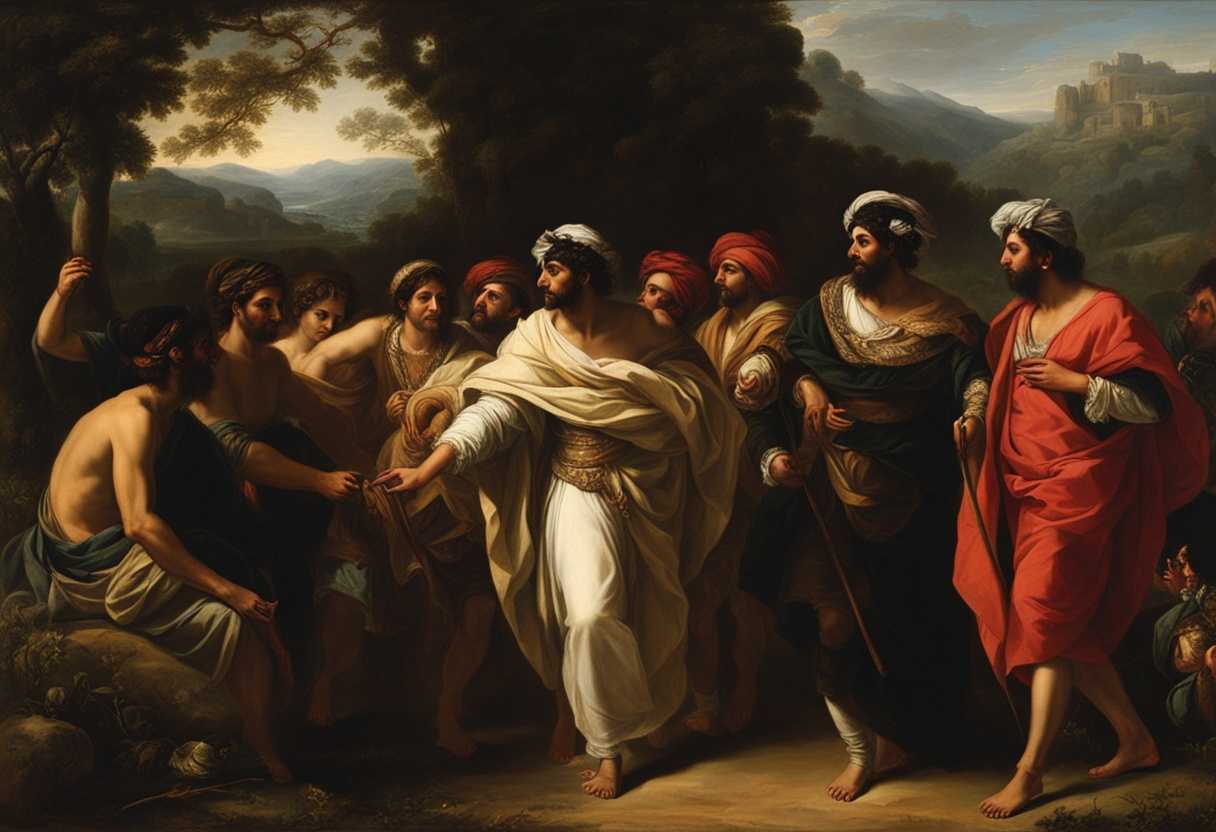
Setting the Scene for Joshua 22:7-9
In Joshua chapter 22, we find the scene set in the land of Canaan, shortly after the Israelites, under the leadership of Joshua, had conquered and divided the land among the tribes of Israel. The tribes of Reuben, Gad, and the half-tribe of Manasseh had been granted land on the east side of the Jordan River, and they were now preparing to return to their families and possessions.
As the time came for them to depart from their fellow Israelites who were to settle on the west side of the Jordan, a poignant scene unfolded. Joshua, along with the leaders of Israel, gathered to bid farewell to the warriors of Reuben, Gad, and Manasseh. The atmosphere was filled with a mix of emotions – pride in their accomplishments in battle, gratitude for God’s faithfulness, and a sense of unity despite the physical separation that was about to take place.
The surroundings were likely rugged and dusty, with the Jordan River flowing nearby, serving as a natural boundary between the lands of the tribes. The sun may have been setting, casting a warm glow over the scene as Joshua spoke words of encouragement and exhortation to the departing warriors, reminding them to remain faithful to God and to keep the covenant they had made with Him and with their fellow Israelites. The unity and brotherhood that had been forged through years of wandering in the wilderness and fighting together were palpable, even as they prepared to part ways.
What is Joshua 22:7-9 about?
The Israelite tribes display a powerful unity, loyalty, and brotherhood in Joshua 22:7-9. After fulfilling their promise to assist in conquering Canaan, the eastern tribes were returning to their own land, and Joshua sent them off with a blessing. This act of sending them off with honor and respect symbolizes the importance of gratitude and recognition for efforts and sacrifices made in the pursuit of common goals. It highlights the significance of valuing teamwork and standing by one another in times of need.
Reflecting on this verse, we can ask ourselves: How do we acknowledge and appreciate the support and contributions of those who have stood by us during our own battles and challenges? How can we show gratitude and respect to those who have journeyed with us through thick and thin? Recognizing the efforts and sacrifices made by others strengthens our bonds of unity and inspires continued acts of solidarity and support. Joshua 22:7-9 serves as a reminder of the power of unity, gratitude, and brotherly love in building strong communities and relationships.
Understanding what Joshua 22:7-9 really means
The Book of Joshua recounts the Israelites’ conquest of Canaan, led by Joshua. In Joshua 22:7-9, we find a pivotal moment after the land division, where the eastern tribes prepare to return to their territories across the Jordan River. Joshua’s words of blessing and guidance to these tribes hold timeless truths that resonate with us today.
As Joshua instructs the tribes to “return to your homes with your great wealth,” we see a reflection of God’s provision and faithfulness in the material blessings they carry. The detailed list of livestock, precious metals, and clothing emphasizes the abundance and variety of God’s blessings, reminding us of the richness of His provision in our lives.
The command to “divide the plunder from your enemies with your fellow Israelites” underscores the importance of sharing blessings and maintaining unity within the community of believers. This principle of communal support and generosity is echoed in other biblical passages like Deuteronomy 8:18, Acts 20:35, and Galatians 6:2, emphasizing the interconnectedness of God’s people.
In a world often driven by individual success, the message of gratitude, sharing, and unity from Joshua 22:7-9 remains relevant. It challenges us to look beyond our own gains and consider how we can support and uplift those around us, fostering a spirit of community and mutual care.
Consider a scenario where a community project brings people together to contribute their skills and resources, culminating in shared benefits among all participants. This illustration mirrors the essence of Joshua 22:7-9, where the tribes are encouraged to share their blessings, fostering unity and mutual respect among the Israelites.
In conclusion, Joshua 22:7-9 serves as a reminder of the importance of recognizing God’s blessings, sharing them with others, and fostering unity within the community. By embodying these principles in our lives, we can cultivate a more supportive and generous society, reflecting the timeless values and teachings found in the Bible.
What steps can we take to maintain unity?
To maintain unity, it is essential to seek clarity and understanding before reacting to a situation. The Israelites first sent Phinehas the priest and a delegation to inquire about the situation when they heard of the altar built by the eastern tribes. Approaching challenging circumstances with an open mind and a willingness to listen can avoid misunderstandings and preserve unity.
Communication plays a crucial role in maintaining unity among individuals or groups. When the delegation addressed the issue of the altar with the eastern tribes, they engaged in respectful dialogue rather than jumping to conclusions. Through clear and honest communication, conflicts can be resolved, and unity can be strengthened. Keeping the lines of communication open and promoting understanding among all parties involved can help prevent division and discord.
Lastly, it is important to approach disagreements with a spirit of humility and a desire for reconciliation. Individuals can work towards finding common ground and solutions that uphold unity by acknowledging the perspectives and concerns of others. Following the example of the Israelites, with humility and a commitment to understanding one another, we can navigate challenges in a way that preserves harmony and fosters a sense of togetherness.
Application
Reflect on Joshua 22:7-9 and embrace attentiveness and obedience to God’s Word every day. Align your actions with scripture, showing faith through your deeds. Dedicate yourself to following God’s guidance wholeheartedly. Will you commit to following God’s guidance in your life today?

Reverend Michael Johnson is an experienced Church Minister with a profound expertise in spirituality and guidance. With a serene presence and a compassionate heart, he has faithfully served his congregation for over 20 years, leading them on a spiritual journey towards inner peace and enlightenment. Reverend Johnson’s extensive knowledge of religious philosophies and profound understanding of human nature have made him a trusted confidant and mentor to many, as he seamlessly weaves his profound wisdom into life teachings. Reverend Johnson’s calming demeanor and empathetic nature continue to uplift and heal souls, nurturing a sense of unity and tranquility within his community.