
Joshua 5:1-15 is about the importance of circumcision and observing the Passover as the Israelites renew their covenant with God before entering the Promised Land.
1 As soon as all the kings of the Amorites who were beyond the Jordan to the west, and all the kings of the Canaanites who were by the sea, heard that the Lord had dried up the waters of the Jordan for the people of Israel until they had crossed over, their hearts melted and there was no longer any spirit in them because of the people of Israel.
2 At that time the Lord said to Joshua, “Make flint knives and circumcise the sons of Israel a second time.”
3 So Joshua made flint knives and circumcised the sons of Israel at Gibeath-haaraloth.
4 And this is the reason why Joshua circumcised them: all the males of the people who came out of Egypt, all the men of war, had died in the wilderness on the way after they had come out of Egypt.
5 And all the people who came out had been circumcised, but all the people who were born in the wilderness along the way as they came out of Egypt had not been circumcised.
6 For the people of Israel walked forty years in the wilderness, until all the nation, the men of war who came out of Egypt, perished, because they did not obey the voice of the Lord; the Lord swore to them that he would not let them see the land that the Lord had sworn to their fathers to give us, a land flowing with milk and honey.
7 And their children whom he raised up in their place, Joshua circumcised. For they were uncircumcised, because they had not been circumcised on the way.
8 And when the circumcising of all the nation was finished, they remained in their places in the camp until they were healed.
9 And the Lord said to Joshua, “Today I have rolled away the reproach of Egypt from you.” And so the name of that place is called Gilgal to this day.
10 And the people of Israel encamped at Gilgal, and kept the Passover on the fourteenth day of the month in the evening on the plains of Jericho.
11 And the day after the Passover, on that very day, they ate of the produce of the land, unleavened cakes and parched grain.
12 And the manna ceased the day after they ate of the produce of the land. And there was no longer manna for the people of Israel, but they ate of the fruit of the land of Canaan that year.
13 When Joshua was by Jericho, he lifted up his eyes and looked, and behold, a man was standing before him with his drawn sword in his hand. And Joshua went to him and said to him, “Are you for us, or for our adversaries?”
14 And he said, “No; but I am the commander of the army of the Lord. Now I have come.” And Joshua fell on his face to the earth and worshiped and said to him, “What does my lord say to his servant?”
15 And the commander of the Lord’s army said to Joshua, “Take off your sandals from your feet, for the place where you are standing is holy.” And Joshua did so.
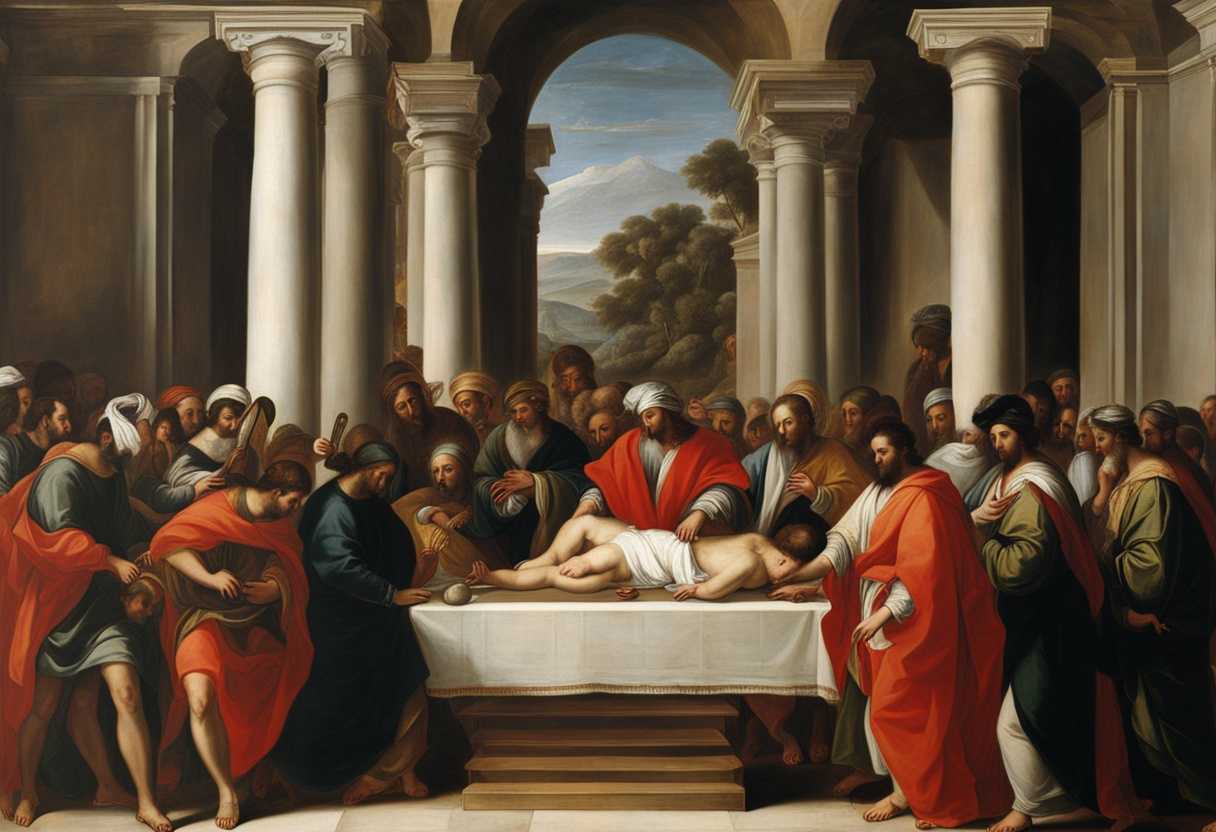
Setting the Scene for Joshua 5:1-15
In Joshua chapter 5, the scene is set in the land of Canaan, just after the Israelites have crossed the Jordan River. The Israelites, led by Joshua, have just completed the miraculous crossing of the river on dry ground, a momentous event that marked the beginning of their conquest of the Promised Land. The atmosphere is charged with anticipation and excitement as the Israelites prepare to face the formidable Canaanite armies that inhabit the land.
Among those present are Joshua, the courageous leader chosen by God to succeed Moses, and the Israelite people who have followed him faithfully on this journey. They have witnessed the wonders of God’s power in parting the Jordan River and are now encamped at Gilgal, a place of great significance in their journey. The surroundings are rugged and untamed, with the towering walls of Jericho visible in the distance, a symbol of the challenges that lie ahead.
As they prepare for the next phase of their journey, the Israelites undergo a powerful moment of spiritual renewal. Circumcision is performed on all the males who were born during the wilderness wanderings, symbolizing their recommitment to the covenant with God. They also celebrate the Passover, a reminder of God’s faithfulness and deliverance in the past. In this pivotal moment, the Israelites are reminded of their identity as God’s chosen people and are strengthened for the battles that await them in the land of Canaan.
What is Joshua 5:1-15 about?
The Israelites physically and spiritually prepare themselves before embarking on their conquest of Jericho in Joshua 5:1-15. Circumcision was a symbolic act of reaffirming their covenant with God and marking themselves as His chosen people. This act demonstrated their obedience and dedication to God’s commands, knowing that they were about to engage in a battle that required divine protection and guidance. Observing the Passover further reinforced their connection to their history and identity as a people rescued by God from slavery in Egypt. They acknowledged God’s faithfulness in the past and His presence with them in the present by commemorating this event.
This passage teaches us the importance of spiritual preparation before facing challenges or embarking on new journeys. We too can benefit from pausing to reflect, pray, and align ourselves with God’s will, just as the Israelites took the time to consecrate themselves and seek God’s guidance through circumcision and the Passover. It reminds us that our battles are not merely physical but spiritual as well, and we need to be spiritually equipped to face them. We can move forward with courage and trust by remembering God’s faithfulness in the past and leaning on His promises for the future, knowing that He goes before us and fights on our behalf.
Understanding what Joshua 5:1-15 really means
In Joshua 5:1-15, we find the Israelites at a pivotal moment as they enter the Promised Land. The surrounding kings are gripped with fear upon hearing of the miraculous crossing of the Jordan River. This sets the stage for Joshua to lead his people in a time of consecration and preparation for the battles that lie ahead. The themes and phrases in this passage are rich with symbolism and significance. The phrase “The hearts of the kings melted” captures the fear and awe that the surrounding nations felt in the face of God’s power. It serves as a reminder of the sovereignty and might of the Lord.
Another key phrase, “Circumcise the Israelites again,” highlights the act of renewal and dedication to the covenant between God and His people. This physical act symbolizes a spiritual cleansing and a recommitment to following God wholeheartedly. The mention of “The reproach of Egypt” signifies the removal of shame and bondage from their past, symbolizing a fresh start and a new beginning under God’s guidance. Additionally, the appearance of the “Commander of the Lord’s army” to Joshua underscores the divine leadership and intervention in the Israelites’ journey.
Drawing parallels to our lives today, we can glean valuable lessons from this passage. Just as the Israelites renewed their covenant with God, we are called to regularly renew our commitment to Him. In the face of challenges, we can take courage knowing that God’s power is recognized even by those who do not follow Him. The divine leadership exemplified by the Commander of the Lord’s army reminds us that God goes before us in our spiritual battles, guiding and protecting us along the way.
To illustrate this point further, consider a sports team preparing for a crucial match. The coach’s pep talk serves to renew the team’s spirit, reminding them of their training and the support they have. Similarly, Joshua’s leadership and the acts of consecration functioned as a divine pep talk, preparing the Israelites for the trials ahead. The detailed explanation of phrases in this passage sheds light on the deeper spiritual significance behind each action and statement. “The hearts of the kings melted” signifies the psychological impact of witnessing God’s power, while “Circumcise the Israelites again” represents a spiritual renewal and recommitment to God.
In conclusion, by delving into the themes and phrases of Joshua 5:1-15, we can find inspiration and strength for our own spiritual journeys. God’s presence, leadership, and call to renew our commitment resonate through these verses, reminding us that He is with us in every step we take. Just as Joshua led the Israelites into the Promised Land, may we too follow God faithfully, trusting in His guidance and provision.
How can we cultivate reverence for holy ground?
We can cultivate reverence for holy ground by understanding the significance of the verses in Joshua 5:1-15. Joshua is instructed to remove his sandals because he is standing on holy ground in these passages. This act symbolizes an acknowledgment of the sacredness and purity of the place where he stands. We can cultivate reverence for holy ground by approaching it with a sense of humility and respect by following this example.
Additionally, we can cultivate reverence for holy ground by recognizing the presence of the divine and the spiritual significance of the space. We can seek to connect with the sacred and experience a sense of awe and wonder in the presence of the divine, just as Joshua encountered God’s presence in the land he was standing on. This can be done through prayer, meditation, or simply taking a moment to pause and reflect on the holiness of the ground we tread upon.
Furthermore, cultivating reverence for holy ground involves treating the space with care and mindfulness. We can strive to steward the ground we walk on with reverence and respect by understanding its sanctity, ensuring its preservation for future generations to experience and connect with the divine. This can involve engaging in practices that honor the sacredness of the space, such as environmental conservation efforts or participating in rituals that acknowledge and celebrate the holiness of the ground.
Application
Let’s dive into Joshua 5:1-15 and grasp the significance of staying loyal and obedient to God. Like the Israelites who unwaveringly obeyed God’s commands, it’s time for us to step up and follow His teachings with unwavering faith. Let’s audit our own paths and identify where we can better synchronize our actions with God’s intentions, like a well-oiled machine at work or a loving family at home. Are we ready to make those crucial moves to wholeheartedly dedicate ourselves to walking in His ways?

Reverend Michael Johnson is an experienced Church Minister with a profound expertise in spirituality and guidance. With a serene presence and a compassionate heart, he has faithfully served his congregation for over 20 years, leading them on a spiritual journey towards inner peace and enlightenment. Reverend Johnson’s extensive knowledge of religious philosophies and profound understanding of human nature have made him a trusted confidant and mentor to many, as he seamlessly weaves his profound wisdom into life teachings. Reverend Johnson’s calming demeanor and empathetic nature continue to uplift and heal souls, nurturing a sense of unity and tranquility within his community.