
1 As soon as all the kings who were beyond the Jordan in the hill country and in the lowland all along the coast of the Great Sea toward Lebanon, the Hittites, the Amorites, the Canaanites, the Perizzites, the Hivites, and the Jebusites, heard of this,
2 they on their part acted with cunning and went and made ready provisions and took worn-out sacks for their donkeys, and wineskins, worn-out and torn and mended,
3 But when the inhabitants of Gibeon heard what Joshua had done to Jericho and to Ai,
4 They on their part acted with cunning and went and made ready provisions and took worn-out sacks for their donkeys, and wineskins, worn-out and torn and mended,
5 And they went to Joshua in the camp at Gilgal and said to him and to the men of Israel, “We have come from a distant country, so now make a covenant with us.”
6 And they went to Joshua in the camp at Gilgal and said to him and to the men of Israel, “We have come from a distant country, so now make a covenant with us.”
7 And the men of Israel said to the Hivites, “Perhaps you live among us; then how can we make a covenant with you?”
8 They said to Joshua, “We are your servants.” And Joshua said to them, “Who are you? And where do you come from?”
9 They said to him, “From a very distant country your servants have come, because of the name of the Lord your God. For we have heard a report of him, and all that he did in Egypt,
10 and all that he did to the two kings of the Amorites who were beyond the Jordan, to Sihon the king of Heshbon, and to Og king of Bashan, who lived in Ashtaroth.
11 So our elders and all the inhabitants of our country said to us, ‘Take provisions in your hand for the journey and go to meet them and say to them, “We are your servants. Come now, make a covenant with us.”‘
12 This our bread we took hot for our provision out of our houses on the day we set out to come to you, but now, behold, it is dry and crumbly.
13 these wineskins, which we filled new, behold, they have burst. And these garments and sandals of ours are worn out from the very long journey.”
14 So the men took some of their provisions, but did not ask counsel from the Lord.
15 And Joshua made peace with them and made a covenant with them, to let them live, and the leaders of the congregation swore to them.
16 This is how we will treat them: we will let them live, so that wrath will not fall upon us, because of the oath that we swore to them.”
17 And the people of Israel set out and reached their cities on the third day. Now their cities were Gibeon, Chephirah, Beeroth, and Kiriath-jearim.
18 But the people of Israel did not attack them, because the leaders of the congregation had sworn to them by the Lord, the God of Israel. Then all the congregation murmured against the leaders.
19 But all the leaders said to all the congregation, “We have sworn to them by the Lord, the God of Israel, and now we may not touch them.
20 This we will do to them: let them live, lest wrath be upon us, because of the oath that we swore to them.”
21 And the leaders said to them, “Let them live.” So they became cutters of wood and drawers of water for all the congregation, just as the leaders had said of them.
22 Then Joshua summoned the Gibeonites and said to them, “Why did you deceive us, saying, ‘We are very far from you,’ when you dwell among us?
23 Now therefore you are cursed, and some of you shall never be anything but servants, cutters of wood and drawers of water for the house of my God.”
24 They answered Joshua, “Because it was told to your servants for a certainty that the Lord your God had commanded his servant Moses to give you all the land and to destroy all the inhabitants of the land from before you—so we feared greatly for our lives because of you and did this thing.
25 And now, behold, we are in your hand. Whatever seems good and right in your sight to do to us, do it.”
26 So he did this to them and delivered them out of the hand of the people of Israel, and they did not kill them.
27 But Joshua made them that day cutters of wood and drawers of water for the congregation and for the altar of the Lord, to this day, in the place that he should choose.
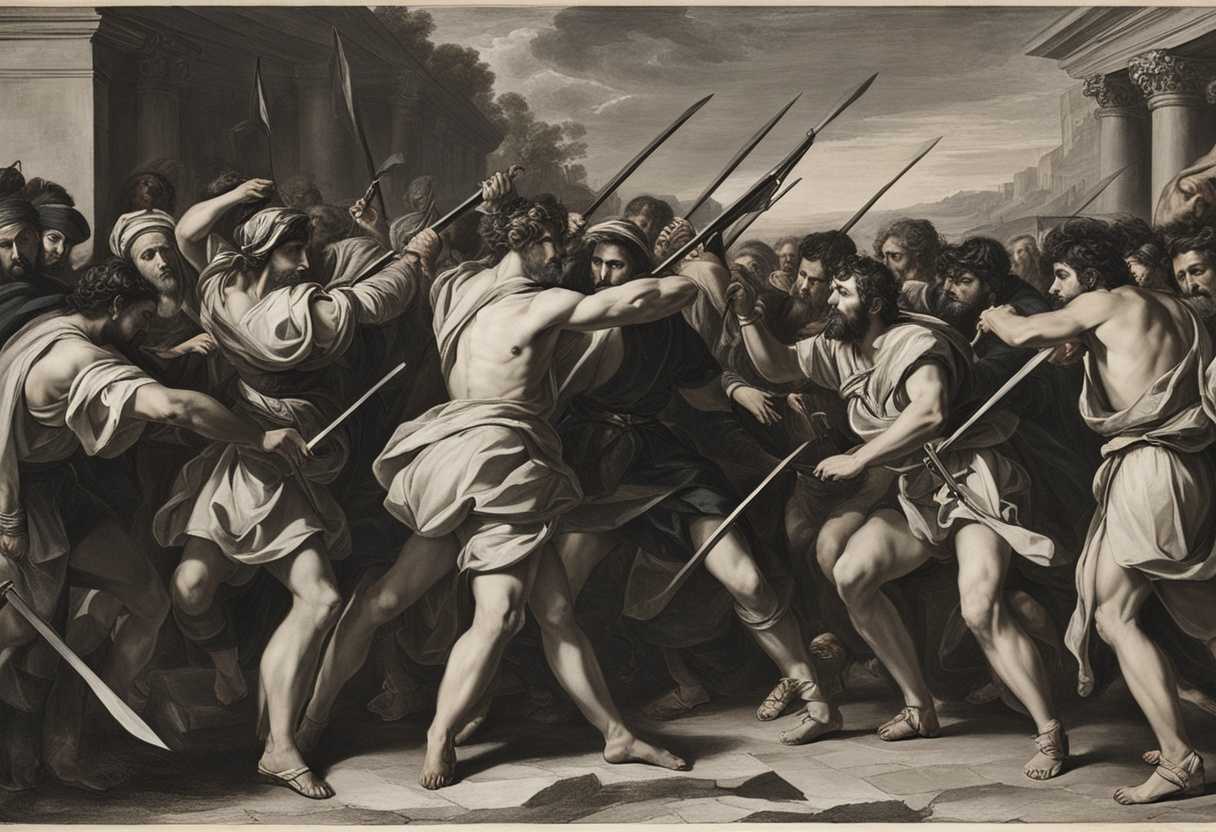
The True Meaning of Joshua 9
This chapter of the Book of Joshua recounts a pivotal moment in the Israelites’ conquest of the Promised Land. The author, likely Joshua himself, provides a firsthand account of how the Israelites were deceived by the Gibeonites, a neighboring Canaanite people. The Gibeonites resorted to trickery to avoid being conquered as the Israelites continued their campaign to take possession of the land God had promised them. The Gibeonites’ cunning scheme and the Israelites’ subsequent response shed light on the challenges and complexities the Israelites faced in fulfilling God’s command to drive out the inhabitants of Canaan.
This chapter also foreshadows the ongoing tensions and alliances that would shape the Israelites’ relationship with their neighbors in the years to come. The Gibeonites’ deception and the Israelites’ decision to honor their oath, despite the initial misunderstanding, offer valuable insights into the importance of integrity and the consequences of hasty judgments. As we delve into this chapter, the Israelites navigated these delicate situations, guided by the principles of obedience to God’s will and the pursuit of justice. The lessons learned here will resonate throughout the rest of the book of Joshua and the broader narrative of the Israelites’ journey to possess the land.
Joshua 9:1-2
The events following the miraculous crossing of the Jordan River by the Israelites are the focus in Joshua 9:1-2. The verse states: “Now when all the kings west of the Jordan heard about these things—the kings in the hill country, in the western foothills, and along the entire coast of the Mediterranean Sea as far as Lebanon (the kings of the Hittites, Amorites, Canaanites, Perizzites, Hivites and Jebusites)—they came together to wage war against Joshua and Israel.”
This section sets the stage for the subsequent events in Joshua 9, where the Gibeonites use deception to make a treaty with the Israelites. The mention of the various kings from different regions reflects the unity among the Canaanite tribes in their opposition to the Israelites. This unity was likely born out of fear of the Israelites, who had already conquered Jericho and Ai. The alliance formed among these kings against Joshua and Israel highlights the challenges and opposition that the Israelites faced as they sought to claim the Promised Land.
This passage serves as a reminder that the people of God may face opposition and challenges even when they are walking in obedience to Him. Despite the Israelites’ victories up to this point, there were still formidable adversaries aligned against them. This is a timeless message that resonates with believers today, as we are called to be vigilant and discerning in the face of spiritual opposition and to rely on God’s guidance and wisdom.
The mention of the various tribes of Canaan also serves as a reminder of the diversity of the peoples living in the land that God had promised to the Israelites. Throughout the Bible, the presence of these different tribes and nations highlights God’s plan to work among all peoples and His desire for all to come to know Him. This diversity underscores the universality of God’s love and the call for His followers to show compassion and grace to all, regardless of their background or circumstances. The events described in Joshua 9:1-2 illustrate the strategic and spiritual challenges that the Israelites faced as they obeyed God’s command to possess the land. The unity of the Canaanite kings against Joshua and the Israelites, as well as the subsequent deception by the Gibeonites, both serve as cautionary tales about the importance of seeking God’s guidance and wisdom in the face of opposition and the need to stay true to His word.
Joshua 9:3-6
The people of Gibeon devise a cunning plan to deceive the Israelites in Joshua 9:3-6. The Gibeonites were inhabitants of Canaan, the land that God had promised to the Israelites. Fearing the advancing Israelite army and the reputation of their God who had parted the Red Sea and defeated mighty enemies, the Gibeonites resorted to trickery to save themselves from destruction.
These verses depict the Gibeonites pretending to be travelers from a distant land, donning worn-out clothes and carrying old supplies to make their deceit seem convincing. They approached the Israelite camp at Gilgal where Joshua and the people were stationed and presented themselves as envoys sent from a faraway place to make a treaty with Israel. They claimed they had come to make a covenant of peace and requested the Israelites not to attack them but to make a treaty instead.
This cunning deception by the Gibeonites serves as a cautionary tale about the dangers of relying on our own understanding and not seeking wisdom and guidance from God. The Israelites, in this instance, failed to consult God before making a treaty with the Gibeonites and were deceived as a result. It underscores the importance of seeking God’s guidance in every decision we make, as highlighted in Proverbs 3:5-6, “Trust in the Lord with all your heart and lean not on your own understanding; in all your ways submit to him, and he will make your paths straight.”
The Gibeonites’ deception also reminds us of the consequences of making decisions based on appearances rather than seeking the truth. The Israelites were swayed by what they saw and the evidence presented to them, rather than seeking God’s discernment. This serves as a powerful lesson for believers to be vigilant against the strategies of the enemy, who often disguises himself to deceive and lead astray, as noted in 2 Corinthians 11:14, “And no wonder, for Satan himself masquerades as an angel of light. Joshua 9:3-6 emphasizes the importance of seeking God’s wisdom, discernment, and guidance in all aspects of our lives to avoid falling prey to deception and making decisions that are not aligned with His will. It also highlights the need for believers to be vigilant and discerning in the face of cunning schemes that may seek to derail us from God’s purpose and plan.
Joshua 9:7-13
The Gibeonites perpetrated the deception against the Israelites in Joshua 9:7-13. The Gibeonites, who were inhabitants of the land that the Israelites were about to conquer, came up with a plan to save themselves from destruction. They disguised themselves as travelers from a distant land, wearing worn-out clothes and carrying old supplies. They approached Joshua and the Israelites with a fabricated story about having come from a faraway land to make a treaty with them.
This section of the verse serves as a cautionary tale about the importance of seeking God’s guidance and discernment in all matters. The Israelites made a grave mistake by not consulting the Lord before making a covenant with the Gibeonites. They were deceived because they relied on their own judgment rather than seeking divine wisdom. This incident highlights the consequences of making decisions based on appearances and outward circumstances rather than seeking God’s will.
The deception of the Gibeonites also reveals the cunning nature of the enemy in trying to thwart God’s plans. Throughout the Bible, we see numerous instances where the enemy tries to deceive God’s people to lead them astray. This episode in Joshua serves as a reminder to be vigilant and cautious against the schemes of the devil, who often disguises himself as an angel of light (2 Corinthians 11:14). This story demonstrates the mercy of God even in the midst of human error. Despite the Israelites being tricked into making a covenant with the Gibeonites, God honored the agreement because they had sworn by His name. This event underscores the importance of keeping our commitments, even when made in ignorance or deception. It reveals God’s faithfulness to His promises and His expectation for His people to uphold their oaths. The account of the Gibeonite deception in Joshua 9:7-13 teaches us a powerful lesson on the importance of seeking God’s guidance, being aware of the enemy’s deceitful tactics, and honoring our commitments. It underscores the timeless message of staying faithful to God’s word, being discerning in our decision-making, and relying on His wisdom in all circumstances.
Joshua 9:14-15
The Israelites encounter the deceit of the Gibeonites in a crucial moment in the narrative in Joshua 9:14-15. At this point, the Israelites had been commanded by God to conquer the land of Canaan and not make any treaties with its inhabitants. However, the Gibeonites, fearing the Israelites’ might, resorted to deception by disguising themselves as travelers from a distant land, complete with old provisions and worn-out clothes. They approached Joshua and the Israelites, claiming they had come from a faraway place and wanted to make a treaty of peace with them.
When the leaders of Israel inspected the provisions but did not seek the Lord’s counsel, they were easily deceived by the Gibeonites’ ruse. Seeing the evidence before them of the old bread, wineskins, and worn-out clothes, they were convinced that these people must have traveled from a far-off land. They did not seek guidance from the Lord through prayer or consultation with the priest as they had done in the past due to their misplaced trust.
This incident serves as a powerful lesson about the dangers of relying on our own understanding and not seeking God’s wisdom and guidance in all matters. It underscores the importance of prayer, discernment, and seeking the will of God before making decisions, especially in situations where deception and deceit may be at play. Proverbs 3:5-6 echoes this sentiment, advising us to trust in the Lord with all our hearts and lean not on our own understanding, acknowledging Him in all our ways so He can direct our paths. The narrative of the Gibeonites continues beyond this passage, revealing the consequences of the Israelites’ hasty decision. Despite realizing they had been deceived, the Israelites chose to honor the treaty they had made with the Gibeonites because they had sworn an oath in the name of the Lord. This demonstrates the seriousness of making vows and commitments before God, even if they are based on deception.
The story of the Gibeonites also highlights the theme of God’s faithfulness amidst human shortcomings. Despite the Israelites’ error in judgment, God eventually used the Gibeonites for good by incorporating them into the community of Israel, albeit as woodcutters and water carriers due to their deception. This serves as a reminder that God can still work out His plans and purposes, even through our mistakes and failings. Joshua 9:14-15 teaches us about the importance of seeking God’s wisdom in all circumstances, the consequences of hasty decisions made without consulting Him, the seriousness of honoring commitments made before the Lord, and the faithfulness of God to turn even our errors into opportunities for His glory and redemptive work.
Joshua 9:16-18
The aftermath of the Israelites making a covenant with the Gibeonites is seen in Joshua 9:16-18. After discovering that the Gibeonites had deceived them by pretending to be travelers from a distant land, Joshua and the leaders of Israel realized that they had made an oath in the name of the Lord not to harm these people. This situation puts the Israelites in a difficult position because they had pledged to spare the Gibeonites, who were actually residents of Canaan, a land the Lord had commanded them to conquer.
This event in Joshua 9 highlights the importance of keeping one’s word, even when it was given under false pretenses. The Israelites were bound by the oath they made in the name of the Lord, despite the deceit of the Gibeonites. This teaches us about the seriousness of making commitments and agreements, as the Lord values truth and faithfulness. It also shows the consequences of acting hastily without seeking guidance from the Lord, as the Israelites failed to consult God before entering into an agreement with the Gibeonites.
The story of the Gibeonites continues throughout the Bible, notably in 2 Samuel 21, where we see King David honoring the covenant made by Joshua by sparing the descendants of the Gibeonites from destruction. This demonstrates the long-lasting impact of keeping promises and the importance of upholding agreements made in the name of the Lord. This passage serves as a reminder of the significance of honesty, integrity, and honoring commitments in the eyes of God. It also emphasizes the need for seeking guidance and wisdom from the Lord before making decisions, as impulsive actions can lead to unintended consequences. The story of Joshua and the Gibeonites serves as a timeless lesson for believers to uphold their word and trust in the Lord’s guidance in all circumstances.
Joshua 9:19-21
The aftermath of the deception perpetrated by the Gibeonites on the Israelites is seen in Joshua 9:19-21. The Gibeonites, understanding that they were in grave danger due to the conquests of Joshua and the Israelites, resorted to trickery by pretending to be from a faraway land in order to make a treaty with Israel and avoid destruction. They presented themselves as weary travelers with worn clothing and old provisions, leading Joshua and the elders of Israel to believe their claim.
When their deception was eventually uncovered, the Israelites were faced with a dilemma. The leaders and congregation had sworn an oath in the name of the Lord to spare the lives of these people, unknowingly making a covenant with them. The Israelites, known for their honor and reverence towards oaths made in the name of God, found themselves in a predicament. Though they were angry at being deceived, they knew that breaking an oath made in the name of God would bring grave consequences upon them.
This situation in Joshua 9 underscores the importance of keeping one’s word, especially when it is made in the name of God. The Bible speaks strongly about the significance of honesty, integrity, and the faithfulness to one’s promises. Proverbs 12:22 says, “The LORD detests lying lips, but he delights in people who are trustworthy.” Furthermore, Ecclesiastes 5:4-5 warns against making hasty vows and emphasizes the solemnity of honoring commitments made to God.
Though the Israelites were tricked by the Gibeonites, they chose to uphold their end of the bargain, and the Gibeonites were spared despite their deceitful actions. This narrative serves as a reminder of the consequences of deception and the importance of upholding one’s commitments, even in the face of treachery. It also highlights God’s faithfulness to His people, as He honored the covenant made with the Israelites despite the circumstances surrounding its inception. God can work through imperfect situations and flawed individuals to accomplish His purposes, as this story in Joshua 9 points out in a broader sense. Despite the deception of the Gibeonites, God used this event to teach the Israelites and future generations about the importance of truthfulness, integrity, and the honoring of commitments. God’s sovereignty and ability to bring good out of challenging circumstances are demonstrated. The account in Joshua 9:19-21 ultimately serves as a poignant reminder of the timeless principles of honesty, integrity, and the faithfulness to one’s word that are deeply rooted in the teachings of the Bible. It also showcases the unwavering faithfulness of God to His promises and His ability to turn even the deceitful actions of individuals towards His greater purposes.
Joshua 9:22-23
The truth about the Gibeonites’ deception is revealed in a significant event in Joshua 9:22-23. The Gibeonites, fearing the Israelites’ military might, devised a plan to trick Joshua and the Israelites into making a covenant with them. They pretended to be travelers from a distant land, complete with worn-out clothes and supplies to make it seem like they had traveled a long distance. They convinced the Israelites that they wanted to make a treaty of peace with them, when in reality, they were inhabitants of the land God had commanded the Israelites to conquer.
This deception resulted in the Israelites making a treaty with the Gibeonites without seeking guidance from the Lord. They even swore an oath in the name of the Lord, unaware that they were entering into an agreement with a nearby enemy. Joshua and the Israelite leaders were troubled when they discovered the truth, realizing that they had been deceived.
The lesson we can draw from this passage is the importance of seeking God’s guidance in all decisions we make. The Israelites’ mistake serves as a reminder for us to not rely on our own understanding but to trust in the Lord and seek His wisdom. Proverbs 3:5-6 (NIV) reinforces this message, stating, “Trust in the Lord with all your heart and lean not on your own understanding; in all your ways submit to him, and he will make your paths straight.”
Furthermore, this incident highlights the consequences of acting hastily without seeking counsel from God. The Israelites fell into a trap and had to live with the consequences of their actions by not consulting the Lord. It underscores the importance of wisdom, discernment, and prayer before making decisions, even when situations seem urgent or pressing. The serpent deceived Eve in the Garden of Eden, paralleling the Gibeonites’ deception in the broader context of the Bible. Just as the Israelites were tricked by the Gibeonites’ outward appearance, Eve was deceived by the serpent’s cunning words. Both instances serve as cautionary tales about the dangers of deception and the consequences of straying from God’s truth. Joshua 9:22-23 ultimately teaches us about the importance of discernment, wisdom, and seeking God’s guidance in all aspects of our lives to avoid falling into traps laid by the enemy and to stay aligned with God’s will.
Joshua 9:24-27
The aftermath of the deception orchestrated by the Gibeonites towards the Israelites is seen in Joshua 9:24-27. The Gibeonites, a nearby Canaanite tribe, heard about the victories of the Israelites under Joshua and decided to deceive them to form an alliance. They disguised themselves as travelers from a faraway land and approached Joshua and the elders of Israel with worn-out clothes, old provisions, and moldy bread, in an attempt to convince them that they were from a distant land and were seeking a treaty of peace. The deception reveals itself in this particular section. Joshua and the Israelites eventually discovered that the Gibeonites were actually their neighbors, living nearby in the land God had promised to give them. However, because they had sworn an oath in the name of the Lord to let them live, they could not go back on their word. Despite the deceit, Joshua and the leaders honored their treaty with the Gibeonites, but they made them woodcutters and water carriers for the Israelite community, serving as a constant reminder of their deception.
This passage in Joshua 9 underscores the importance of being cautious and seeking God’s guidance in decision-making. The Israelites made the mistake of relying on their own judgment and did not inquire of the Lord before making a covenant with the Gibeonites. This teaches us the significance of seeking God’s wisdom in all our dealings to avoid being deceived or led astray.
Additionally, this portion of the story highlights the gravity of making oaths and vows before the Lord. Once a promise is made in the name of God, it is binding and should be upheld with integrity, regardless of any deceitfulness involved. This principle is reiterated in Ecclesiastes 5:5, which warns against making hasty vows before God and emphasizes the seriousness of keeping one’s word.
The narrative of the Gibeonites serves as a cautionary tale for believers today, reminding us of the importance of discernment, seeking God’s counsel, and the significance of integrity and honoring commitments made in His name. This passage in Joshua ultimately conveys timeless messages about faithfulness, the consequences of deception, and the enduring importance of upholding one’s word in the sight of God and man.
After Joshua 9
The Israelites had been deceived by the Gibeonites, who had tricked them into making a treaty. The Israelites had sworn an oath to protect the Gibeonites, and they were now bound to keep their promise. I, as the reverend, knew that this chapter would lead us to a deeper understanding of the importance of keeping our word, even when it is difficult. The next chapter would reveal how the Israelites would navigate this challenging situation, and we would see the consequences of their actions, both good and bad. It was a reminder that our choices have lasting impact, and that we must be vigilant in our decision-making, lest we find ourselves in a similar predicament.

Reverend Michael Johnson is an experienced Church Minister with a profound expertise in spirituality and guidance. With a serene presence and a compassionate heart, he has faithfully served his congregation for over 20 years, leading them on a spiritual journey towards inner peace and enlightenment. Reverend Johnson’s extensive knowledge of religious philosophies and profound understanding of human nature have made him a trusted confidant and mentor to many, as he seamlessly weaves his profound wisdom into life teachings. Reverend Johnson’s calming demeanor and empathetic nature continue to uplift and heal souls, nurturing a sense of unity and tranquility within his community.