
Judges 13:1 is about God’s intervention in the life of the Israelites by sending an angel to announce the birth of Samson, emphasizing the divine plan and purpose behind his miraculous conception and future role as a judge and deliverer of his people.
1 And the people of Israel again did what was evil in the sight of the Lord, so the Lord gave them into the hand of the Philistines for forty years.
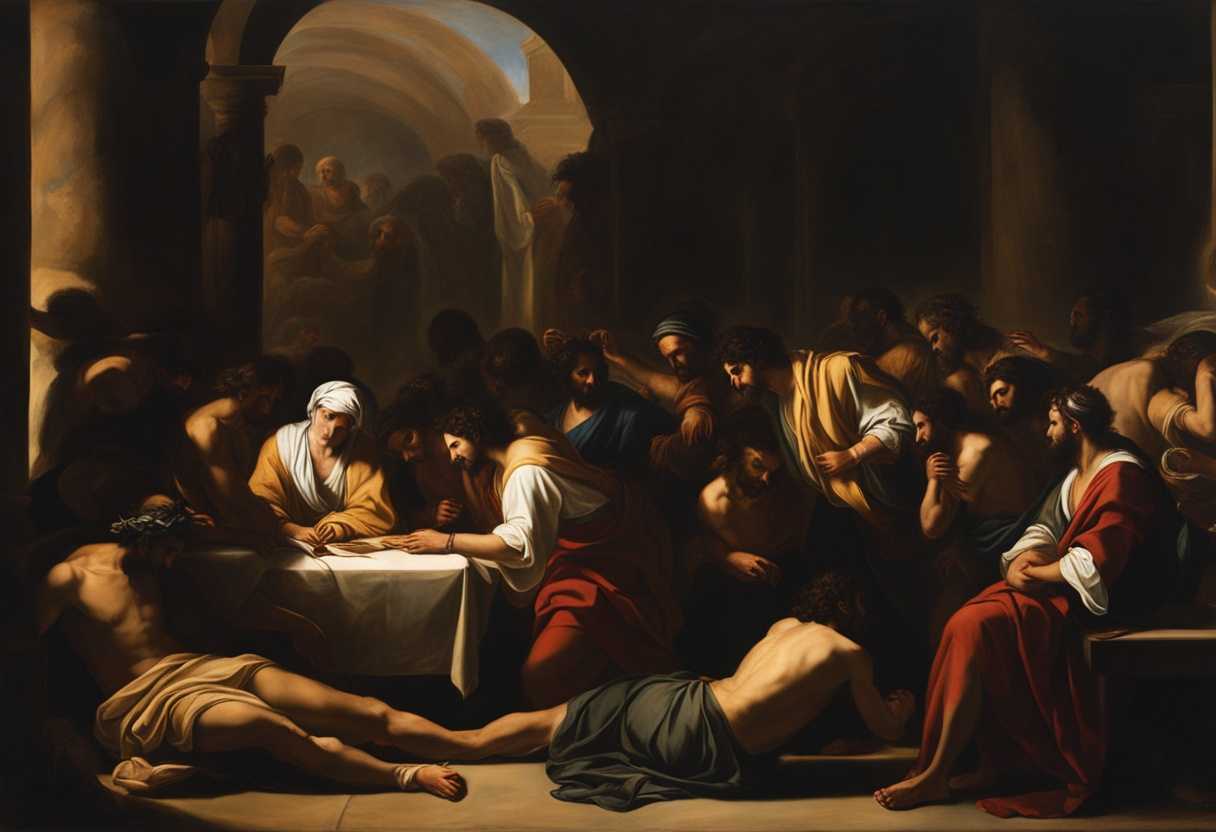
Setting the Scene for Judges 13:1
In the scene described in Judges chapter 13, we find the Israelites once again doing evil in the eyes of the Lord, so He delivers them into the hands of the Philistines for forty years. In the midst of this turmoil, an angel of the Lord appears to a barren woman named Manoah. The angel tells her that she will conceive and bear a son who is to be a Nazirite, dedicated to God from birth.
Manoah excitedly shares this news with her husband, also named Manoah, who prays for the angel to return and give them more instructions on how to raise this special child. The angel obliges, appearing once again to Manoah’s wife while she is in the field. She quickly fetches her husband, and together they listen as the angel reiterates the instructions for the child’s upbringing.
The scene is set in a simple, rural setting, with the couple surrounded by fields and the sounds of nature. The couple’s initial shock and disbelief at the angel’s announcement give way to awe and reverence as they realize the significance of the child they are to bear. The atmosphere is charged with a sense of divine presence and purpose as the couple prepares for the miraculous birth of their son.
What is Judges 13:1 about?
An angel foretold a miraculous promise of a child to a barren woman in Judges 13:1. This verse symbolizes the power of divine intervention and the fulfillment of God’s plans, even in the midst of seemingly impossible circumstances. It serves as a reminder that God’s timing and purpose are beyond human comprehension, and that He can bring forth blessings and miracles in the most unexpected ways.
Imagine the joy and wonder that must have filled the hearts of this barren woman and her husband upon receiving the news of their impending miracle child. This verse invites us to reflect on the faithfulness of God and the beauty of His sovereign will. It challenges us to trust in His promises, even when our own circumstances may seem bleak or hopeless. We are reminded that God can bring forth blessings and redemption in the midst of barrenness and despair, just as Samson’s birth brought light and hope to his parents and ultimately to the Israelites. Let us consider the areas in our own lives where we may be experiencing barrenness or waiting for a miracle as we ponder this verse. God is always at work behind the scenes, orchestrating moments of divine intervention and fulfilling His promises in ways we could never imagine. May we hold onto faith like the barren woman in Judges 13:1, knowing that God is able to turn our deepest struggles into sources of joy and blessing.
Understanding what Judges 13:1 really means
The Book of Judges provides a historical account of Israel’s time under judges rather than kings, offering insights into their spiritual and social dynamics. Judges 13:1 serves as the starting point for the captivating narrative of Samson, a renowned judge of Israel, by painting a picture of the prevailing conditions in Israel at that time. The verse opens with a poignant statement, “Again the Israelites did evil in the eyes of the Lord,” revealing a recurring pattern of sin and repentance among the Israelites. This phrase underscores their tendency to stray into idolatry and disobedience despite God’s past deliverances, showcasing a cycle that echoes throughout their history.
Furthermore, the verse continues, stating, “So the Lord delivered them into the hands of the Philistines for forty years,” illustrating God’s response to Israel’s transgressions by allowing them to face the consequences of their actions. The significance of the number forty in the Bible, often symbolizing a period of testing or judgment, adds depth to the understanding of the Israelites’ plight under Philistine oppression. Connecting Judges 13:1 to related passages like Judges 2:11-19, 1 Samuel 7:3-4, and Romans 6:23 further illuminates the cyclical nature of sin, repentance, and deliverance evident throughout biblical history.
In a contemporary context, the cycle of sin and repentance depicted in Judges 13:1 remains relevant as individuals grapple with recurring sins and their repercussions. This verse serves as a poignant reminder of the significance of faithfulness and the necessity of repentance in maintaining a steadfast relationship with God. It also underscores the dual aspects of God’s character—His justice in allowing consequences for disobedience and His mercy in offering avenues for redemption and restoration.
To illustrate the enduring relevance of Judges 13:1, consider a scenario where someone repeatedly falls into financial mismanagement, leading to a cycle of debt and financial struggles despite their efforts to change. This cycle mirrors the spiritual journey of the Israelites, emphasizing the challenges of breaking free from entrenched patterns of behavior. Just as financial advisors may intervene to help break the cycle of poor financial decisions, God sends judges, prophets, and ultimately Jesus to guide humanity towards breaking free from the cycle of sin and finding redemption.
In conclusion, Judges 13:1 serves as a poignant reflection on the consequences of disobedience, the significance of repentance, and the hope of redemption through God’s grace. It prompts readers to introspect on their own lives, encouraging them to seek God’s guidance in breaking any cycles of sin they may be ensnared in. This verse encapsulates a timeless message of justice, mercy, and the enduring promise of redemption, resonating with readers across generations and cultures.
What does it mean to wait faithfully on God?
To wait faithfully on God means to trust in His timing and His plan for our lives. It involves patiently relying on Him for guidance and deliverance, even when we may not understand what is happening. It requires us to have a steadfast faith and to remain obedient to Him, knowing that He is in control and will come through for us in His perfect timing.
Waiting faithfully on God also involves seeking His will and direction through prayer and staying connected to Him through reading His Word. It means surrendering our own desires and plans to His, recognizing that His ways are higher than our ways. We demonstrate our reliance on His wisdom and sovereignty by waiting faithfully on God, believing that He will work all things together for our good according to His purpose. We are called to remain hopeful and not lose faith in times of waiting, knowing that God is always with us and will never forsake us. We can find peace and strength to endure the challenges of waiting by trusting in His faithfulness and believing in His promises, confident that God is working behind the scenes for our ultimate good and His glory.
Application
Just like a project at work or managing a family, life can throw unexpected curveballs our way. But in those moments of doubt and confusion, we must turn to God for strength and direction. Take a moment to pause, pray, and trust in His ultimate plan for you. Will you release control and follow His path, even when it feels challenging or uncertain?

Reverend Michael Johnson is an experienced Church Minister with a profound expertise in spirituality and guidance. With a serene presence and a compassionate heart, he has faithfully served his congregation for over 20 years, leading them on a spiritual journey towards inner peace and enlightenment. Reverend Johnson’s extensive knowledge of religious philosophies and profound understanding of human nature have made him a trusted confidant and mentor to many, as he seamlessly weaves his profound wisdom into life teachings. Reverend Johnson’s calming demeanor and empathetic nature continue to uplift and heal souls, nurturing a sense of unity and tranquility within his community.