
Judges 19:22-24 is about the tragic tale of a Levite’s concubine who was abused and eventually died after seeking refuge in a town that lacked hospitality and had descended into moral degradation.
22 As they were making their hearts merry, behold, the men of the city, worthless fellows, surrounded the house, beating on the door. And they said to the old man, the master of the house, “Bring out the man who came into your house, that we may know him.”
23 And the man, the master of the house, went out to them and said to them, “No, my brothers, do not act so wickedly; since this man has come into my house, do not do this vile thing.
24 Behold, here are my virgin daughter and his concubine. Let me bring them out now. Violate them and do with them what seems good to you, but against this man do not do this outrageous thing.”
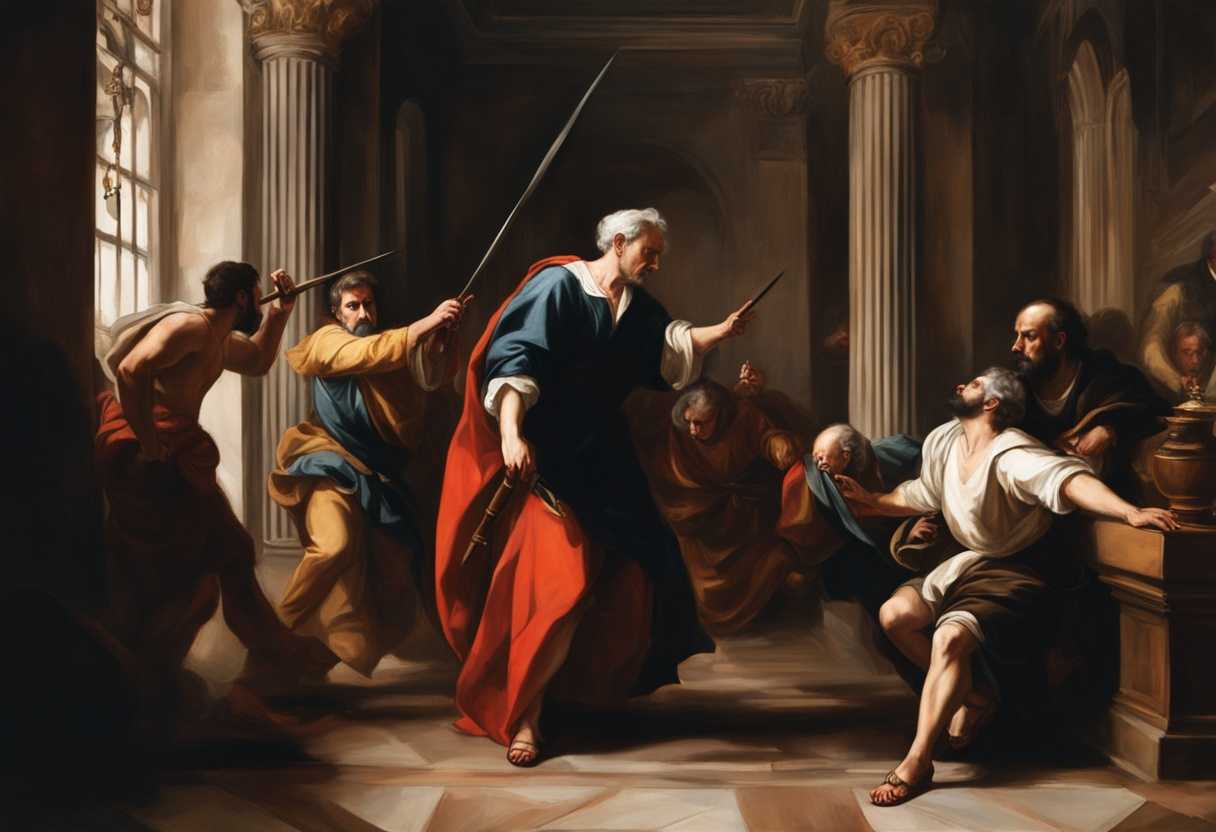
Setting the Scene for Judges 19:22-24
In Judges chapter 19, we find a chilling scene unfolding as an unnamed Levite, his concubine, and his servant are traveling through the city of Gibeah. They are on their way back home after a visit to the Levite’s father-in-law in Bethlehem. As evening approaches, they decide to stop in Gibeah, a town belonging to the tribe of Benjamin, to spend the night.
The Levite, his concubine, and his servant are welcomed into the home of an old man in Gibeah. However, the peace is shattered when a group of wicked men from the city surround the house, demanding that the Levite be brought out to them. The old man, trying to protect his guests, offers his own daughter and the Levite’s concubine to appease the mob. Tragically, the concubine is taken outside and abused all night long, leading to her death.
The scene in Judges 19:22-24 is one of darkness and depravity, highlighting the moral decay and lawlessness that had taken hold in Gibeah. It serves as a stark reminder of the consequences of turning away from God and the importance of upholding justice and righteousness in society.
What is Judges 19:22-24 about?
This verse serves as a stark reminder of the devastating consequences that can arise from moral corruption and societal decay. It paints a grim picture of the dark and destructive behavior that can manifest when individuals abandon ethical principles and indulge in sinful actions. The use of the word “horrifying” conveys the intense and chilling nature of the abuse and violence that can stem from a lack of moral guidance and restraint. Educators must reflect on the deeper message of this verse and consider the implications it holds for our communities and society as a whole. We must ask ourselves: what happens when we allow moral standards to crumble and fail to uphold values of respect, compassion, and integrity? How can we work to foster a culture that promotes empathy, kindness, and accountability to prevent such tragedies from occurring? Let this verse serve as a powerful call to action, urging us to prioritize ethical conduct and strive towards a society built on principles of justice and righteousness.
Understanding what Judges 19:22-24 really means
The Book of Judges provides a historical backdrop of a tumultuous time in Israel’s history, marked by moral and social chaos due to the absence of a king and widespread disobedience to God’s laws. Within this context, Judges 19:22-24 unveils a disturbing narrative involving a Levite, his concubine, and the morally corrupt men of Gibeah. The phrase “perverted men” or “wicked men” used to describe the men of Gibeah underscores the depth of their moral decay and evil intentions, painting a grim picture of societal degradation.
Amidst the unfolding tragedy, the host’s desperate plea of “Do not act so wickedly” reveals a recognition of the gravity of the impending crime, showcasing a last-ditch effort to prevent further sin. The shocking offer of the host to sacrifice his own daughter and the Levite’s concubine to protect his male guest sheds light on the distorted priorities and misguided sense of hospitality prevalent in that society, where the safety of men was valued over the well-being of women.
Drawing parallels with the story of Sodom and Gomorrah in Genesis 19:1-11, where Lot similarly offers his daughters for protection, emphasizes the recurring theme of hospitality and the protection of guests in ancient cultures. The narrative in Judges serves as a cautionary tale, prompting readers to reflect on the consequences of moral relativism and societal decay, urging a return to godly principles and the defense of the vulnerable in today’s world rife with violence and exploitation.
Imagine a community where self-interest reigns supreme, leading to rampant corruption and injustice, akin to a crime-ridden neighborhood where fear stifles acts of kindness. This modern-day scenario mirrors the chaos in Gibeah, highlighting the critical need for a moral compass and communal responsibility in upholding righteousness and safeguarding the innocent. Judges 19:22-24 stands as a poignant reminder of the dire consequences of forsaking God’s laws, compelling individuals to reassess their values and communities, advocating for a revival of godly virtues and the protection of the marginalized.
In contemplating this passage and its implications alongside related scriptures like Romans 1:24-27, which elucidates the repercussions of turning away from God, a deeper understanding emerges of the significance of righteousness and the perils of moral compromise. By engaging with these narratives, we are challenged to uphold moral integrity, resist societal decay, and champion justice and compassion in a world fraught with moral challenges.
What does it mean to protect the vulnerable?
To protect the vulnerable in this context means to safeguard those who are in danger or are at risk of harm. It involves providing support, refuge, and defense to those who are in a position of weakness or disadvantage. The verse emphasizes the importance of standing up and advocating for those who are unable to protect themselves, ensuring their safety and well-being. The vulnerable individual sought refuge and protection in a household to escape harm and violence in these verses. This signifies the responsibility we have to offer assistance and shelter to those who are in need, especially when they are unable to defend themselves. It highlights the need to show compassion and provide a safe haven for those who are marginalized or facing threats to their safety. Protecting the vulnerable in this context underscores our moral obligation to intervene and stand up against injustice and harm. It emphasizes the importance of showing empathy, compassion, and solidarity towards those in distress, and taking actions to ensure their safety and protection.
Application
As believers, we must be vigilant and courageously confront the injustices plaguing our society. Let’s be the voice for the voiceless, shielding the vulnerable from harm like a loving family protects its own. Silence is not an option; we must work tirelessly to build a better world for all. How will you answer the call to stand against injustice and spread kindness in your community?

Reverend Michael Johnson is an experienced Church Minister with a profound expertise in spirituality and guidance. With a serene presence and a compassionate heart, he has faithfully served his congregation for over 20 years, leading them on a spiritual journey towards inner peace and enlightenment. Reverend Johnson’s extensive knowledge of religious philosophies and profound understanding of human nature have made him a trusted confidant and mentor to many, as he seamlessly weaves his profound wisdom into life teachings. Reverend Johnson’s calming demeanor and empathetic nature continue to uplift and heal souls, nurturing a sense of unity and tranquility within his community.