
Judges 3:15-30 is about how Ehud, a left-handed judge and assassin, successfully kills the Moabite king Eglon, delivering the Israelites from Moabite oppression through his cunning and bravery.
15 Then the people of Israel cried out to the Lord, and the Lord raised up for them a deliverer, Ehud, the son of Gera, the Benjaminite, a left-handed man. The people of Israel sent tribute by him to Eglon the king of Moab.
16 Ehud made for himself a sword with two edges, a cubit in length, and he bound it on his right thigh under his clothes.
17 And he presented the tribute to Eglon king of Moab. Now Eglon was a very fat man.
18 And when the children of Israel cried out to the Lord, the Lord raised up a deliverer for the children of Israel, who saved them, Othniel the son of Kenaz, Caleb’s younger brother.
19 But he himself turned back at the idols near Gilgal and said, “I have a secret message for you, O king.” And he commanded, “Silence.” And all his attendants went out from his presence.
20 And Ehud came to him as he was sitting alone in his cool roof chamber. And Ehud said, “I have a message from God for you.” And he arose from his seat.
21 But Ehud reached with his left hand, took the sword from his right thigh, and thrust it into his belly.
22 And the handle also went in after the blade, and the fat closed over the blade, for he did not pull the sword out of his belly; and the dung came out.
23 Then Ehud went out into the porch and closed the doors of the roof chamber behind him and locked them.
24 When he had gone, the servants came, and when they saw that the doors of the roof chamber were locked, they thought, “Surely he is relieving himself in the closet of the cool chamber.”
25 And they waited till they were embarrassed. But when he still did not open the doors of the roof chamber, they took the key and opened them, and there lay their lord dead on the floor.
26 Ehud escaped while they delayed, and he passed beyond the idols and escaped to Seirah.
27 When he arrived, he sounded the trumpet in the hill country of Ephraim. Then the people of Israel went down with him from the hill country, and he was their leader.
28 And he said to them, “Follow me, for the Lord has given your enemies the Moabites into your hand.” So they went down after him and seized the fords of the Jordan against the Moabites and did not allow anyone to pass over.
29 And they killed at that time about ten thousand of the Moabites, all strong, able-bodied men; not a man escaped.
30 So Moab was subdued that day under the hand of Israel. And the land had rest for eighty years.
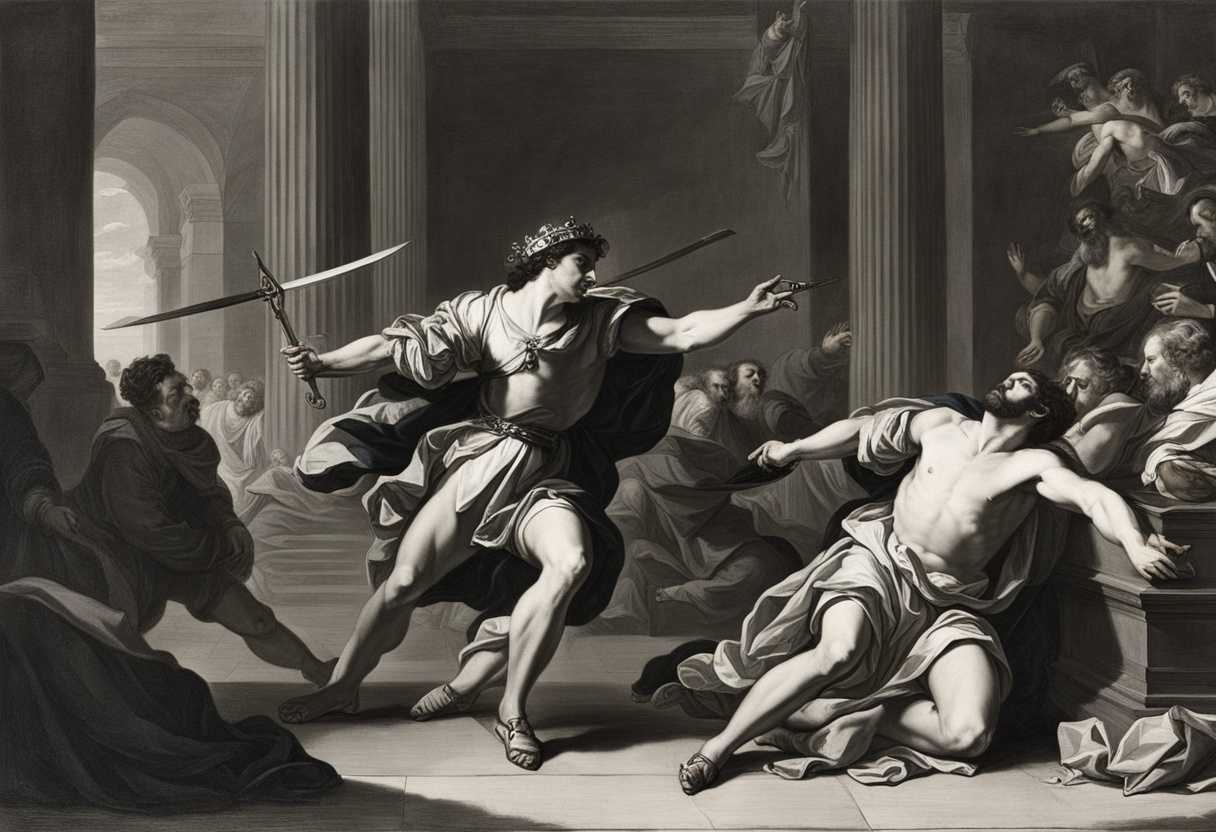
Setting the Scene for Judges 3:15-30
In Judges chapter 3, we find the Israelites under the oppressive rule of King Eglon of Moab. The scene unfolds in the city of Jericho, a place known for its strategic location and strong fortifications. The main characters in this narrative are Ehud, a left-handed man from the tribe of Benjamin, and King Eglon himself.
Ehud, chosen by God to deliver the Israelites from Moabite oppression, crafts a double-edged sword and conceals it on his right thigh, as left-handed individuals were not searched for weapons in that era. He gains an audience with King Eglon under the pretense of delivering a tribute. As they meet in the king’s private chambers, Ehud seizes the opportunity and swiftly draws his sword, stabbing Eglon in the belly. The fat covering Eglon’s belly even conceals the sword, emphasizing the gruesome nature of the act.
The guards outside the chamber assume the king is relieving himself, giving Ehud time to escape. He then rallies the Israelites, leading them to victory over the Moabites in a decisive battle. This scene in Judges 3:15-30 showcases God’s faithfulness in raising up unexpected heroes to deliver His people from their enemies.
What is Judges 3:15-30 about?
This verse captures a pivotal moment in Israel’s history where Ehud, a judge chosen by God, bravely takes action to deliver his people from the oppressive rule of the Moabite king, Eglon. The death of Eglon marks a significant turning point for the Israelites, symbolizing their liberation from oppression and their renewed sense of freedom and autonomy. But what does this act of violence teach us about the nature of justice and liberation? Can violence ever be justified in the pursuit of freedom and justice? We reflect on this verse and are challenged to consider the complexities of power dynamics, oppression, and the lengths people will go to in order to secure their freedom. Ehud’s actions may be seen as extreme, but they also serve as a reminder of the often difficult and messy realities of standing up against injustice and tyranny. What sacrifices are we willing to make for the greater good? And how can we find the courage and strength to confront systems of oppression and stand up for what is right, even in the face of great danger?
Understanding what Judges 3:15-30 really means
The Book of Judges provides a historical narrative of Israel’s recurring pattern of disobedience, suffering, repentance, and deliverance. In this particular passage, the focus is on Ehud, a judge appointed by God to liberate Israel from Moabite oppression. The Israelites, having strayed from God’s ways, found themselves under the rule of King Eglon of Moab, prompting them to cry out to the Lord for help. This act of crying out signifies repentance and a plea for divine intervention, a common theme throughout the Bible where God responds to the earnest cries of His people.
God, in His mercy, raised up Ehud as a deliverer for the Israelites, showcasing His faithfulness in providing a savior in times of need. Ehud’s act of crafting a double-edged sword symbolizes both the physical and spiritual aspects of God’s deliverance, highlighting the multifaceted nature of divine intervention. The cunning and decisive action displayed by Ehud in assassinating King Eglon demonstrate the necessity of bold steps in securing freedom from oppression, mirroring the courage and determination required in our own battles against sin and injustice.
Drawing parallels with other biblical passages such as Exodus 3:7-10 and Psalm 34:17, we see a consistent theme of God hearing the cries of His people and delivering them from their troubles. This narrative of deliverance extends to the New Testament, as seen in Romans 6:18, where believers are set free from sin through Christ, emphasizing the ultimate liberation found in Him. The relevance of Ehud’s story to contemporary audiences lies in the timeless truth that God still responds to the cries of His children, raising up deliverers and providing avenues for freedom from various forms of bondage.
In our present context, individuals and communities can emulate the Israelites’ cry for help by turning to God in times of distress and seeking His intervention. Just as Ehud was prepared and took decisive action, we are called to be vigilant and ready to respond when God calls us to be instruments of His deliverance. An illustrative anecdote of a community facing adversity and finding relief through a leader’s inspired actions echoes the principles embodied in Ehud’s story, showcasing how God can work through individuals to bring about transformation and hope in challenging circumstances.
In conclusion, the account of Ehud serves as a poignant reminder of God’s faithfulness, the power of prayer, and the significance of proactive faith in times of crisis. It prompts us to trust in God’s deliverance, remain prepared for His leading, and be willing to take bold steps in obedience to His will. As we reflect on Ehud’s story, may we be encouraged to seek God’s guidance, act courageously in the face of adversity, and serve as agents of His deliverance in a world longing for hope and redemption.
What does it mean to trust in God’s timing?
Trusting in God’s timing means believing that His plans will unfold at the right moment, even if it doesn’t align with our own expectations or desires. God’s timing is perfect in delivering victory to the people of Israel through an unexpected individual, Ehud, as illustrated in the verse from Judges. Despite the odds appearing stacked against them, God’s timing and chosen method of deliverance proved to be effective and successful.
This passage reminds us that when we trust in God’s timing, we allow Him to work in ways that we may not comprehend initially. It requires patience, faith, and surrendering our own desires to His divine plan. Our trust in God’s timing can bring about unexpected blessings and victories in our own lives, demonstrating His sovereignty and wisdom in all circumstances, just as Ehud’s timely arrival and strategy led to the defeat of King Eglon.
Application
Just like Ehud faced his enemies with determination, let’s tackle our challenges with faith. Remember, God is always by your side, even when things seem tough. It’s time to rise up and conquer your obstacles, no matter how daunting they may appear. Believe in your inner strength and take that first step towards victory. Will you embrace the courage within you and trust in God’s unwavering support to overcome your struggles today?

Reverend Michael Johnson is an experienced Church Minister with a profound expertise in spirituality and guidance. With a serene presence and a compassionate heart, he has faithfully served his congregation for over 20 years, leading them on a spiritual journey towards inner peace and enlightenment. Reverend Johnson’s extensive knowledge of religious philosophies and profound understanding of human nature have made him a trusted confidant and mentor to many, as he seamlessly weaves his profound wisdom into life teachings. Reverend Johnson’s calming demeanor and empathetic nature continue to uplift and heal souls, nurturing a sense of unity and tranquility within his community.